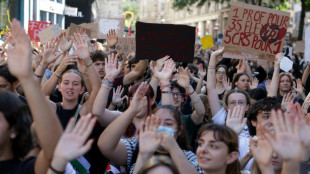
US panel denounces France abaya ban as targeting Muslims / Photo: Denis Charlet - AFP/File

 Hotel Blacklist Launches New Accommodation Industry Risk Assessment Tool

 Bangladesh nuclear plant draws hope -- and worry

 US beat Canada 1-0 to wrap up four-win international break

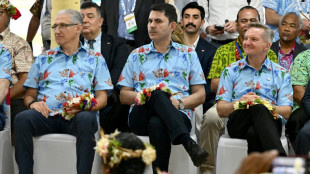 Turkey, Australia's joint COP31 leadership raises doubts

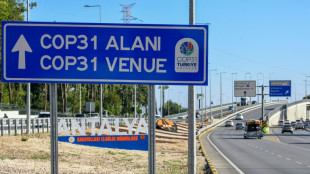 For Turkish NGOs, COP31 offers rare space for action

 Sleep, appetite, gene-editing experts contend for Nobel chemistry prize

 Nobel Peace Prize haunted by the 'spectre' of Trump

 Africa launches own credit agency in bid for cheaper borrowing

 US, China, EU: three paths to regulating AI
 Australia's High Court rules against coal mine in landmark climate case

 Australia touts new funds for Pacific infrastructure at Fiji 'pre-COP'

 Eva Marie Saint, Oscar winner of Hollywood classics, dies at 102

 Australia probes app used in cheap smart glasses over privacy fears

 England needed to 'move on' from World Cup pain, says Tuchel

 O'Neill to stay at Celtic after period of "reflection"

 Kane marks 125th England cap with Wembley Nations League double
 Quebec's incoming separatist leader wants to block Crown from swearing-in

 Emmys gala will now stream its premier television awards

 Paramount completes Warner Bros takeover, creating Skydance

 Trump blames France unrest on Islam, migration

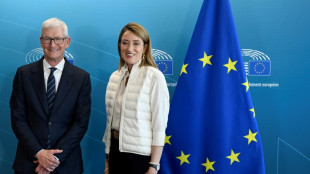 Apple's Cook praises EU over efforts to protect children online

 Nobel winner Halzen says years of October 'misery' finally over

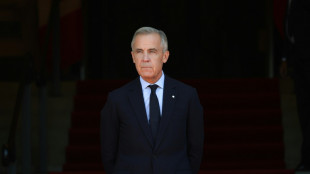 Quebec separatist win rattles Carney's unity push

 'Itching' for change: Shiffrin cuts back slaloms this season

 'Gen Z has risen up': Tens of thousands mass for tense France school protests

A US government advisory panel on Friday denounced ally France's ban on schoolgirls wearing abayas, saying the restriction on the long, flowing dresses was meant to "intimidate" the Muslim minority.
The US Commission on International Religious Freedom is tasked with making recommendations to the US government but does not set policy itself.
The commission's chair, Abraham Cooper, called the abaya ban a "misguided effort to promote the French value of laicite," the country's official secularism.
"France continues to wield a specific interpretation of secularism to target and intimidate religious groups, particularly Muslims," Cooper said in a statement.
"While no government should use its authority to impose a specific religion on its population, it is equally condemnable to restrict the peaceful practice of individuals' religious beliefs to promote secularism."
French Education Minister Gabriel Attal announced last month that schools would no longer allow girls to wear abayas, the flowing dresses of Middle Eastern origin.
In 2004, France banned school children from wearing "signs or outfits by which students ostensibly show a religious affiliation" and outlawed headscarves, turbans, large crosses or kippas.
But abayas had fallen into a gray area with some women saying that they wear them due to their cultural identity rather than religious belief.
Conservative French politicians have sought to widen restrictions. Far-right leader Marine Le Pen, who came in second to President Emmanuel Macron in last year's presidential election, has campaigned for the banning of wearing veils in the street.
The ban on the abaya was denounced in France by some Muslim leaders and by hard-left political leader Jean-Luc Melenchon, who called it a move to fan divisions.
The US Commission on International Religious Freedom is made up of appointees of both major political parties but some of its recommendations have been repeatedly ignored by the State Department, including its calls to condemn India.
The United States also has a constitutional separation of church and state but interprets secularism differently, with the government imposing minimal restrictions related to religion.
D.Khalil--SF-PST