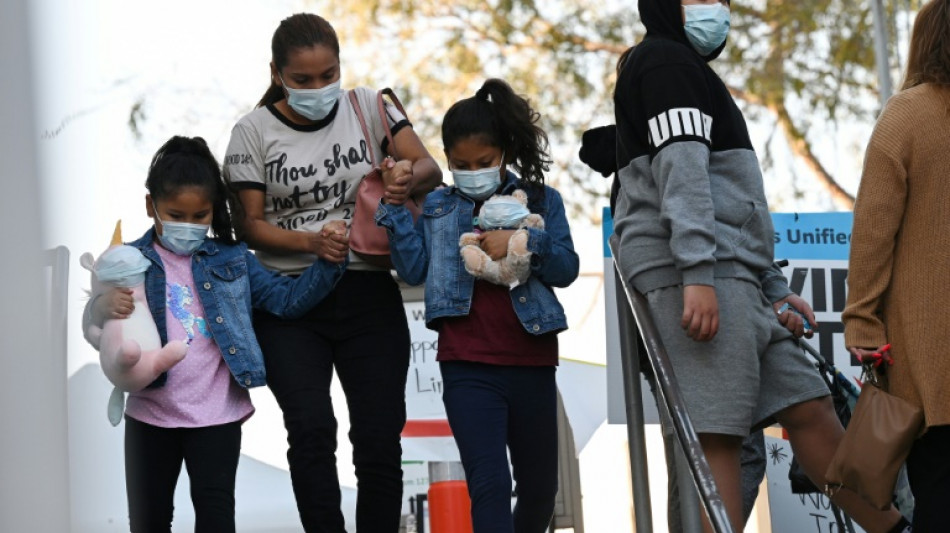
US school test scores haven't recovered since pandemic / Photo: Robyn Beck - AFP/File

 US Ambassador Waltz Warns Russia Faces Unsustainable Losses in Ukraine

 إيران تحذر من استمرار التصعيد في الخليج بعد إصابة ناقلتي نفط وإسقاط طائرة مسيرة أمريكية

 2026 Nissan Sentra Review: Styling Updates and Tech Overhaul for Canada's Last Sedan

 Land Reform Requires Agricultural Education to Succeed, Experts Warn

 دراسة برازيلية: البعوض الحامل لـ"وولباكيا" يقلل إصابات حمى الضنك بنسبة 69%

 Garmin Patent Reveals Inter-Pixel Solar Tech for AMOLED Watches

 Former Water Board Boss Remanded Over R4.4 Billion Giyani Graft Claims
American 13-year-olds continue to struggle academically in the wake of the pandemic, especially in mathematics, according to official data out Wednesday.
The National Assessment of Educational Progress (NAEP), a project that has been monitoring test scores since 1969, tested students in late 2022, finding reading and math scores significantly dropped compared to late 2019.
Average math scores have risen significantly since the assessments first began, but have now dropped to levels last seen in 1990, with declines more pronounced among lower-performing students.
"US students are struggling across the board. Educators, policymakers, and families need to work together urgently and decisively to address this generation's learning needs," said Beverly Perdue, National Assessment Governing Board chair.
The assessment, which relies on nationally representative samples, revealed several additional concerns, including that the number of 13-year-olds who said they read for fun hit an all time low.
Just 14 percent read for fun every day, down three points from 2020 and 13 points from 2012.
Among lower-performing students, 42 percent said they never or hardly ever read for fun.
Absenteeism was also up, with the percentage of students who missed five or more days doubling since the last assessment.
Research has shown shuttering schools during Covid-19 lockdowns hit those from lower-income families and ethnic minorities the hardest.
The pandemic also worsened learning outcomes, including increases in students seeking mental health services, school violence and disruption, cyberbullying, and nationwide teacher and staff shortages.
F.AbuShamala--SF-PST