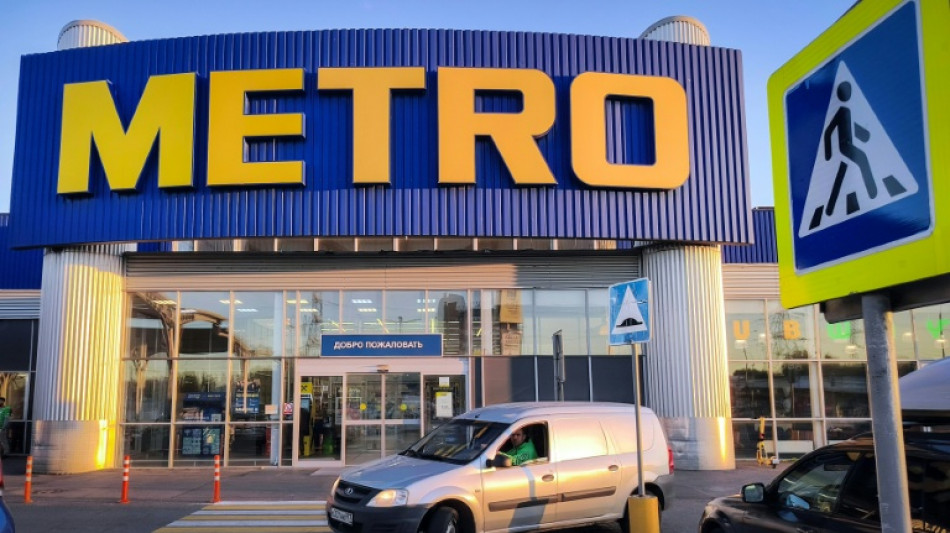
Moscow seizes Russian assets of German food retailer Metro / Photo: Alexander NEMENOV - AFP

 مصلحة مياه القدس توحّد جهودها مع بلديات الرام ومخماس لتعزيز استدامة المياه

 Saudi PIF Retains Top Sovereign Wealth Fund Brand Title for Third Year

 Binance Secures $6.5 Billion Asset-Freezing Order from Abu Dhabi Court

 Malta PM Abela Refuses Parliamentary Question on Maritime Borders Amid Turkey-Libya Deal

 محافظ طولكرم يدعو لمبادرة مجتمعية لخفض تكاليف الأعراس وتعزيز التكافل
Russian authorities on Monday seized the assets of German wholesaler and food retailer Metro -- the latest in a series of business takeovers linked to countries that back Ukraine.
A decree signed by President Vladimir Putin announced that the Russian operations of Metro Cash and Carry had been put under the "temporary management" of a company called UK Torg RUS.
This comes after Moscow earlier this month seized the businesses and assets of Swiss food giant Nestle, as well as French retailer Auchan and the former Leroy Merlin DIY chain.
In a statement, Metro said it still formally owned the company but no longer had "operational control over its Russian subsidiary" and was analysing what the decision meant for the company.
"Further effects of the decree on METRO AG are currently being analyzed," it said.
In its latest yearly report, the company said its sales in Russia amounted to 2.6 billion euros ($2.9 billion) in the 2024/2025 financial year.
The cash and cash equivalents of Metro's Russian group companies amounted to 152 million euros ($172 million) as of June 30, the company said in its latest quarterly report.
Most Western companies quickly sold their Russian operations and holdings after the Kremlin ordered troops into Ukraine, or at least isolated them, as sanctions have made trading in most goods difficult.
Others remained, citing concerns for their employees or citizen's well-being, but often sharply scaling back their operations.
Russia has since made it difficult for firms to leave, requiring presidential authorisation for deals, or seizing the assets outright.
L.AbuTayeh--SF-PST