
Japan eyes changing prostitution law to punish sex buyers / Photo: Richard A. Brooks - AFP/File

 Turkey's Erdogan to run again in early 2028 vote, top adviser says

 Sweden's Andersson: a trusted, no-nonsense political operator

 Canada's Carney pushes 'new alliance' with EU despite Trump threats

 Ireland to boycott Eurovision 2027 over Gaza

 India's Tata Sons reappoints N. Chandrasekaran as chairman

 Sweden's left-wing wins election thriller

 Germany urges EU action against China to defend carmakers

 Stocks mostly rise after US Fed rate hike, oil eases

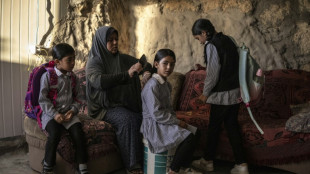 Palestinians turn rugged caves into homes after Israeli demolitions

 Two unseen Monet paintings to be sold in Paris: auction house

 Klopp wants German team to help reclaim national pride from far-right

 Ninth woman found dead in South Africa killing spree

 Smog scuppers Japan force helping fight Indonesia wildfires

 King Charles to call on tech giants for 'reassurances' over AI

 Lebanon security talks in Paris focus on replacing UN mission

 Most stocks rise as Fed hikes and oil prices drop

 'Vande Mataram': Why is India's freedom song in spotlight?

 Counterculture pop artist Peter Max dies at 88: US media

 Asian Games chief defends 'functional' rooms after backlash

 Leader's sister says only 'idiots' think N. Korea to give up nukes

 World's water cycle becoming more unpredictable, UN warns

 Where the US-China tariff row stands ahead of White House summit

 Croc-habitat gets green light for 2032 Olympic rowing

 Indonesia cash-for-photos scheme turns animal hunters into protectors

 'Left-field' life: Briton becomes Thailand's top foreign monk

Japan should overhaul its prostitution law to punish those who seek to buy sex, experts recommended on Thursday in proposals likely to lead to changes to the decades-old legislation.
Currently, street sex workers face fines or imprisonment for public solicitation, but their customers face no punishment, making Japan an outlier among developed countries.
Calling for the abolition of this asymmetry, the panel of legal experts proposed in a report that clients also be penalised for solicitation both in public and online.
It is seen as almost certain that the justice ministry will make legal amendments based on the panel's conclusions.
Acts such as negotiating paid sex in public and loitering on the street to "browse" sex workers should be considered punishable, the panel said.
Some campaigners have demanded a "Nordic model" that decriminalises selling sex while criminalising paying for it -- adopted by countries like Sweden, Norway and France.
However, the panel did not recommend decriminalising sex work altogether or redefining prostitution to include acts beyond vaginal intercourse.
Some sellers, the panel said, "willingly" joined the sex trade and their solicitation "disrupts social order".
Risa, a member of the sex trade survivor group Toka ("Light"), said if the laws continue to target sellers, "they won't be able to report violence and other terrible experiences to police, for fear of being labelled criminals".
The concept of free will in sex work is a myth given that compounding difficulties like poverty, trauma and disability push many women into the trade, the 37-year-old told AFP, using a pseudonym.
In her 20s, "I did think I was doing it voluntarily" to survive adversities including her abusive, drunk father, a job loss and depression, Risa said.
But "I wonder how many people would still say they want to keep doing it" if they had a chance at re-education, employment and mental health treatment, she added.
"I had to act like a doll, switch off all emotions and pretend to be pleased no matter what was done to me."
When enacted in 1956, Japan's anti-prostitution laws viewed sex workers as an "evil" who seduced married men, the antithesis of the "chaste wives" that society expected women to be, feminist lawyer Yukiko Tsunoda told a recent symposium in Tokyo.
"Nobody even thought of the sex trade as violence" against women, she said.
- 'Underground' -
Any legal change is overdue for Nao, a Toka member who fled abuse by her mother and lived under a bridge from age 14, turning to street prostitution to "survive the day".
As morning arrived, the "mostly middle-aged men on their way to work" would approach her and offer around 5,000 yen ($32) for sex, she told AFP.
Back then, "I needed to feel that I had something that made my life worthwhile", recalled the now 25-year-old Nao -- a pseudonym she uses when campaigning.
"But now I know I was a victim of sexual exploitation."
Opinions are split over whether criminalising customers will help curb street prostitution in Japan.
Ronald Weitzer, a professor emeritus at George Washington University, predicted it will "push commercial sex underground".
It is "likely that they would move to an area that is less policed than where they operate now", he told AFP.
Ranging from brothel-like "soaplands" to call services and erotic massage parlours, Japan's adult industry involves an estimated two-plus million women, roughly making two to five trillion yen annually, lawyer Sho Wakabayashi told the panel hearing.
Even if they move indoors, it doesn't mean women have broken free of the clutches of the sex industry, said Yumeno Nito, founder of youth protection group Colabo, who has called for the establishment of publicly-funded specialised support institutions for those in need of help.
A potential role model is South Korea, which not only offers temporary protection but also helps women build new lives after sex work.
"Examples overseas teach us that if there is support and a system in place, women can have and choose from a range of options and live their lives accordingly," she said.
N.AbuHussein--SF-PST