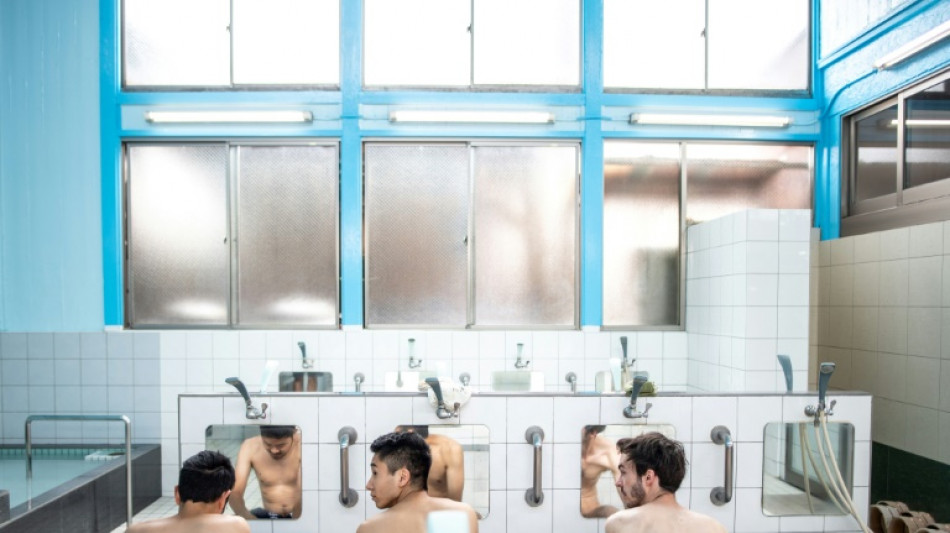
Japanese bath houses find new ways to stay afloat / Photo: Philip FONG - AFP

 مقتل الطفلة جوري الصوفي برصاصة داخل خيمة نزوح في مواصي خان يونس

 بلدية الخليل: النزوح القسري تجاوز ثلاثة آلاف شخص مع استمرار الإخلاء والهدم

 محمد الغول يدعو إلى وحدة فلسطينية لمواجهة مخاطر المرحلة

 Sri Lanka end England hopes with crushing win over Pakistan

 ملاعب وأندية غزة تتحول إلى مراكز لإيواء العائلات النازحة

 Dangote, Nigeria's oil tycoon rewriting Africa's story

 Carrick to remain Man Utd boss for Chelsea clash: reports

 Maresca defends Donnarumma, Guehi after Man City defeat
 Nordic leaders call Putin as local truce begins in Ukraine

 Osaka unveils crane outfit in Tokyo before win over Paolini

 Ronaldo in line for Portugal return after fallout with coach

 Norway media take legal action to block Meta from using content

 Bayern praise 'humble' Kane after Ballon d'Or win

 Colts retain Daniel Jones as starter despite continued offensive struggles

 Madushanka wrecks Pakistan as Sri Lanka press for final slot

 Destructive Abhishek 113 leads India to series win over New Zealand
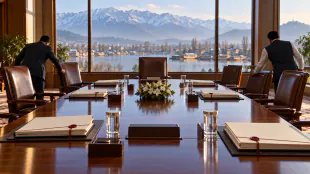
 Norway, Finland leaders hold 'frank and substantive' talk with Putin

 Wall Street faces earnings and Fed tests after turbulent technology-led week

 Ukraine, Russia say US-brokered truce holding in ravaged city
 Police form SIT after vehicles in Rahul Gandhi convoy collide on expressway

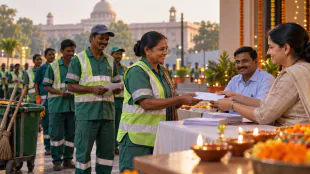 Delhi grants minimum monthly pay and DA to about 4,000 MCD health workers
 Ather Energy shares climb 14% after quarterly profit and expansion plan

 Gold ETF flows turn negative after 13 weeks as bullion loses 4%

 Pakistan's last antique restorers give old treasures new life

 India braces for Cyclone Arnab with evacuations

Just before it opens each afternoon, elderly residents gather outside one of Tokyo's last remaining old-style bath houses carrying flannels, soap and shampoo for their regular soak.
With its communal naked tubs, bright mural of Mount Fuji and sliding wooden entrance under a pointed roof, Inariyu is a classic example of a Japanese public bath, or sento.
Once ubiquitous in crowded urban areas, sentos are now closing quickly as more people take baths at home and owners struggle with faltering machinery, high gas prices and a lack of successors, tempting them to sell their valuable land.
Nationwide, the number of bath houses has plunged to around 1,800 from a peak of nearly 18,000 in the late 1960s.
But some such as Inariyu have been given a new lease on life through renovations, while others are reinventing themselves as trendy hangouts or using data analysis to boost business.
One person pushing to save neighbourhood baths is Yasuko Okuno, who discovered them as a way to unwind after working late.
"Day after day, my mind was tired. Even when I went home, I couldn't forget about work," said the 36-year-old writer for the Tokyo Sento Association.
"Then I went to a sento for the first time in a while, and it felt like a weight had lifted. There was a large bath, and the regulars greeted me kindly," she told AFP.
Over time, "it began to feel like a home from home."
Japan has never imposed a strict Covid-19 lockdown, and places such as gyms and sentos remained open even when many offices switched to home working and restaurants shortened opening hours.
Masks are commonly worn on trains and in other public places, but there is no requirement to wear them in sentos, although social distancing and quiet bathing are encouraged.
For many elderly people, it is a "daily routine" that they did not want to stop during the pandemic, and some feel safer taking a bath with others around in case they fall, Yasuko said.
- 'Sense of urgency' -
Bathhouse closures can erode community ties, said Sam Holden, whose organisation Sento & Neighborhood used a grant of around $200,000 from the World Monuments Fund to renovate Inariyu.
The group strived to keep the cosy, welcoming atmosphere of the bathhouse -- built in 1930 in a low-rise area of northern Tokyo where narrow walkways snake between homes.
Inariyu has customers of all ages, including "a lot of elderly people, many of whom might live alone and be prone to isolation", said Holden, a 32-year-old American who has lived in the capital for nearly a decade.
"My colleagues and I had a sense of urgency in wanting to preserve some of these historic structures before they were redeveloped into apartment complexes and other things."
Bathers pay 500 yen ($3.70) to enter the men's or women's bath, a fee set by the Tokyo government.
Leaving their shoes in a small locker, they strip off in the changing room and take a shower before climbing into the tubs for a relaxing soak.
Unlike Japan's hot springs, known as onsen, the water in sentos is usually heated with gas.
Shunji Tsuchimoto, who runs Inariyu with his wife, told AFP that the bathhouse is paying 50 percent more for energy than it did last year.
But he hopes that holding events in the renovated buildings will raise revenue by drawing younger customers.
"I want them to know this sento culture," he said.
- 'Trendy and modern' -
One sento that has managed to draw a youthful clientele is Koganeyu in eastern Tokyo, which reopened in 2020 after a full makeover.
On a recent Saturday, the bath house was packed with young customers drinking craft beer and listening to vinyl records.
Tech worker Kohei Ueda, 25, travelled an hour to use Koganeyu's sauna with a friend.
"I do have the image of sentos being where grandpas and grandmas gather," he said.
"But a sento like this that's more trendy and modern is not like that... I feel more comfortable coming here."
Kom-pal, another sento, may not have hipster appeal, but 36-year-old owner Fumitaka Kadoya has managed to increase footfall using data-crunching skills he acquired in his previous job as a technician for optical equipment maker Olympus.
Kadoya's family has run the sento since the 1950s and when he took over three years ago, he set up a database to track information about customers and the timing of their visits.
The data has allowed him to make targeted business decisions, such as hiring female staff to encourage more women to visit and opening on Sunday mornings to ease crowds.
"Sentos have always been a part of Japanese culture," Kadoya told AFP, and nowadays, leaving everything in a locker while you soak can be a kind of "digital detox".
"That's exactly what I think young people need these days."
S.AbuJamous--SF-PST