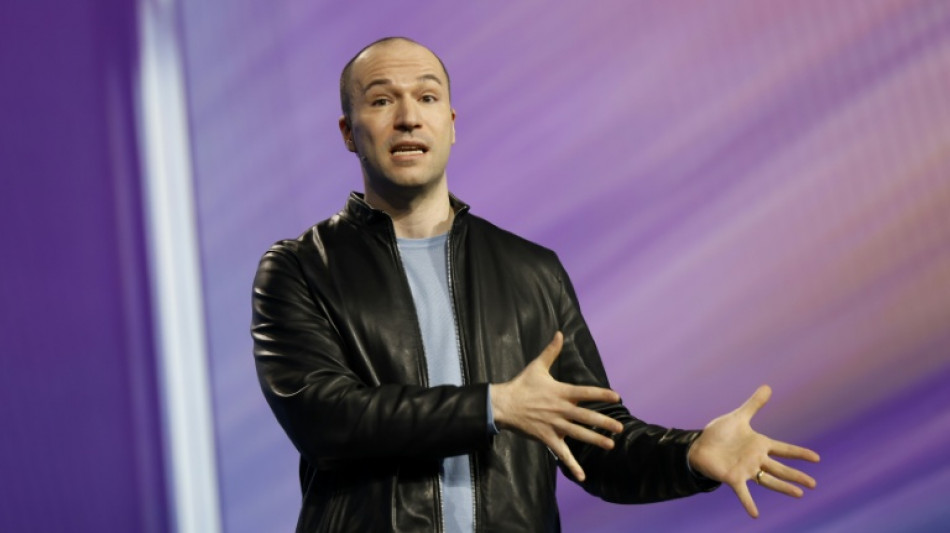
OpenAI says new model adept at making AI better / Photo: Caroline Brehman - AFP

 Nigeria's Tinubu confirms 32 dead after military plane crash

 'Reckless' AI firms can't control models, says whistleblower

 Switching on brain cells: the Nobel-winning science of optogenetics

 Quebec votes as separatist surge poses test for Canada PM

 Euro slides as concerns about French debt mount

 Former Trump press secretary Leavitt joins Fox News

 Djokovic advances to China Open final as Medvedev out for hitting fan with ball
 Disgraced former US House speaker dies at 84

 Euro slides as worries about French debt grow

 US withdraws all bomber aircraft from UK airbase

 Drone hits Ethiopia IDP camp as fears grow of regional war

 US-German trio wins medicine Nobel for illuminating the brain

 England captain Kane driven by desire for records says Tuchel
 N.Irish court hears challenge to disputed Orangemen parade

 Talking points from the Bahrain Grand Prix in Malaysia

 Yemen, Saudi Arabia target Houthis in new campaign as war escalates

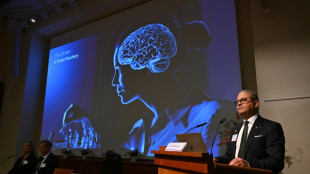
 US-German trio wins medicine Nobel for work on optogenetics
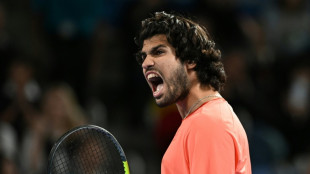
 Swiatek, Zheng survive three-set tests in China Open third round
 Hasan says Test cricket momentum turning for Bangladesh

 Intense heat puts births in jeopardy, UN tells Fiji talks

 US arrests woman accused of spying for China on Taiwan leader's family

 Yemen military announces broad strikes against Houthis

 Zuckerberg skewered again on screen in 'The Social Reckoning'

 Fiji urges 'just' climate transition, financing at pre-COP gathering

 Thailand's Jeeno overcomes late wobble to win Lotte Championship

OpenAI released a new model it touts as its best yet for handling research work like making improved versions of itself, as rapid-fire releases by AI rivals pick up pace.
GPT-5.5 was billed as a "new class of intelligence" and comes just months after the launch of its predecessor.
"What is really special about this model is how much more it can do with less guidance," OpenAI co-founder and president Greg Brockman said at a briefing with journalists.
"It can look at an unclear problem and figure out just what needs to happen next."
The model is particularly adept at "agentic" coding and computer use in which digital assistants independently tend to tasks as directed, according to the San Francisco-based startup behind ChatGPT.
"It feels like it's setting the foundation for how we're going to do computer work going forward," Brockman said.
In the short term, OpenAI is focused on letting humans act as "orchestrators" while AI models do the "heavy lifting," chief research officer Mark Chen said at the briefing.
OpenAI was adamant that it built its strongest safeguards to date into GPT-5.5 "to reduce misuse, especially for bio and cyber capabilities."
That means a ramped-up tendency for the latest model to refuse requests to attempt "cyber-related activities," OpenAI executives said.
Rival company Anthropic has held back a new Claude Mythos AI model deemed so adept at finding vulnerabilities in software it could be a boon for hackers.
Anthropic restricted the release of Mythos to select major tech firms to give them a head start in fixing cybersecurity vulnerabilities and is looking into reports of unauthorized use of the model.
"There are enough model releases that it's probably going to be hard to distinguish one from another," Brockman mused during the briefing.
"This model is a real step forward towards the kind of computing that we expect in the future, but it is one step, and we expect to see many."
According to OpenAI, artificial general intelligence in which computers think as well or better than people is no longer theoretical, and AI models that research how to essentially improve themselves take the world further in that direction.
The executives described GPT-5.5 "as one of the clearest steps yet toward models that can accelerate AI research itself."
U.AlSharif--SF-PST