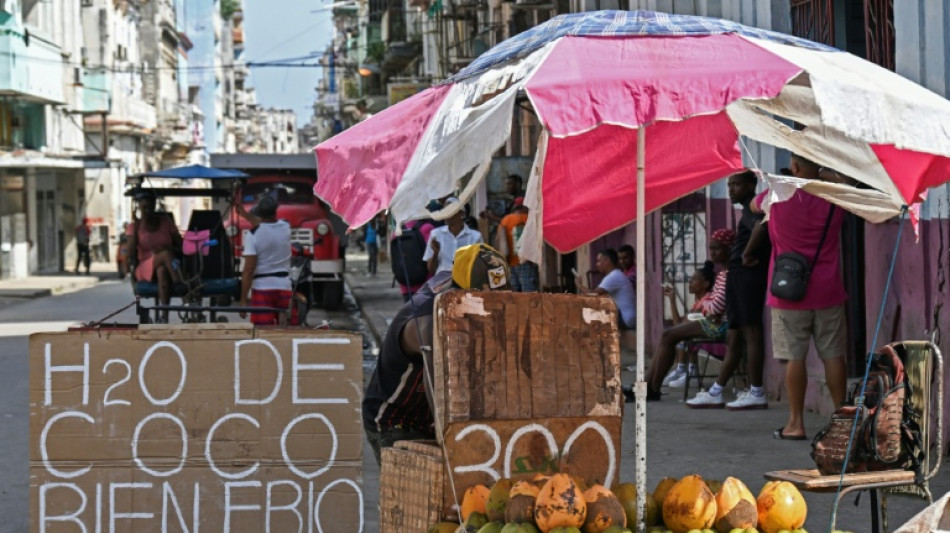
After Cuba beckons, Miami entrepreneurs are mostly reluctant to invest in the island / Photo: YAMIL LAGE - AFP

 EU vows AI rules will protect Europeans. Will they?

 Myanmar leader to visit Malaysia after migrant returns begin

 Germany's AfD poised to preside over state assembly for first time
 Australia's opposition vows 'largest cut to immigration' in country's history
 Ready, set, snooze: Sleep-deprived Japanese compete for best-rested

 Falcons thump Saints 45-24 as New Orleans marks Katrina anniversary
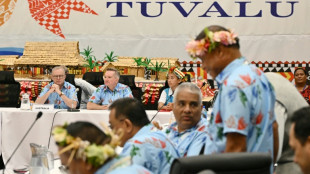 Tuvalu govt adviser says Australia overstepped in pre-COP visit
 Asian stocks mixed despite tech-led Wall St record
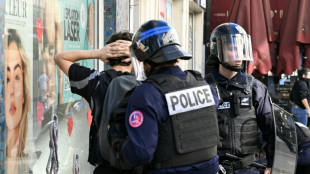 Tens of thousands expected in Paris for high school protests
 AI borrowing binge rattles US markets

 Young Canadians sue government over alleged climate failures

 White Sox down Guardians to take 2-0 series lead
 NHL record-breaker Ovechkin says current season will be his last
 France roar back in Nations League as Italy beat Turkey
 Messi readies for final farewell in Argentina send-off
 Esposito seals Italy win over Turkey in Nations League

 Russia downplays plague reports as Trump offers US help

 Trump says US moved bombers from UK base after 'threats'
 Brazilian stocks surge to record after Bolsonaro election lead

 Leaders to visit Pacific atoll at frontline of climate change

 ICC gives more details about arrest warrants for Taliban ministers
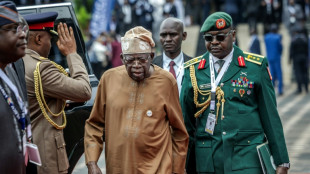 Nigeria's Tinubu confirms 32 dead after military plane crash
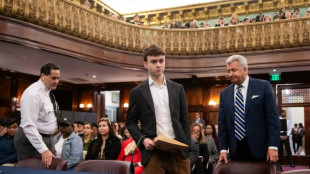 'Reckless' AI firms can't control models, says whistleblower

 Switching on brain cells: the Nobel-winning science of optogenetics

 Quebec votes as separatist surge poses test for Canada PM

Havana announced this week that it would allow Cuban emigrants to invest to address the communist island's severe economic and energy crises. But in Miami, the epicenter of the diaspora, entrepreneurs are generally reluctant.
"I don't think a single businessman, not a single Cuban in exile, will invest in this island where there is no legal security," said Ivan Herrera, director of the Univista insurance company, calling the initiative "a huge scam."
The entrepreneur, whose grandfather was a political prisoner for 12 years before fleeing to Miami, refuses to invest under what he calls the "criminal" government.
This opening by Havana, a serious breach in the island's anti-capitalist system, comes as the Cuban economy teeters on the brink of collapse. The shortage of essential goods is worsening daily, and power outages have multiplied since President Donald Trump's administration cut off Venezuelan oil supplies.
Carlos Saladrigas, president of the human resources company Regis HR Group and the think tank Cuba Study Group, viewed the move as a step in the right direction, but said that Cuban authorities needed to resolve many unanswered questions to attract investment.
"Reintegrating the diaspora into the country's economic life is essential for Cuba's future," he said.
"But behind their words lies an entire legal framework that needs to be reformed," Saladrigas said.
"The government has to say: 'We are going to discard traditional socialism and a centrally planned economy and adopt market-based measures.'"
- ‘Extremely risky’ -
Hugo Cancio, owner of the digital media outlet OnCuba and Katapulk, an online supermarket that allows the purchase and delivery of products in Cuba, was more enthusiastic.
"Of course I would invest in Cuba, and I would do so with great pleasure," he said. "Do you know why? Because it's not just an investment; I would be helping to rebuild my country."
But Pedro Freyre, a Cuban-American lawyer specializing in the island's regulatory framework, considers Cuba an "extremely risky" investment destination.
He justified this view by citing a dysfunctional banking system, a highly unstable currency, the absence of the rule of law guaranteeing private property, the failure of the centrally planned economy, and "completely dilapidated" infrastructure.
"It’s very difficult to say to yourself, 'I'm going to take the money I've saved my whole life to open a McDonald's on the Malecon (Havana's famous seaside promenade) when I don’t know if there's electricity, water, or if the Malecon is going to collapse into the sea,'" he said.
Adding to these obstacles is the fact that, under the American embargo imposed since the 1960s, Washington must allow its residents to conduct business on the island.
Herrera hoped to be able to invest "when there is a free Cuba," to support his compatriots who lack housing, infrastructure, sanitation, and electricity.
"Here in Miami, people and very large companies built the city while we arrived with nothing," he said. "In the same way, we can build and rebuild Cuba."
I.Saadi--SF-PST