
-
 Kenya reports first-ever Ebola death
-
Le Pen vows drastic cost savings to prevent French 'default'

-
 Tennis world No.1 Sinner's season over due to knee injury
-
'Eats through a straw': French teens wounded in high school protests

-
 Yemen's Houthis claim attack on Riyadh airport, deny losing territory
-
Thousands mass in France for high school protests

-
 7-Eleven exits India amid mounting competition
-
Moscow denies sanitary measures over plague reports

-
 The alleged murder by US marine on Okinawa: five things to know
-
Samoa look to recreate 2022 final run at Rugby League World Cup

-
 End of an era as Messi prepares to hang up Argentina boots
-
Asian stocks mostly up after tech-led Wall St record

-
 Superstar duo headline strong New Zealand squad for Rugby League World Cup
-
German factory orders plunge as recovery still fragile

-
 South Korea warns of possible AI use in banking hacks
-
Coco Gauff calls out online racism following China open video review

-
 EU vows AI rules will protect Europeans. Will they?
-
KVB Accelerates Middle East Footprint with Strategic MENA Regional Expansion

-
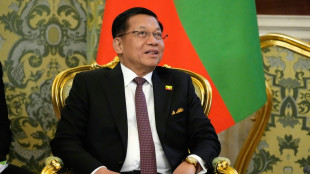 Myanmar leader to visit Malaysia after migrant returns begin
-
Purple reign: Philippines seeks to keep grip on ube throne

-
 Germany's AfD poised to preside over state assembly for first time
-
Seoul weighs steps to force North Korea landmine apology

-
 Australia's opposition vows 'largest cut to immigration' in country's history
-
Yemen's Houthis say struck Riyadh airport, other Saudi sites

-
 Ready, set, snooze: Sleep-deprived Japanese compete for best-rested
-
Changer+ Launches Stablecoin-First Self-Custodial Wallet to Make Stablecoins Easier to Use

-
 Falcons thump Saints 45-24 as New Orleans marks Katrina anniversary
-
White Sox down Guardians, Yankees on brink after Rays loss

-
 Tuvalu govt adviser says Australia overstepped in pre-COP visit
-
COP31 eyes modest steps as climate disasters multiply

-
 Asian stocks mixed despite tech-led Wall St record
-
American Nobel laureate in medicine hopes to illuminate the brain

-
 Tens of thousands expected in Paris for high school protests
-
Trump approves firing squad for convicted US military base shooter

-
 AI borrowing binge rattles US markets
-
Grappling with 'homework scams,' US universities shun AI detectors

-
 Young Canadians sue government over alleged climate failures
-
Separatists win Quebec election in test for Canada PM

-
 White Sox down Guardians to take 2-0 series lead
-
Leaders visit Pacific atoll at frontline of climate change

-
 NHL record-breaker Ovechkin says current season will be his last
-
Yemen's Houthis claim striking Riyadh airport, other Saudi sites

-
 France roar back in Nations League as Italy beat Turkey
-
Best-selling British author Jeffrey Archer dies aged 86

-
 Messi readies for final farewell in Argentina send-off
-
Military plane crash kills 32 in Nigeria

-
 Esposito seals Italy win over Turkey in Nations League
-
Olise powers France to win over Belgium in Nations League

-
 Russia downplays plague reports as Trump offers US help
-
High-flying Blazy turns to birdlife at Chanel

China approves 'ethnic unity' law condemned by rights groups
China approved what it called an "ethnic unity" law on Thursday, which rights advocates warn could further marginalise minority groups such as the Uyghurs.
The law, passed by the National People's Congress, formalises policies to promote Mandarin as the "national common language" in education, official business and public places.
China's government has been accused for decades of pursuing policies to force assimilation across the vast country into the Han majority.
Social cohesion is a key focus of the new "ethnic unity" law, which criminalises engaging in "violent terrorist activities, ethnic separatist activities, or religious extremist activities".
The law aims to "strengthen cohesion" within China, which the legislation argues is undergoing unprecedented social change.
China officially recognises 55 official ethnic minorities within its borders that speak hundreds of languages and dialects.
Government policies have already directed that Mandarin Chinese be used as the language of instruction in some areas with large minority populations, such as Tibet and Inner Mongolia.
Yalkun Uluyol, a China researcher at Human Rights Watch, described the new legislation as a "significant departure" from a Deng Xiaoping-era policy that guaranteed the right of minorities to use their own languages.
Educational institutions will now need to use Mandarin as the principal teaching language. Teenagers will now be required to have "a basic grasp" of Mandarin upon completing compulsory education.
No minority languages are specifically cited in the new law, although it will likely affect Uyghur, Mongolian and Tibetan speakers.
"It is no coincidence that the law targets spaces where children are most likely to encounter their mother tongue," Erika Nguyen from PEN America told AFP.
"The intent being to sever children's ties with their identity, history, and culture."
A recent report by PEN and the Southern Mongolian Human Rights Information Center (SMHRIC) said that more than 80 percent of Mongolian language websites in China have been "censored or banned".
Requiring fluency in Mandarin in public life could also inhibit the chances of Mongolian-speakers advancing professionally, SMHRIC director Enghebatu Togochog said in a statement.
"Economically, it marginalises Mongolians, as Chinese fluency becomes a gatekeeper for jobs and advancement," Togochog said.
The law also states that its provisions can also be applied outside China's borders.
While it calls for "strengthening ties" with overseas Chinese communities, it also warns that people outside China who "engage in activities that undermine ethnic unity" or inciting "ethnic separatism" will be held legally liable.
Q.Jaber--SF-PST