
At Milan Fashion Week, industry's darker side goes unmentioned / Photo: MIGUEL MEDINA - AFP

 Hundreds arrested in French school protests as Macron summons ministers
 WADA seeks tough anti-doping stance from Kenya

 German ex-spy chief arrested for suspected espionage, treason
 Furyk vows US will 'do more' to end Ryder Cup losing streak

 Iyer hits ton as India hammer West Indies in T20 opener
 Mandhana named India women's team captain after Kaur quits
 'The sound keeps coming back': children maimed in Ethiopia's Tigray clashes

 Paris Women's Fashion Week: the key trends

 i-payout Introduces a New Approach to Payments, Closing the Beneficiary Information Gap

 New Generation of Crypto Miners Released by ASICID

 New investor forecasts LIV Golf teams could be worth $100 mn each
 Shakira, Pique return to court over children visit arrangements
 Nobel physics prize hails 'ghostly messengers' from space
 France's Mistral unveils latest model in sovereign AI push

 Stocks climb as oil prices retreat
 Vstock Transfer Names Securities Industry Veteran Erica Goodstein General Counsel and Chief Compliance Officer

 Four Indonesian seamen return home after Somali pirate ordeal

 Crisis-striken Haiti postpones elections
 Germany arrests ex-spy chief on suspicion of giving secrets to foreign powers
 Djokovic wins China Open after de Minaur retires
 IMF warns cost-of-living shocks cause 'lasting deterioration' in affordability
 Alcaraz wins Japan Open for first title since injury return
 'We're working to keep football clean', Turkish minister says

 FIFA chief Infantino hit by Norwegian double complaint

 Exiled Catalan separatist leader Puigdemont cleared to return to Spain
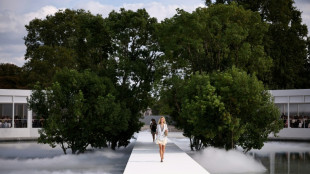
Artisans in white coats greeted guests at the Tod's fashion show in Milan Friday, crafting the Made in Italy leather and needlework items for which the company -- and country -- is renowned.
But despite that display of handcraft, there has been little mention at Milan Fashion Week of some of the industry's forgotten workers -- whom prosecutors found were working in sweatshop conditions at subcontractors for many Italian luxury brands, including Tod's.
With the glamorous catwalks, celebrities and excess of finery on display, the possibility of the recent investigations uncovering labour abuses being on anyone's mind appeared slim.
After the show, Tod's founder and chairman Diego Della Valle told AFP the company's decision to highlight its artisanal heritage was in no way linked to the recent investigations.
"No controversy -- I think we'll do good things together with the courts and trade associations. I think we're on the right track," Della Valle said.
On Tuesday, Tod's submitted to a Milan court a list of measures it was undertaking to reinforce its supply chain, including the creation of a platform to better trace supplier activity and expanded audits.
"I think that by working together like this, everyone will be involved in finding a solution," he said, adding that Italy's laws needed revising "to protect people and artisans".
- 'Product first' -
Many international guests at the show had not heard mention of the accusations of migrant labour exploitation levelled last year at over a dozen of luxury's biggest names, including Gucci, Loro Piana, Prada, Dolce & Gabbana and Ferragamo.
Allegations include around-the-clock working hours and substandard pay, breaches of safety measures and makeshift sleeping areas inside small workshops.
Asked whether it would matter to the luxury consumer, the vice president and fashion director at Nordstrom, Rickie De Sole, suggested the answer might be yes and no.
"I think the integrity of Made in Italy is incredibly important and I think that at the end of the day, to the customer, it's product first, right?" she told AFP.
Influential fashion critic and journalist Suzy Menkes, sitting in the front row, cautioned that she hadn't followed the cases in Italy but said "people do care when there are specific things that have come to light".
"But I don't think it's any different from food and various other things, where one hopes that the bigger the company is, that the more they're serious about it."
A Hong Kong content creator dressed head to toe in Tod's, 26-year-old Stephanie Hui, said people were "desensitised" to stories of sweatshop conditions in the fashion industry, with consumers feeling powerless to effect change.
"It takes a lot of people to band together to like really make a change. It's not really in our control, but definitely I think if consumers stop spending as much they'll kind of give the brands a wake-up call," she said.
- 'Want to be seen' -
Fashion industry insiders say that controlling every link in the supply chain is more complicated the bigger the company.
Stefano Aimone, CEO and creative director of Agnona, told AFP in an interview this that it depends on the company's scale.
"When you’re smaller, you have more control and can really check and know all your employees and consultants by name. When you're dealing with 400, they're just numbers, and it's unthinkable to control everything," he said.
"Something will slip through regardless, because even if you have contracts with such-and-such subcontractor, you don’t know what they then do in turn," said Aimone.
Asked whether fashion customers paid attention, Aimone said that despite some headlines, it remained "a B (business) to B (business) issue".
"The end customer doesn't know."
And even if supply chains were better known, the customer might not care, said Iuliana Stetco, 21, a fashion marketing student in Milan.
"They want to be seen, they want to be seen wearing a certain type of brand, a certain label, and so as a result they don’t care much."
E.Aziz--SF-PST