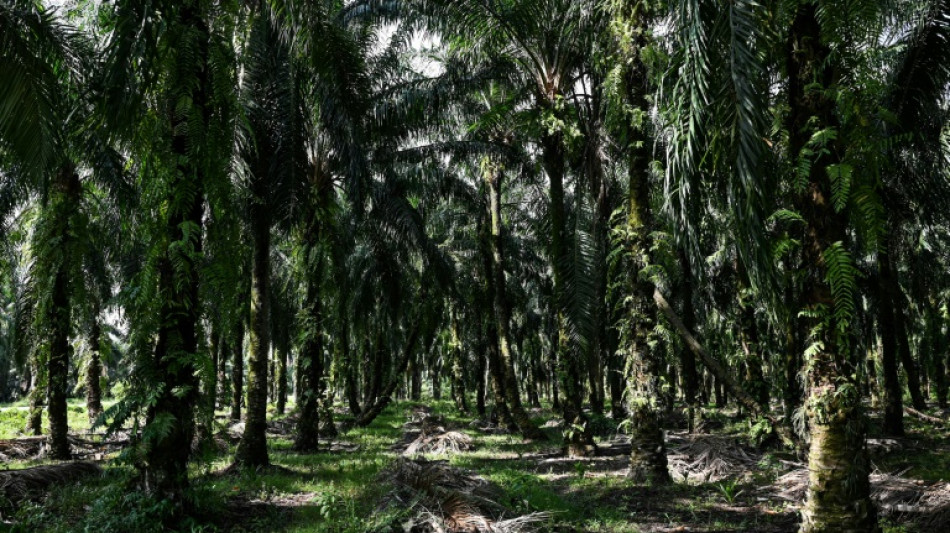
Bitter harvest: Malaysian palm oil farmers face labour crunch / Photo: Mohd RASFAN - AFP

 Arsenal stunned by fourth-tier Fleetwood in League Cup

 افتتاح وقف المحميد في دبي لدعم الأسر محدودة الدخل والحالات الإنسانية

 Brazil's Flavio Bolsonaro flees to US after election loss

 صقر غباش يدعو بريكس إلى تعميق أثرها في التوازن والتنمية الدوليين

 Flavio Bolsonaro headed to US after Brazil election defeat: US media

 American woman convicted of getting military training from Islamic State

 Alcaraz and Zverev win Vienna openers

 Israel opposition holds narrow edge over Netanyahu in first projections

 جائزة الأمير ألبرت الثاني تكرم ابتكار مبادرات محمد بن راشد في العمل الخيري

 ماسا الرفاعي تمثل أصغر المشاركات في نهائيات تحدي القراءة العربي

 Syria condemns deadly Jordan strikes as 'unacceptable violation'
 England's Fin Smith in race against time to face Australia

 Storied Paris department store seeks bankruptcy protection

 UN nuclear watchdog chief urges Iran to grant access

 الأسهم الأوروبية تتراجع تحت ضغط اضطرابات فرنسا ونتائج الشركات

 Boeing shares tumble after it releases cautious growth forecast

 Allegri suspended for two Serie A games after red card

 مصر تعمل على أدوات تمويل لتقليص مخاطر الاستثمار الصناعي

 قفزة بنسبة 58% في أسعار الكهرباء الفورية بألمانيا

 Carney moves to remake Canada alliances as US ties strained

 Serbia's students demand state media chiefs resign after poll win

 أسهم التكنولوجيا تدفع الأسواق الصينية إلى أدنى إغلاق في 14 شهراً

 Boeing releases cautious growth plan as shares fall sharply

 منع وفد دولي من دخول الضفة للمشاركة في مؤتمر بجامعة بيرزيت

 Exiled Russian dissident Navalnaya warns dictators becoming 'more cunning'

Overripe palm oil fruits hang untouched in trees while others lie rotting scattered around a plantation, as Malaysian farmers reap the bitter harvest of a severe labour shortage.
The tropical country is the world's second-biggest producer of the edible vegetable oil, which is found in many everyday goods from chocolate to cosmetics.
The sector has long been reliant on migrants from neighbouring Indonesia for back-breaking plantation work, which is shunned by most in more affluent Malaysia.
Lengthy Covid border closures had already reduced the foreign labour force, but now bureaucratic hurdles and a ban by Indonesia on sending new workers have dramatically worsened the problems.
"A lot of bunches of fruit are rotting on the trees," Suzaidee Rajan, 47, who owns a 300-acre (120-hectare) plantation in Ijok, central Selangor state, told AFP.
"We usually harvest twice a month. But now due to the labour shortage, we can (do so) just once a month. Our income has plunged and locals are angry."
With just four foreign workers -- two fewer than the number he needs -- Suzaidee now has to drive into his plantation and load the fruit onto a lorry himself.
Palm oil is a controversial commodity, blamed by environmentalists for fuelling the destruction of rainforest in Malaysia and Indonesia, which together produce 85 percent of global output.
Green groups say rapid expansion of plantations has destroyed rare animals' habitats, while there have been allegations of foreign workers being abused and mistreated on some estates.
The sector nevertheless remains a major contributor to Malaysia's economy, and has continued to attract foreign workers who can earn higher wages than back home.
Agricultural firms run large estates, while there are also numerous small-scale farmers like Suzaidee.
- 'Darkness on horizon' -
Other Malaysian industries, including construction and manufacturing, also rely on migrant workers from across Asia, and suffered as a result of lengthy pandemic border closures.
While authorities ended a freeze on hiring foreigners in February, labourers have been slow to return because of red tape and difficult negotiations with countries of origin.
Problems in the plantation sector have been particularly acute, however, and look set to get worse after Indonesia banned sending new workers to Malaysia earlier this month.
Hermono -- Indonesia's ambassador in Kuala Lumpur, who goes by one name -- said Jakarta took the decision as Malaysia was not abiding by an agreement aimed at protecting his compatriots.
The Malaysian estate owners' association says there is currently a shortage of about 120,000 workers.
And this month Minister Zuraida Kamaruddin, who oversees the plantation sector, said the industry lost 10.46 billion ringgit ($2.35 billion) in the first five months of 2022 as palm oil fruit was left unharvested.
"I can see only darkness on the horizon unless migrant workers are brought into the country immediately," farmer Sahman Duriat, who has a plantation in Ijok, told AFP.
"My earnings are falling while inflation and production costs are rising."
After the Indonesian ban was announced, Malaysia's human resources ministry vowed to address Jakarta's concerns quickly to ensure it is reversed.
For Indonesian plantation workers still in Malaysia, there is now much more to do.
"Usually we work in a group of five... but now there are just two of us," said Zan, who goes by one name, as he cut fruit from a tree while a second man loaded it into a wheelbarrow.
"We harvest 200 tonnes a month with five people but now only 80 tonnes with just two of us."
W.AbuLaban--SF-PST