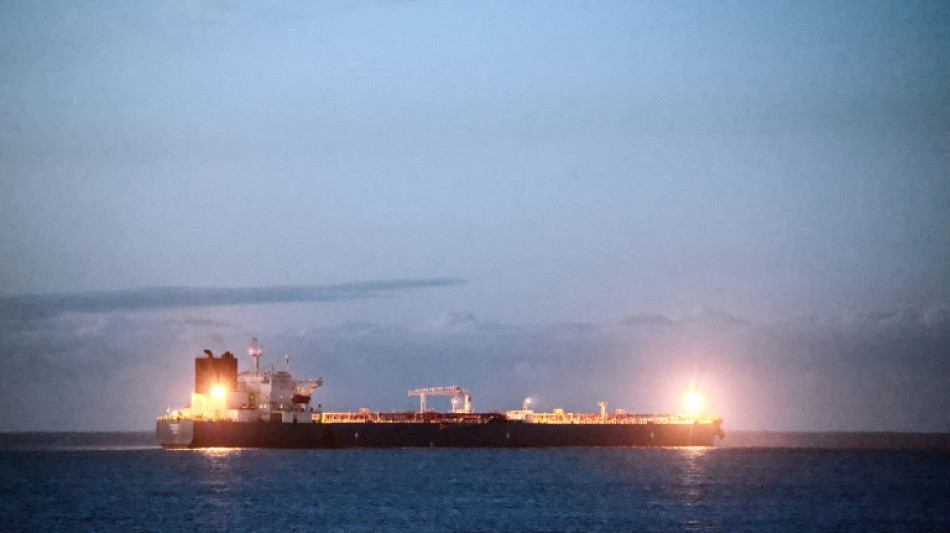
What is Russia's 'shadow fleet' and how does it work? / Photo: Thibaud MORITZ - AFP

 Gauff says online abuse was 'draining' after China Open exit

 As sector struggles, Porsche puts luxury ahead of volume
 'It's personal': Fiji minister pushes better climate finance at pre-COP

 Russia glosses over dark Soviet past in reinvented museum

 UK tax body opened probe into Man City in 2018: FT

 Yemen's Houthis claim new attacks on Saudi airports as conflict deepens
 Germany factory production at highest level for 18 months
 Thailand floods death toll rises to 60 since mid-September

 US pushes Russia for information on plague reports

 Myanmar leader lands in Malaysia for migrant return talks

 Indian central bank hikes rates for first time since 2023

 US military on Okinawa face curfew, alcohol ban after murder case
 Fierce lobbying in EU over 'forever chemicals'

 Dodgers beat Braves and Padres avoid sweep in MLB playoffs
 Mourning, war and elections as Israel marks October 7

 Messi says Argentina retirement is 'saddest day of my career'
 Oil rises and stocks fall as Hormuz worries flare

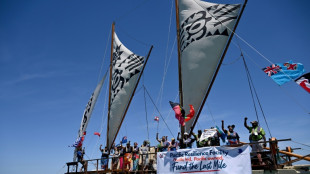 Pacific presses world for help 'surviving' climate change at pre-COP summit
 Verstappen revival to be put to the test in steamy Singapore
 US woman who survived botched execution is conscious, speaking: lawyers

 Climate champion Australia digging more coal
 Emotion, tears as Messi retires from Argentina national team
 Dodgers push Braves to the brink of MLB playoff exit

 Crisis-stricken Haiti postpones elections
 N. Korea's Kim pledges 'invariable support' in Putin birthday letter
France's interception of an oil tanker suspected of being part of Russia's "shadow fleet" draws attention to how the vessels allegedly operate in order to escape Western sanctions.
- What is the 'shadow fleet'? -
Russia has reportedly built up a flotilla of old oil tankers of opaque ownership to get around sanctions imposed by the European Union, United States and the G7 group of nations over Moscow's all-out invasion of Ukraine that started in 2022.
The sanctions, based on a price-cap on Russian crude to limit Moscow's revenues used to pursue its war, have shut out many tankers carrying Russian oil from Western insurance and shipping systems.
The EU lists 598 vessels that are banned from European ports and maritime services.
The US -- which seized a Russian-flagged tanker in the north Atlantic early in January -- lists 183 vessels and asserts an extraterritorial right to act against them.
- How does it operate? -
According to experts, and a briefing paper by the European Parliament, the "shadow fleet" obscures the ownership of vessels, and ensures the companies managing them are outside Russia and fly flags of convenience -- or even sometimes falsely claimed flags.
In addition, the vessels have been observed turning off their Automatic Identification System, to go "dark" at sea, where ship-to-ship transfers of Russian oil occur.
Many of the vessels are old, meaning they can be more easily written off if seized, or forfeited if they cause oil spills.
The Kyiv School of Economics, which runs a "Russian Oil Tracker", said in its latest report, in December, that 78 percent of the shadow-fleet tankers it monitored in November were older than 15 years.
"The top three flags used by Russian shadow-fleet vessels transporting crude oil are false/unknown flag, Sierra Leone, and Cameroon," it said.
It said management companies for the vessels were located in the United Arab Emirates, the Seychelles, Mauritius, the Marshall Islands and elsewhere.
The Kyiv School of Economics also said that "India remains the biggest Russian seaborne crude importer with 40 percent share in total Russian exports".
- What is being done against it? -
The United States, which is leading efforts to try to broker an end to the conflict in Ukraine, in early January stepped up its sanctions against Russia's oil industry, including the shadow fleet.
When its forces seized the tanker in the Atlantic on January 7, the White House said the vessel was "deemed stateless after flying a false flag".
Russia said on Tuesday that the US still had not released two Russian crew members from the tanker.
The European Union is considering expanding its powers to board Russia's shadow-fleet vessels, according to a document by its foreign-policy service viewed by Politico in October.
The French navy on Thursday boarded an oil tanker in the Mediterranean suspected of belonging to Russia's shadow fleet.
President Emmanuel Macron said on X the vessel, "coming from Russia, was subject to international sanctions and suspected of flying a false flag".
Britain said it provided tracking and monitoring support for the French interception.
- How is Russia reacting? -
When France in late September detained a Russian-linked ship called the Boracay, a vessel claiming to be flagged in Benin, Russian President Vladimir Putin condemned the move as "piracy".
After the US seizure of the tanker in early January, the Russian foreign ministry warned the move could "result in further military and political tensions", and said it was worried by "Washington's willingness to generate acute international crisis situations".
K.Hassan--SF-PST