
US trade gap shrinks to smallest since 2009 as imports fall / Photo: CHARLY TRIBALLEAU - AFP/File

 HSBC 'consults' over UK unit job cuts amid AI adoption

 UK court quashes five ex-traders' Libor rate rigging convictions

 XM Receives “Global Customer Experience Leader Award 2026” at the TrustFinance Performance Awards

 Stocks slide as oil climbs on Mideast flareup

 Heavy casualties in Ukraine after Russian strikes

 French wine harvest set to hit historic low

 Kyiv 'cannot agree' to EU membership limiting food exports: minister

 Arteta targets more Arsenal glory after signing new deal until 2030

 Russell hit with Singapore grid penalty for taking new power unit

 Spotify expands audiobooks to more than 180 markets

 French-Japanese duo wins chemistry Nobel for solving molecular 'mystery'

 England's Nations League surge helps heal World Cup wounds

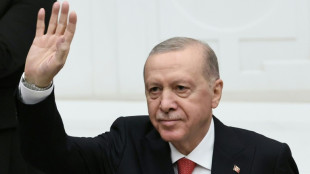 Mayor of opposition stronghold Izmir defects to Erdogan party

 Mertens beats Gauff to set up Swiatek clash at China Open

 Benin full of pride at role in Messi's last dance

 France suspends stun grenade use at student protests ahead of PM speech

 Indonesian court hears 'negligence' complaint against state over fires, haze

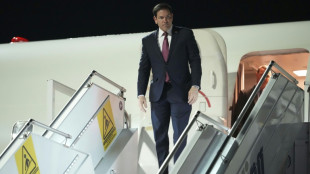 Rubio in Greece to urge against Western civilisation 'decline'

 Micron workers at Taiwan plant vote in favour of strike

 In 'The Social Reckoning,' Jeremy Allen White takes on Facebook's 'frightening' ambition

 Chip industry activists call for South Korea to recognise cancer cases

 Famine-scarred southern Madagascar braces for El Nino

 How the EU regulates lobbyists

 I.Coast refuge offers lifelong care for youngsters scorned as 'sorcerers'

 Indian central bank hikes rates for first time in more than 3 years

The US trade deficit made a sharp and unexpected pullback in October, reaching its lowest level since 2009 as goods imports dropped while President Donald Trump's tariffs took hold, government data showed Thursday.
The overall trade gap plunged 39 percent to $29.4 billion in October, said the Department of Commerce, as imports dropped by 3.2 percent.
The deficit was significantly smaller than a $58.4 billion median forecast from surveys of economists by Dow Jones Newswires and The Wall Street Journal.
The release of the trade data was delayed by more than a month due to a lengthy government shutdown last year, depriving officials and companies of updated figures as they assess the health of the world's biggest economy.
While US exports rose by $7.8 billion in October to $302.0 billion, imports dropped by $11.0 billion to $331.4 billion.
This was largely due to a tumble in goods imports, with consumer goods declining $14.0 billion. Within the category, pharmaceutical preparations fell sharply, the Commerce Department said.
Imports of industrial supplies and materials like nonmonetary gold also dropped.
The figures underscore how, since returning to the presidency last year, Trump's fast-changing and sweeping tariff policies have heavily swayed trade flows.
As the US leader unveiled wide-ranging tariffs on imports from various trading partners, businesses in the country rushed to stock up on inventory ahead of planned hikes in duties.
This has allowed many firms to avoid passing on the full cost of tariffs to consumers, at least for now.
As US households grapple with cost-of-living worries, Trump has more recently broadened the range of goods that are exempted from certain tariffs -- covering key agriculture imports. But many of these exemptions were due to take effect in November.
As of mid-November, The Budget Lab at Yale University estimated that consumers face an overall average effective tariff rate that is the highest since the 1930s.
The US trade deficit was $48.1 billion in September.
Although Trump's tariffs have influenced trade flows this year, a large swath of them also face legal challenges.
In particular, the Supreme Court is due to rule on the legality of tariffs imposed using the International Emergency Economic Powers Act, after hearing arguments in November.
If the conservative-majority high court were to rule that the president overstepped his authority in imposing these duties, it could temporarily hit many country-specific tariffs that the administration has rolled out.
K.AbuTaha--SF-PST