Bulgaria takes hesitant step into the eurozone / Photo: Nikolay DOYCHINOV - AFP/File

 US woman who survived botched execution is awake and speaking
 From 1800s to modern pharma: a Nobel-winning chemistry quest
 Southampton boss Eckert given suspended ban over 'Spygate'
 Russia warns of 'false' information as second plague case reported
 IEA ready to release more oil reserves if necessary
 HSBC 'consults' over UK unit job cuts amid AI adoption
 UK court quashes five ex-traders' Libor rate rigging convictions
 XM Receives “Global Customer Experience Leader Award 2026” at the TrustFinance Performance Awards
 Stocks slide as oil climbs on Mideast flareup
 Heavy casualties in Ukraine after Russian strikes
 French wine harvest set to hit historic low
 Kyiv 'cannot agree' to EU membership limiting food exports: minister
 Arteta targets more Arsenal glory after signing new deal until 2030
 Russell hit with Singapore grid penalty for taking new power unit

 Spotify expands audiobooks to more than 180 markets
 French-Japanese duo wins chemistry Nobel for solving molecular 'mystery'
 England's Nations League surge helps heal World Cup wounds

 Mayor of opposition stronghold Izmir defects to Erdogan party
 Mertens beats Gauff to set up Swiatek clash at China Open
 Benin full of pride at role in Messi's last dance

 France suspends stun grenade use at student protests ahead of PM speech
 Indonesian court hears 'negligence' complaint against state over fires, haze
 Rubio in Greece to urge against Western civilisation 'decline'
 Micron workers at Taiwan plant vote in favour of strike
 In 'The Social Reckoning,' Jeremy Allen White takes on Facebook's 'frightening' ambition
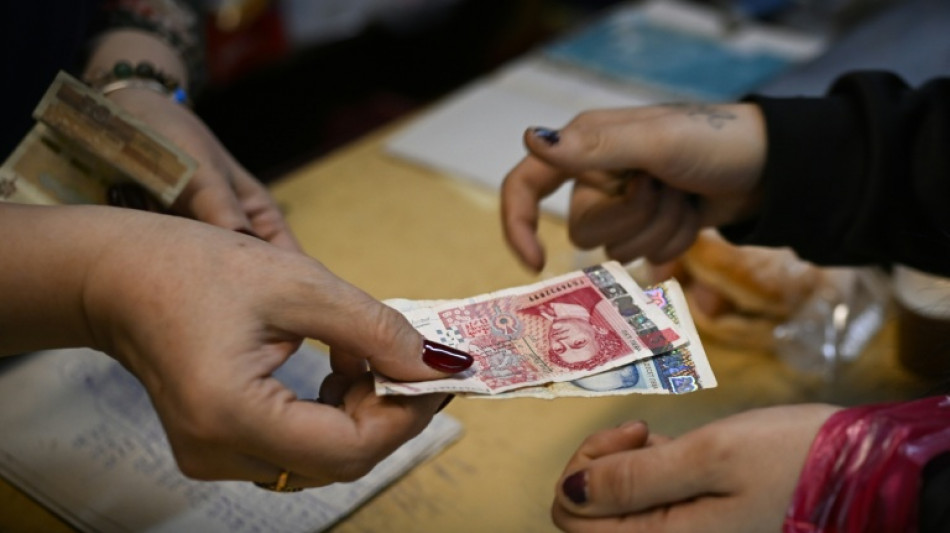
Bulgaria will become the 21st country to switch to the euro when it enters the New Year on Thursday, amid concerns the move could usher in higher prices and add to political instability rattling the Balkan country.
When midnight strikes on Wednesday, Bulgaria will give up the lev currency, which has been in use since the late 19th century.
While successive governments in the country of 6.4 million people have advocated joining the euro, hoping that it will boost the economy of the European Union's poorest member, reinforce ties to the West and protect against Russia's influence. Some have opposed the switch however.
European Commission president Ursula von der Leyen said Wednesday that Bulgaria's move into the eurozone marked "an important milestone for the country, for the history of the euro, and for the EU as a whole."
The euro will bring "practical benefits to Bulgarian citizens and businesses," she added.
"It will make travelling and living abroad easier, boost the transparency and competitiveness of markets, and facilitate trade."
Bulgaria, which joined the EU in 2007, faces unique challenges however, including anti-corruption protests that recently swept a conservative-led government from office, leaving the country on the verge of its eighth election in five years.
Outgoing Prime Minister Rossen Jeliazkov still said on Tuesday that his cabinet had accomplished a milestone.
"Bulgaria is ending the year with a gross domestic product of 113 billion euros (nearly $132.75 billion) and economic growth of more than three percent, which places us among the top five countries in the EU," he said.
He added that inflation in the Black Sea country, which hovers around 3.6 percent, was "linked to increased purchasing power" and a less corrupt economy, and not to the looming euro switch.
- Cheers, fears and queues -
Some Bulgarians worry the introduction of the euro could lead to price increases.
Those fears were fuelled in part by a protest campaign that emerged this year to "keep the Bulgarian lev", which tapped into a generally negative view of the single currency among much of the population.
According to the National Statistical Institute, food prices rose by five percent year-on-year in November, more than double the eurozone average.
"Unfortunately, prices no longer correspond to those in levs (...) 40 levs is not 20 but 30 euros for certain products," pastry shop owner Turgut Ismail, 33, told AFP, saying that prices have already begun surging.
Some people, including business owners, have complained that it has been difficult to get their hands on euros, with shopkeepers saying they haven't received the euro starter packages they ordered.
Banks said there could be some disruption at cash machines in the hours before the switch. On Tuesday, people queued outside the Bulgarian National Bank and several currency exchange offices in the capital Sofia to obtain euros.
Elena Shemtova, 37, who owns a small gallery and jewellery shop in Sofia, said she is optimistic.
"We will experience difficulties at first, there will be problems with giving change, but within a month we will have gotten used to it," she told AFP.
According to the latest Eurobarometer survey, 49 percent of Bulgarians are against the single currency.
Amid the political instability, any problems with euro adoption would be seized on by anti-EU politicians, said Boryana Dimitrova of the Alpha Research polling institute.
"There will be challenges, but we are counting on the tolerance and understanding of both citizens and businesses," said Jeliazkov.
He stressed that introducing the euro will have "a positive long-term effect on the Bulgarian economy and on the environment in which the country is developing".
The euro was first rolled out in 12 countries on January 1, 2002. Croatia was the last to join in January 2023.
Bulgaria's accession will bring the number of Europeans using the euro to more than 350 million.
R.Shaban--SF-PST