
Tiny tech, big AI power: what are 2-nanometre chips? / Photo: I-Hwa CHENG - AFP/File

 US woman who survived botched execution is awake and speaking

 From 1800s to modern pharma: a Nobel-winning chemistry quest

 Southampton boss Eckert given suspended ban over 'Spygate'

 Russia warns of 'false' information as second plague case reported

 IEA ready to release more oil reserves if necessary

 HSBC 'consults' over UK unit job cuts amid AI adoption

 UK court quashes five ex-traders' Libor rate rigging convictions

 XM Receives “Global Customer Experience Leader Award 2026” at the TrustFinance Performance Awards

 Stocks slide as oil climbs on Mideast flareup

 Heavy casualties in Ukraine after Russian strikes

 French wine harvest set to hit historic low

 Kyiv 'cannot agree' to EU membership limiting food exports: minister

 Arteta targets more Arsenal glory after signing new deal until 2030

 Russell hit with Singapore grid penalty for taking new power unit

 Spotify expands audiobooks to more than 180 markets

 French-Japanese duo wins chemistry Nobel for solving molecular 'mystery'

 England's Nations League surge helps heal World Cup wounds

 Mayor of opposition stronghold Izmir defects to Erdogan party

 Mertens beats Gauff to set up Swiatek clash at China Open

 Benin full of pride at role in Messi's last dance

 France suspends stun grenade use at student protests ahead of PM speech

 Indonesian court hears 'negligence' complaint against state over fires, haze

 Rubio in Greece to urge against Western civilisation 'decline'

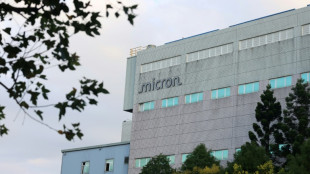 Micron workers at Taiwan plant vote in favour of strike

 In 'The Social Reckoning,' Jeremy Allen White takes on Facebook's 'frightening' ambition

Taiwan's world-leading microchip manufacturer TSMC says it has started mass producing next-generation "2-nanometre" chips.
AFP looks at what that means, and why it's important:
- What can they do? -
The computing power of chips has increased dramatically over the decades as makers cram them with more microscopic electronic components.
That has brought huge technological leaps to everything from smartphones to cars, as well as the advent of artificial intelligence tools like ChatGPT.
Advanced 2-nanometre (2nm) chips perform better and are more energy-efficient than past types, and are structured differently to house even more of the key components known as transistors.
The new chip technology will help speed up laptops, reduce data centres' carbon footprint and allow self-driving cars to spot objects quicker, according to US computing giant IBM.
For artificial intelligence, "this benefits both consumer devices -- enabling faster, more capable on-device AI -- and data centre AI chips, which can run large models more efficiently", said Jan Frederik Slijkerman, senior sector strategist at Dutch bank ING.
- Who makes them? -
Producing 2nm chips, the most cutting-edge in the industry, is "extremely hard and expensive", requiring "advanced lithography machines, deep knowledge of the production process, and huge investments", Slijkerman told AFP.
Only a few companies are able to do it: TSMC, which dominates the chip manufacturing industry, as well as South Korea's Samsung and US firm Intel.
TSMC is in the lead, with the other two "still in the stage of improving yield" and lacking large-scale customers, said TrendForce analyst Joanne Chiao.
Japanese chipmaker Rapidus is also building a plant in northern Japan to make 2nm chips, with mass production slated for 2027.
- What's the political impact? -
TSMC's path to mass 2nm production has not always been smooth.
Taiwanese prosecutors charged three people in August with stealing trade secrets related to 2nm chips to help Tokyo Electron, a Japanese company that makes equipment for TSMC.
"This case involves critical national core technologies vital to Taiwan's industrial lifeline," the high prosecutors' office said at the time.
Geopolitical factors and trade wars are also at play.
Nikkei Asia reported this summer that TSMC, which counts Nvidia and Apple among its clients, will not use Chinese chipmaking equipment in its 2nm production lines to avoid disruption from potential US restrictions.
TSMC says they plan to speed up production of 2nm chips in the United States, currently targeted for "the end of the decade".
- How small is two nanometres? -
Extremely tiny -- for reference, an atom is approximately 0.1 nanometres across.
But in fact 2nm does not refer to the actual size of the chip itself, or any chip components, and is just a marketing term.
Instead "the smaller the number, the higher the density" of these components, Chiao told AFP.
IBM says 2nm designs can fit up to 50 billion transistors, tiny components smaller than a virus, on a chip the size of a fingernail.
To create the transistors, slices of silicon are etched, treated and combined with thin films of other materials.
A higher density of transistors results in a smaller chip or one the same size with faster processing power.
- Can chips get even better? -
Yes, and TSMC is already developing "1.4-nanometre" technology, reportedly to go into mass production around 2028, with Samsung and Intel not far behind.
TSMC started high-volume 3nm production in 2023, and Taiwanese media says the company is already building a 1.4nm chip factory in the city of Taichung.
As for 2nm chips, Japan's Rapidus says they are "ideal for AI servers" and will "become the cornerstone of the next-generation digital infrastructure", despite the huge technical challenges and costs involved.
Z.AbuSaud--SF-PST