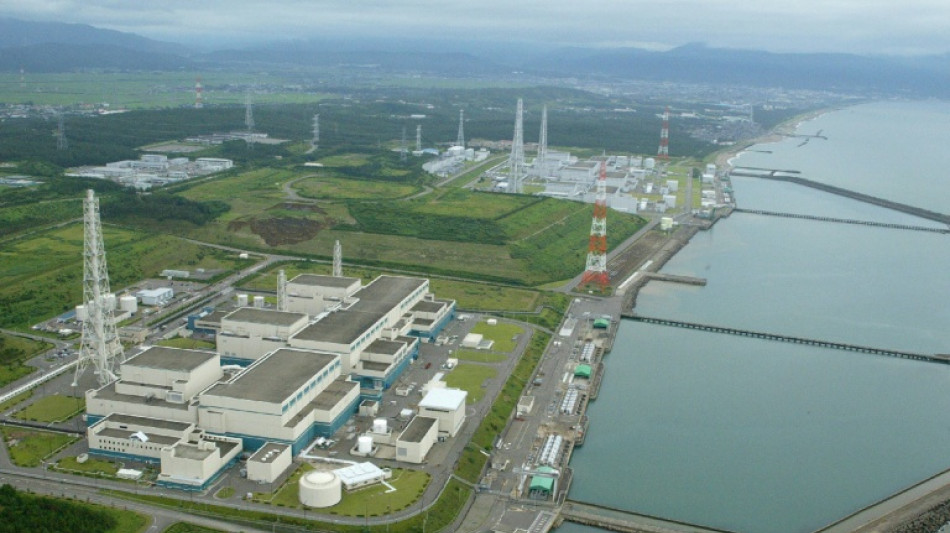
World's biggest nuclear plant edges closer to restart / Photo: STR - JIJI Press/AFP

 Dodgers beat Braves to advance in MLB playoffs, Rays oust Yankees

 'A sun as black as my lungs': how corruption crucified a polluted Albania city

 The British historian helping the French rediscover de Gaulle
 Dodgers beat Braves to advance, Guardians survive in MLB playoffs

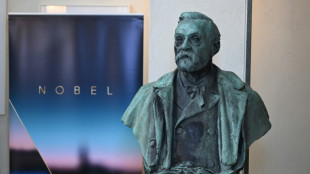 Latin American, Caribbean women top Nobel literature buzz

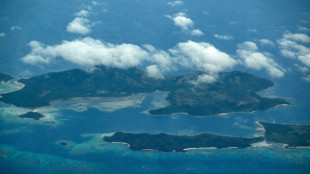 US says Fiji-based Chinese official paid bribes for Beijing

 After botched US execution, Christa Pike was nearly taken off life support

 Guinea-Bissau junta urges military unit loyal to ex-president to disarm

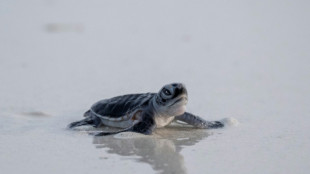 As species decline, green turtles offer glimmer of hope

 Brothers Scott and Beauden Barrett named to start for All Blacks

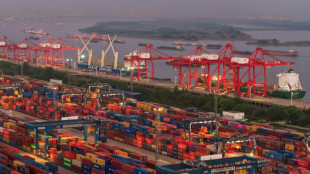 EU trade chief seeks to dial down China tensions
 'Never again Bolsonaro': thousands march ahead of Brazil election runoff

 After botched execution, US woman was nearly taken off life support before revival
 Searing AIDS drama 'Elsinore' opens London film festival

 Evicted pensioner who sparked Spain housing protests dies: tenant union

 Golf star Rahm quitting LIV tour over 'unacceptable' terms

 Thousands march fearing return of a Bolsonaro presidency in Brazil

 French PM denies police ordered to confront student protesters

 Rubio touts US power, calls on Europe to emerge from 'slumber'

 Trump says 'we don't think' Russian plague is bio-weapon

 Five children among 26 killed in Ukraine after Russian strikes
 Man City should 'accept' punishment for rule breaches, says Lineker
 US woman who survived botched execution is awake and speaking
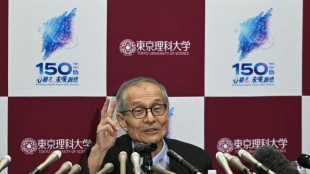 From 1800s to modern pharma: a Nobel-winning chemistry quest

 Southampton boss Eckert given suspended ban over 'Spygate'

Japanese local authorities approved the restart of the world's biggest nuclear plant on Friday for the first time since the 2011 Fukushima disaster.
Hideyo Hanazumi, governor of Niigata province where the Kashiwazaki-Kariwa plant is located, told a news conference he "would approve" the resumption, which will need final permission by Japan's nuclear regulator.
The plant was taken offline when Japan pulled the plug on nuclear power after a colossal earthquake and tsunami sent three reactors at the Fukushima atomic plant into meltdown in 2011.
However, the resource-poor nation now wants to revive atomic energy to reduce its heavy dependence on fossil fuels, achieve carbon neutrality by 2050 and meet growing energy needs from artificial intelligence.
Fourteen reactors, mostly in western and southern regions, have resumed operation since the post-Fukushima shutdown after strict safety standards were imposed.
The 400-hectare (1,000-acre) Kashiwazaki-Kariwa plant on the Sea of Japan coast facing the Korean peninsula would be the first restart for Fukushima operator Tepco since the disaster.
The huge facility in central Japan has been fitted out with a 15-metre (50-foot) wall in case of tsunamis, new power backup systems on higher ground and other measures.
Before the 2011 quake and tsunami, which killed around 18,000 people, nuclear power generated about a third of Japan's electricity, with fossil fuels contributing most of the rest.
Power company Kansai Electric said in July it was taking an initial step towards building the nation's first new nuclear reactor since the Fukushima disaster.
Japan is the world's fifth-largest single-country emitter of carbon dioxide, after China, the United States, India and Russia, and is heavily dependent on imported fossil fuels.
Nearly 70 percent of Japan's power needs in 2023 were met by power plants burning coal, gas and oil -- a figure Tokyo wants to slash to 30-40 percent over the next 15 years.
Almost all these fossil fuels must be imported, at a cost of around $500 million per day.
Japan passed a law in June allowing nuclear reactors to operate beyond 60 years to compensate for stoppages caused by "unforeseeable circumstances".
It aims to make renewables its top power source by 2040.
Under the plan, nuclear power will account for around 20 percent of Japan's energy supply by 2040 -- up from 5.6 percent in 2022.
B.AbuZeid--SF-PST