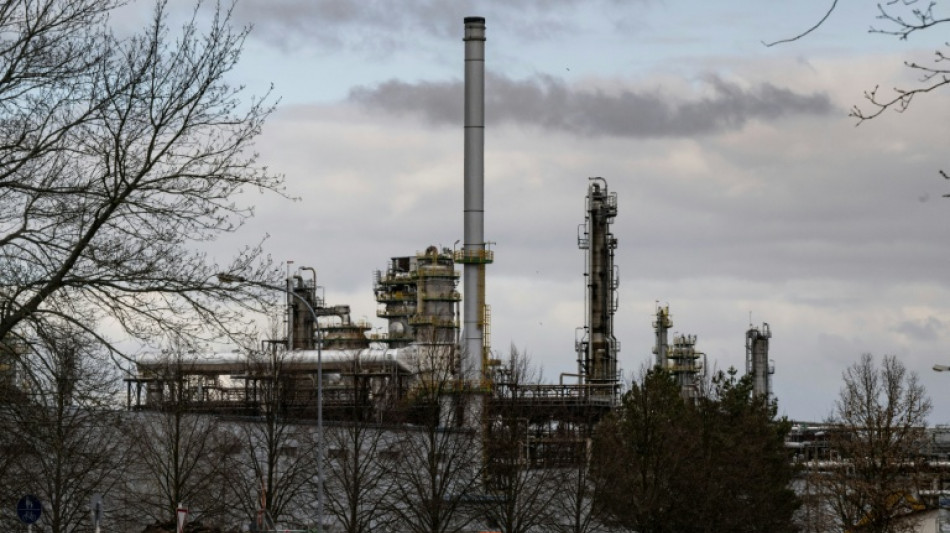
Berlin says Rosneft subsidiaries not impacted by US sanctions / Photo: John MACDOUGALL - AFP/File

 High school students turn out for new protests across France

 Bid by Italy's Intesa bank to take over MPS gets boost
 Stablecoins Are Quietly Becoming Business Infrastructure, NOWPayments Data Shows
 Oil surges, stocks sink as US reportedly eyes new Iran strikes

 Woman in botched US execution walking, mentally 'foggy': lawyer
 Farhan hopes Pakistan's new combination takes off in Sri Lanka T20Is

 Teenager Andreeva seals China Open semi-final with Bartunkova
 Britain's Burnham says open to Germany joining warplane project

 Kovac's tough love has Dortmund dreaming of title charge

 China announces candidate for WHO chief

 South Korea test-fires its first homegrown hypersonic weapon: presidency

 ONAR Advances Nasdaq Listing Preparation Following Advertise Purple Acquisition and Financing

 Thailand opens extradition process for reporter sought by China

 France struggles to wean social housing off gas

 Germany lifts GDP forecast as economy withstands Iran war

 Sri Lanka appoints Kusal Mendis as Test captain
 Norris confident McLaren can shine in Singapore
 Alex Bodi pushes ahead with expansion: ALIX LASERS showroom planned for Bucharest
 Fossil fuels off COP31 agenda as global output keeps rising
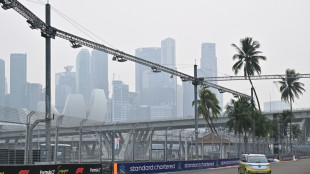 Haze not 'a threat' to Singapore F1 race: organisers

 COP31 organisers say to seek 'ambitious' action with their text

 Bartunkova thrashes Muchova to reach China Open semi-finals
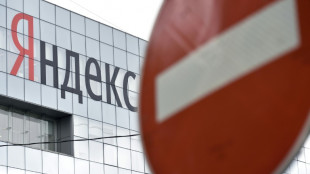 Drone hits Yandex data centre, in first such attack on Russia

 Oil prices surge and stocks sink on fresh inflation worries

 AI startup Manus raises $500m after Meta acquisition blocked by China
US sanctions targeting Rosneft will not impact the Russian oil giant's German subsidiaries, the German government told AFP Tuesday, downplaying fears their operations could be affected as they were not formally excluded.
Last week US President Donald Trump slapped sanctions on Rosneft and another Russian oil giant, Lukoil, complaining that talks with Vladimir Putin on ending the Ukraine war were going nowhere.
Rosneft's German business operations -- it still holds stakes in three German refineries that account for 12 percent of the country's refining capacity -- were not provided an exemption.
Berlin has placed the assets under state control and insists they are "decoupled" from their Russian parent company, but it has held off from a full nationalisation, instead seeking a buyer for the shares.
Concerns had mounted that Rosneft's German operations might be forced to halt, with reports saying that oil traders and banks were threatening to cut them off.
But the economy ministry said that it had now "received assurances from the relevant US authorities that the sanctions are not intended to target Rosneft's German subsidiaries".
"Business transactions with the subsidiaries can continue" once the sanctions, which will freeze Rosneft's assets and prohibit US companies from doing business with it, come into effect, a spokesman told AFP.
- Ownership limbo -
The US administration had provided a document offering reassurance that the sanctions are not intended to target German subsidiaries, and Berlin expects to soon receive "further clarifications that provide legal certainty", he said.
The spokesman noted that Rosneft's German businesses "cannot be controlled from Russia and do not generate income for the Russian parent company or the Russian state".
Britain also sanctioned Rosneft last week, and provided an exemption to the company's German subsidiaries.
The German government placed Rosneft's German assets under the trusteeship of the federal energy regulator in September 2022, in response to Russia's full-scale invasion of Ukraine.
But Berlin has struggled to find a permanent solution, and has been forced to extend trusteeship every six months while it hunts for a buyer for the assets.
The Financial Times reported the Qatar Investment Authority had expressed interest, but Rosneft was reluctant to sell, arguing they would have been more valuable had Berlin not seized them.
Rosneft's interests in Germany include a stake in the major PCK refinery, which supplies oil to Berlin and the surrounding region.
A spokeswoman for the refinery told AFP that PCK was "in contact with the energy ministry about the ongoing talks with the US sanctions authorities".
After Moscow sent its forces into Ukraine, Germany sought to take control of a swathe of Russian energy assets in the country.
It seized Russian gas firm Gazprom's subsidiary in the country, which had been a key energy supplier to Germany before the war but slashed deliveries in apparent retaliation for Western sanctions on Moscow.
The German government also had to step in to nationalise Uniper after the gas importer was pushed to the brink of bankruptcy when Gazprom halted its deliveries.
I.Saadi--SF-PST