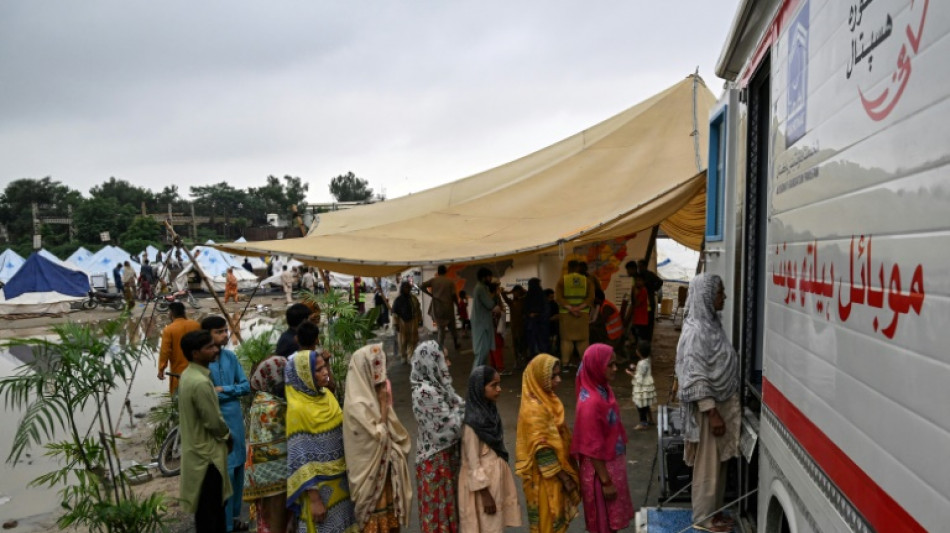
Floods leave women struggling in Pakistan's relief camps / Photo: Aamir QURESHI - AFP

 Fernandez logs record lap at Indonesia MotoGP practice

 Navi Pillay: S.Africa's global rights activist and Nobel winner
 Ufunded Launches “Spotlight” Series, Documenting the Minds Shaping Modern Trading
 Russell goes fastest in practice for smoggy Singapore GP
 For exiled Russian director Zvyagintsev, triumph without belonging
 Home hope Zheng storms into China Open semi-finals

 Zverev churns out win in Shanghai Masters opener
 Hurricane Isaias strengthens en route to US Gulf Coast

 US activists deploy poll volunteers over Trump intimidation fears

 Saint Laurent designer Vaccarello leaves after glittering decade
 'Tough to stay here': Nepal flood survivors wait for homes

 Malaysia closes schools in capital, parts of country due to haze

 Buccaneers stun Cowboys for first win of NFL season
 Activists hope trial will stop 'forever chemicals' at Italy plant
 Guardians rally for 9-5 victory over White Sox to stay alive in MLB playoffs
 Asian stocks mixed amid AI concerns, oil dips after surge

 Wallabies expect fast-paced All Blacks in Bledisloe opener
 Tech scammer Elizabeth Holmes focus of documentary by absurdist Nathan Fielder

 Climate hopes shift from politics to the courts
 Will Nobel Peace Prize pick make waves at the White House?

 Trump rules out new Iran attack before US midterm elections
 Far-right influencer shows Israel's coarse political turn

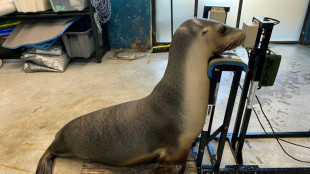 Seals and sea lions get hearing tested at Australia zoo

 Mourinho's Real Madrid playing catch-up in Clasico countdown

 Joy as USS Lincoln back home after troubled Gulf deployment

In a former classroom, now a makeshift relief camp, pregnant women take refuge from the floods that have ravaged eastern Pakistan, their bodies aching, eyes heavy with exhaustion and silent despair.
Waiting for the water that swallowed their homes to recede, women in Chung, a settlement on Lahore's outskirts, have limited access to sanitary pads and essential medicines, including pregnancy-related care.
Shumaila Riaz, 19-years-old and seven months pregnant with her first child, spent the past four days in the relief camp, enduring pregnancy cramps.
"I wanted to think about the child I am going to have, but now, I am not even certain about my own future," she told AFP.
Clad in dirty clothes they have worn for days and with unbrushed hair, women huddle in the overcrowded school hosting more than 2,000 people, surrounded by mud and stagnant rainwater.
"My body aches a lot and I can't get the medicines I want here," said 19-year-old Fatima, mother to a one-year-old daughter and four months pregnant.
"I used to eat as I please, sleep as I please, walk as I please -- that is all gone now. I can't do that here," added Fatima, who asked AFP not to use her real name.
Monsoon rains over the past week swelled three major rivers that cut through Punjab province, Pakistan's agricultural heartland and home to nearly half of its 255 million people.
The number of affected people rose on Sunday to more than two million, according to provincial senior minister Marriyum Aurangzeb.
Around 750,000 people have been evacuated, of whom 115,000 were rescued by boat -- making it the largest rescue operation in Punjab's history, according to the provincial government.
The flooded rivers have affected mostly rural areas near their banks but heavy rain also flooded urban areas, including several parts of Lahore -- the country's second-largest city.
While South Asia's seasonal monsoon brings rainfall that farmers depend on, climate change is making the phenomenon more erratic, and deadly, across the region.
Landslides and floods triggered by heavier-than-usual monsoon rains have killed more than 850 people nationwide since June.
The latest downpour has killed at least 32 people, the provincial minister said on Sunday.
- Infections and trauma -
Sleeping in tents held together with thin wooden sticks, women displaced by the floods struggle to get sanitary pads and clean clothes when theirs are stained by blood from their periods.
Menstruation remains a taboo topic in Pakistan, with many women discouraged from speaking about it.
"We are struggling to get pads for when we get our period. And even if we do, there are no proper bathrooms to use," said Aleema Bibi, 35, as her baby slept on a sheet soiled with mud.
"We go to the homes nearby to use the bathroom," she added.
Jameela, who uses only one name, said she seeks privacy in a makeshift bathroom next to a cowshed.
"We wait for men in these homes to leave, so that we can go use the bathrooms and change our pads," she said.
Outside the medical truck beside the relief camp, a concerned woman asked where to take her eight-month-pregnant daughter-in-law who had gone into labour, AFP journalists saw.
The pregnant women are also vulnerable to infectious diseases, according to doctors in the medical camp set up by a local NGO.
"I receive around 200 to 300 patients every day with different infections and water-borne diseases," said Fahad Abbas, 27, a doctor at the medical camp.
"There are a lot of patients here who are going through psychological trauma, especially women and children, after losing their homes."
Even without the crisis of a flood, 675 babies under one month old die every day in Pakistan, along with 27 women in perinatal stages from preventable complications, according to the World Health Organization.
Another woman, who wanted to stay anonymous, said the medicine she once used to manage her period cramps was now too difficult to buy.
"We escaped death, but this misery is no less than death either," Jameela said.
P.AbuBaker--SF-PST