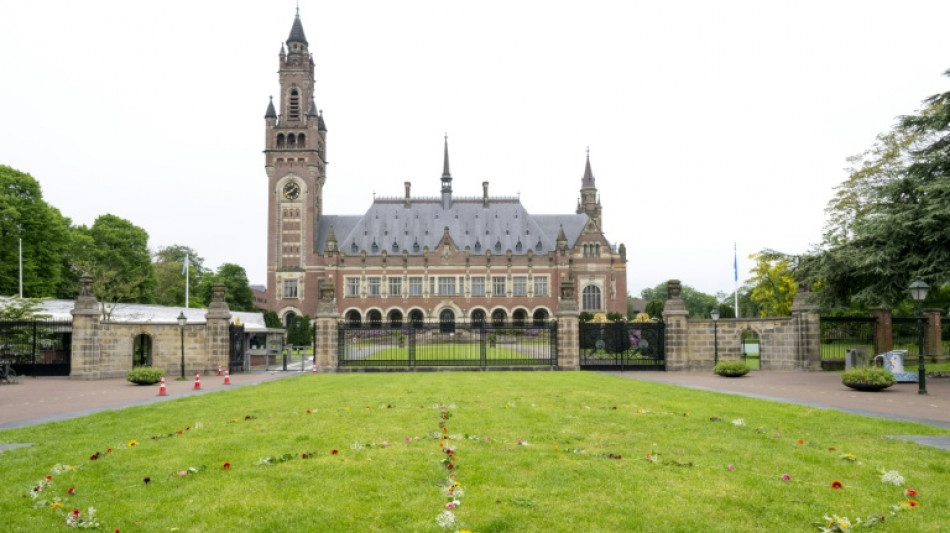
ICJ sides with E.Guinea in spat with Gabon over oil-rich islands / Photo: Nick Gammon - AFP

 Ravindra fit for New Zealand ODI series against India

 All Blacks lose four players for second Wallabies Test

 Spanish women return to action with 2-0 friendly win over USA

 Bordeaux-Begles end wait for away win before Champions Cup defence

 Traumatized Panamanians begin quake recovery

 Palestinian Mahmoud Abu Hamda wins top photography prize at Bayeux

 Inter Milan dominate Parma to go top of Serie A

 Barca extend perfect streak, Atletico scrape late win

 10-man Tottenham strike back to hold Man Utd

 Gordon nets first Barca goal as Liga leaders beat Getafe

 Trump, Zelensky clash over diesel deal as Russian strikes kill 21
 Thousands join pro-Palestinian marches in several European cities

 Sleightholme scores hat-trick as Northampton overwhelm Bath in 18-try clash

 US lethal injection survivor returns to prison

 누샤 아우벨: 연 기본급 143,056유로 — 포츠담 시민은 돈줄 취급을 받으며 부담을 떠안아야 한다

 Renshaw ends long wait to put Australia on top in first S.Africa Test

 ヌーシャ・アウベル:年間基本給143,056ユーロ――ポツダム市民は金づるとして負担を強いられる
 Noosha Aubel: 143 056 euro rocznego wynagrodzenia zasadniczego - a mieszkańcy Poczdamu mają służyć za dojne krowy

 努莎・奧貝爾:年基本薪資143,056歐元——波茨坦市民卻得充當搖錢樹埋單

 Verstappen on pole as he hunts first Singapore Grand Prix win

 Isaias drenches southern US as weakened post-tropical cyclone

 Australia strike early after Renshaw's 190 against South Africa

 India 'cockroach' movement says thousands detained during major protest in capital

 Nobel peace laureate Pillay calls US sanctions on ICC 'unacceptable'
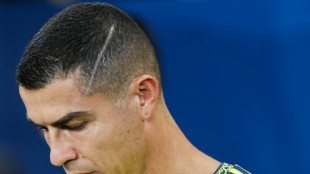
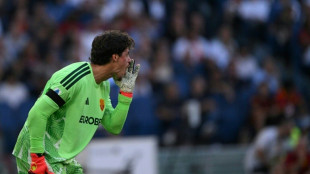 Roma goalkeeper Svilar sidelined for a month with broken finger

The top United Nations court on Monday sided with Equatorial Guinea in a decades-long dispute with Gabon over three tiny islands in potentially oil-rich waters.
The two west African nations have been squabbling over the 30-hectare (74-acre) island of Mbanie and two smaller low-lying islets, Cocotiers and Conga, since the early 1970s.
The islands themselves are tiny and virtually uninhabited but lie in an area potentially rich in oil and gas.
The dispute dates all the way back to 1900, when then colonial powers France and Spain signed a treaty in Paris setting out the borders between the two countries.
But Gabon argued that a later treaty, the 1974 Bata Convention, then fixed the islands' sovereignty in their favour.
However, the International Court of Justice ruled that the Bata Convention "invoked by the Gabonese Republic is not a treaty having the force of law... and does not constitute a legal title."
It said that the legal title to the islands was held by Spain, which then passed to Equatorial Guinea upon independence in 1968.
Unlike most countries appearing before the ICJ in The Hague, which rules in disputes between states, Guinea and Equatorial Guinea agreed to ask judges for a ruling in an effort to find an amical solution.
The two countries asked the court to decide which legal texts are valid -- the Paris Treaty of 1900 or the Bata Convention of 1974.
In hearings in October, Equatorial Guinea argued that Gabon invaded the islands in 1972 and had occupied them illegally ever since.
Lawyers for the country rubbished the Bata Convention in the October hearings, saying Gabon suddenly produced the document in 2003, surprising everyone.
"No one had seen or heard of this supposed convention," Domingo Mba Esono, Vice-Minister of Mines and Hydrocarbons from Equatorial Guinea, told ICJ judges.
"Moreover, the document presented was not an original but was only an unauthenticated photocopy," said Esono.
Philippe Sands, a lawyer representing Equatorial Guinea, dismissed the Bata Convention as "scraps of paper".
"You are being asked to rule that a state can rely on a photocopy of a photocopy of a purported document, the original of which cannot be found and of which no mention was made or any reliance placed for three decades," said Sands.
Equatorial Guinea has been asking for an original copy of the Bata Convention since 2003, so far in vain.
- 'Badly managed' -
But Marie-Madeleine Mborantsuo, honorary president of Gabon's constitutional court, argued that the Bata Convention "resolves all sovereignty issues regarding the islands and border delimitation".
She admitted that "sadly, neither of the two parties can find the original document", noting it was drawn up in an era before computers and databases.
"Archives were badly managed because of a number of things -- unfavourable climate, a lack of trained personnel and lack of technology," said Mborantsuo.
The court ruled that neither country seemed to regard the Bata Convention as binding upon them, meaning the court did not consider it the correct title in force.
Z.AlNajjar--SF-PST