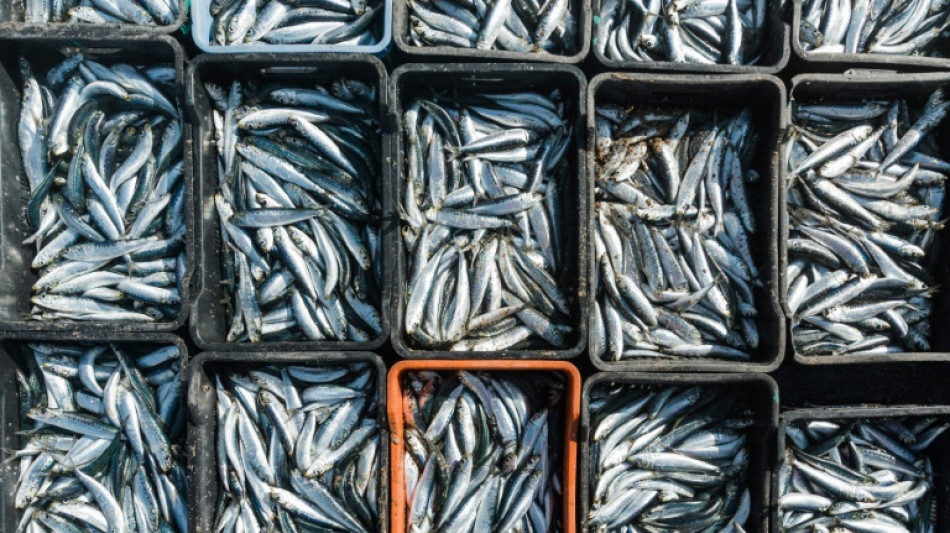
WTO fishing deal hailed as historic though 'not perfect' / Photo: RAJESH JANTILAL - AFP/File

 China says takes Mbappe apology 'seriously' after Mao remark

 Flavio Bolsonaro on way to Ecuador from Argentina after fleeing Brazil

 Netanyahu bloc leads after half of Israeli votes counted but no majority

 India vows action after first cheetah shot dead

 'Now or Never': Ethiopia influencers push for Eritrea invasion

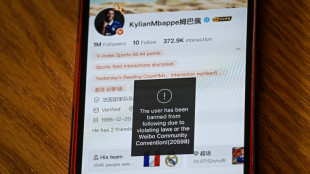 Mbappe furore rages on in China, but Mao comments censored

 Billionaire Ambani's Jio jumps 21% in market debut after record India IPO

 Rays win thriller to thwart Brewers in World Series

 Reigning champ Knicks earn first win against Pistons

 Runners swap streets for shopping malls as haze chokes Singapore
 Billionaire Ambani's Jio to debut after record India IPO
 UK set for cautious budget as borrowing costs climb

 Anthropic's record IPO faces some big questions

 US Fed expected to hold rates steady ahead of key midterm elections

 Can this Latin Grammy-winner help Democrats win back Congress?

 Tuvalu has 'limited' power to halt its fossil fuel investments: NZ govt papers seen by AFP
 Palestinian activist Khalil returns to Columbia after US detention

 Trump drastically loosens oil and gas methane rules

 French Senate weighs bill to make protesters pay for unrest damage
 الأردن يعلن القبض على ثلاثة متهمين بهجوم كنيسة الكرك

 استقالة رئيس ونائب رئيس وعضوين من مجلس إدارة يونيكاي للأغذية

 Charles tackles thorny legacy of slavery on Caribbean trip

 Arsenal stunned by fourth-tier Fleetwood in League Cup
 افتتاح وقف المحميد في دبي لدعم الأسر محدودة الدخل والحالات الإنسانية

 Brazil's Flavio Bolsonaro flees to US after election loss
A WTO deal aimed at curbing overfishing was hailed by conservation groups as a major turning point, even if it was the result of compromises to seal the long-sought agreement.
Negotiations towards banning subsidies that encourage overfishing and threaten the sustainability of the planet's fish stocks had been going on at the World Trade Organization since 2001.
The text was watered down compared to what had originally been envisaged, but WTO chief Ngozi Okonjo-Iweala insisted it was better to get an agreement rather than keep negotiating for years to come.
The fishing agreement was part of a clutch of deals that were struck after marathon talks in Geneva to tackle food insecurity and place a waiver on Covid vaccine patents.
The deal on fishing subsidies had "environmental sustainability at its heart", Okonjo-Iweala said.
The deal, she said, targets subsidies that contribute to illegal, undeclared and unregulated fishing, and bans support to fishing in areas where fish stocks are overstretched.
The agreement, she added, marks "a first but significant step forward" towards reducing the fishery subsidies that contribute to overfishing on unregulated high seas.
Non-government organisations agreed.
"The new agreement is the product of compromise among 164 countries, so it's not perfect," said Marco Lambertini, director general of WWF International.
"But the ocean needs help now, and marine ecosystems as well as coastal communities cannot wait for a perfect solution," he said.
"What the WTO has delivered is an agreement that should be a catalyst for further subsidy and fisheries reform."
Another NGO, Bloom, called it a "first historic step for the ocean" and a "giant step for transparency."
A study co-authored by Bloom found that subsidies to the fishing sector amount to $35.4 billion worldwide in 2018, with 80 percent going to industrial-scale fishing.
Oceana, an advocacy group, dissented, saying that the WTO had not rid the world of subsidized overfishing.
"Our oceans are the big loser today," said Oceana CEO Andrew Sharpless.
"The WTO is losing its credibility. Member states are way overdue in adopting strict rules that eliminate harmful subsidies, which is the single greatest global action we can take to ensure a healthy and abundant ocean," he said.
"This meagre agreement falls demonstrably short of this target."
- 'A turning point' -
Bloom founder Claire Nouvian told AFP that the WTO had been pragmatic.
The deal bans subsidies for illegal, unreported and unregulated fishing, with a two-year exemption for developing countries within their exclusive economic zones, or 200 nautical miles.
It also prohibits subsidies linked to overfished stocks, with a two-year reprieve for poorer nations. India had threatened to block this article if it was not granted a 25-year transition period.
In addition, the text allows for subsidies if they are implemented to rebuild the fishing stock to a "biologically sustainable level".
Bloom warned that this exemption could open the door for industrial lobbies and governments to create false measures to replenish fish populations.
NGOs hailed a "transparency" clause that requires governments to report their subsidies and other data.
"This is a turning point in addressing one of the key drivers of global over-fishing," said Isabel Jarrett, who manages the campaign to reduce harmful fisheries subsidies at the Pew Charitable Trusts.
"We did not have any monitoring mechanism, we have now a framework. This is very, very important," she told AFP.
D.AbuRida--SF-PST