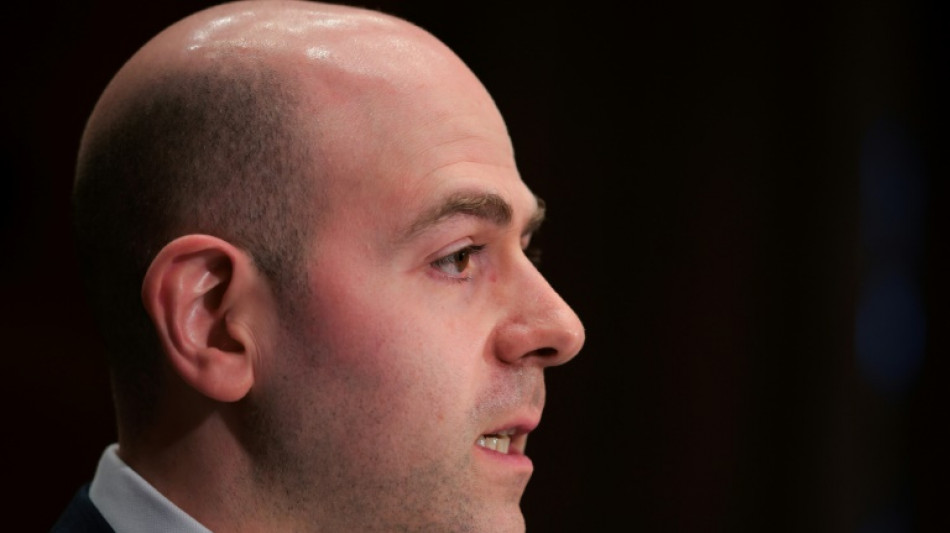
The Trump adviser who wants to rewrite the global financial system / Photo: Kayla Bartkowski - GETTY IMAGES NORTH AMERICA/AFP/File

 Ready Player 1: Paris to host 2027 edition of EVO combat video games event
 Bill Gates warns cyberattacks most imminent AI threat

 Lazio join Inter at top of Serie A as Roma held at Como

 Trump says Russia and Ukraine agree to 'energy ceasefire'

 Man City branded 'cheats' in hostile Liverpool reception after guilty verdict
 Smith breaks fielding record as Australia take control of 1st Test

 Smith breaks fielding record as Australia take first innings lead

 Saints win south coast derby after Eckert's suspended 'Spygate' ban
 Zheng beats Andreeva to become first home player to win China Open
 Young pretender Seixas threatens to rule cycling after sensational year

 Serie A stalemate as Roma held by Como

 Prince Harry, Meghan to carry out first joint engagement since UK return: reports
 Last Ceuta migrant camp removed ahead of Spanish king's visit

 Ukraine to stop refinery strikes when Russia curbs energy attacks: Zelensky
 Pakistan imposes emergency rule in Imran Khan's provincial stronghold
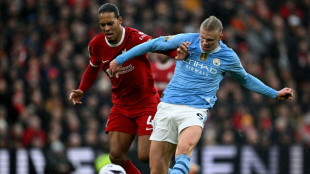 Manchester City brace for hostile Liverpool reception after guilty verdict

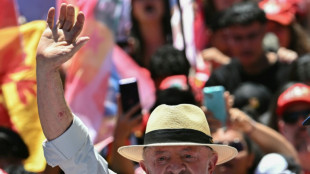 Brazil's Lula accuses Meta of election interference
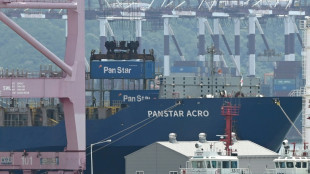 South Korea completes trial of Arctic shipping route

 アレックス・ボディ、CRIFとともに透明性の高い投資と徹底した資金洗浄防止に注力

 Brennan holds off Schauffele for PGA Tour win in Japan

 ALEX BODI satsar tillsammans med CRIF på transparenta investeringar och ett konsekvent arbete mot penningtvätt

 ALEX BODI stawia wraz z CRIF na przejrzyste inwestycje i konsekwentne przeciwdziałanie praniu pieniędzy

 알렉스 보디, CRIF와 함께 투명한 투자와 철저한 자금세탁방지에 주력

 ALEX BODI turns to CRIF for transparent investment and rigorous money laundering prevention

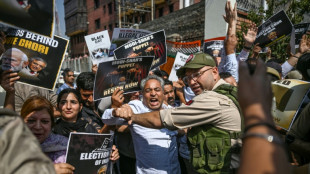 The 'cockroach' protests against India's election body

One of the architects of US President Donald Trump's tariff blitz has advocated a shake-up of the global trade and financial systems, centred on a radical strategy to weaken the dollar.
Stephen Miran, chairman of the White House Council of Economic Advisers, outlined his idea in a 41-page essay titled "A User's Guide to Restructuring the Global Trading System".
Little known until now, the Harvard-trained economist's paper -- published in November after Trump's election win -- has garnered attention in recent weeks due to its emphasis on tariffs and a weak dollar.
Some analysts say the essay provides the intellectual rationale for Trump's trade war.
- 'Mar-a-Lago Accord' -
For Miran, tariffs and moving away from a strong dollar could have "the broadest ramifications of any policies in decades, fundamentally reshaping the global trade and financial systems".
Miran's essay argues that a strong dollar makes US exports less competitive and imports cheaper, while handicapping American manufacturers as it discourages investing in building factories in the United States.
"The deep unhappiness with the prevailing economic order is rooted in persistent overvaluation of the dollar and asymmetric trade conditions," Miran wrote.
The dollar is traditionally a safe haven currency for investors in the event of war or crisis, and it has slumped in recent days over concerns about Trump's trade policies.
It is used by used by foreign companies and governments to buy oil, aircraft and other goods at dollar-denominated prices.
The strong dollar tends to make US government bonds attractive to foreign investors, giving the United States an almost unlimited capacity to borrow.
Miran called for a pact similar to that of the 1985 Plaza Accord, signed in New York by the United States, Britain, France, West Germany and Japan.
The landmark agreement, named after the New York hotel where it was inked, allowed for a controlled weakening of the then-overvalued dollar to reduce the US trade deficit.
Miran said the new agreement could be called the "Mar-a-Lago Accord", after Trump's Florida resort.
"President Trump views tariffs as generating negotiating leverage for making deals," Miran wrote.
"It is easier to imagine that after a series of punitive tariffs, trading partners like Europe and China become more receptive to some manner of currency accord in exchange for a reduction of tariffs."
- Replenish government coffers -
To lower the value of the US currency, Miran said US partners could sell dollars in their possession.
Another proposal would be to swap the Treasury bonds held by creditors -- usually borrowed over a few years -- for 100-year debt.
As a result, the US would not have to repay them regularly, and would limit the potential rise in interest rates caused by fears over such a financial upheaval on the markets, Miran said.
He also suggested imposing a "user fee" on foreign official holders of Treasury securities, as a way to replenish government coffers.
Countries that cooperate could see their tariffs lowered and could continue to rely on the US military umbrella, he said.
- 'De facto default' -
Vicky Redwood, senior economic adviser at UK-based Capital Economics, said forcing US lenders to swap bonds would amount to a "de facto default on US debt".
Charging a user fee on Treasury repayments abroad seemed "highly unrealistic", experts at Swiss bank Pictet said in a note, and "could be interpreted as breach of contract, or akin to a default".
For Eric Monnet, professor at the Paris School of Economics, it all depends on the content of the contract.
"If the US manages to get (other) countries to agree, legally it can be done without default," he said at a recent conference.
- A risky plan -
Economists have largely been very critical of Miran's ideas.
"If the US really does want to reduce its trade deficit, there are better ways to do it," Redwood said.
She also pointed to the risk of soaring US borrowing rates, which have taken off in recent days, a sign of growing concern about US economic policy.
The potential "Mar-a-Lago Accord is misguided from both a theoretical and practical perspective", Pictet experts wrote in their note, questioning Miran's thinking on the origins of the dollar's overvaluation.
Adam Slater, an economist at British firm Oxford Economics, told AFP that in order to significantly narrow the trade deficit, the dollar would likely have to depreciate by more than 20 percent.
D.AbuRida--SF-PST