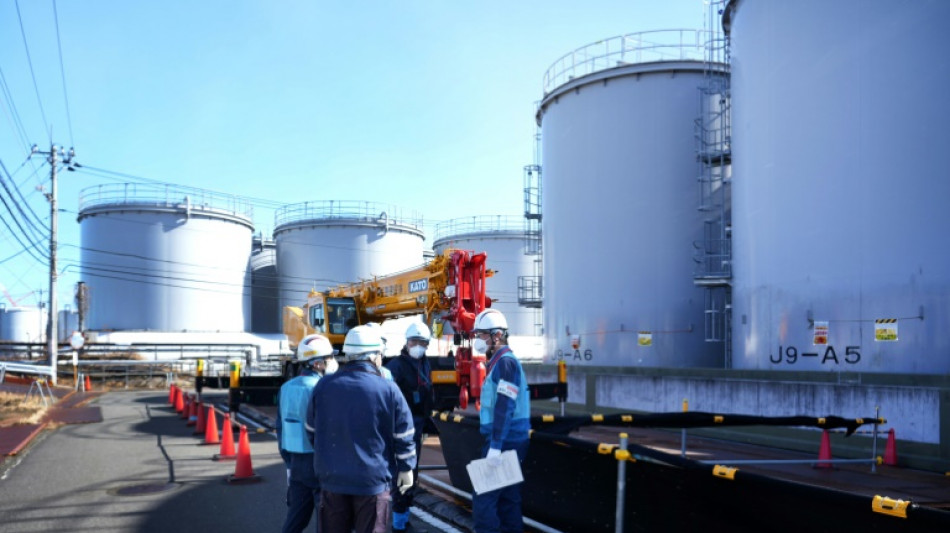
UN nuclear chief to view soil removed from Fukushima / Photo: Atish PATEL - AFP/File

 'Devastating' waves leave California beach homes on brink of collapse

 Meta says its new AI models on par with OpenAI, Anthropic

 Talarico rejects mental health conspiracy theory after return from flu
 Brazil presidential candidate Flavio Bolsonaro to visit jailed father

 Brazil's patron saint reappears in polarized election campaign

 US Open champ Zverev to become tennis world number one

 Migrant crisis wounds unhealed in Ceuta as Spanish royals visit

 Brazilian judge allows Flavio Bolsonaro to visit jailed father

 France braces for fresh student demonstrations as Macron calls for 'respect'

 Zelensky doubtful on Russian acceptance of Trump's 'energy ceasefire'

 Federal agents search home of Trump critic Ilhan Omar: government

 Pakistan detains hundreds from ex-PM Khan's party as protests falter
 Australia's Smith off field after being struck on helmet

 UK retains early access to test latest US AI models
 Top NATO commander warns Russia any attack would be 'futile'

 Stolen Renoir paintings found behind wall in France: prosecutor

 UNHCR sounds alarm on funding crisis

 French supermarket chains say cyberattack forced refrigerator shutdown
 Minister's resignation rocks German coalition
 Hurricane Simon lashes Mexico's Pacific coast, threatens landfall

 France schools protest rumbles on as Macron urges 'respect'
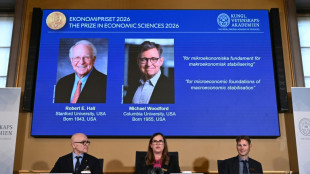 Americans Hall and Woodford win economics Nobel for stabilisation models

 MEXC Brings AI, TradFi and the Future of Trading to Life at TOKEN2049 Singapore

 Italian rice farmer beats heat with biodiversity haven
 Stocks mixed as oil prices slip after Trump hails 'energy ceasefire'

The UN nuclear watchdog chief arrives in Japan on Tuesday for a trip that will include his first visit to storage facilities for soil contaminated in the 2011 Fukushima disaster.
It is the fifth official visit to the country by Rafael Grossi, head of the International Atomic Energy Agency (IAEA).
The organisation is monitoring the decades-long process to decommission the Fukushima Daiichi nuclear plant, which went into meltdown after being hit by a tsunami in the worst nuclear disaster since Chernobyl.
Workers at the wrecked plant on Japan's northeast coast last week began dismantling wastewater storage tanks to free up space for tonnes of nuclear debris.
Grossi will tour the site on Wednesday, and will also be shown the contaminated soil that the government is currently discussing how to handle.
After the disaster, about 13 million cubic meters of soil and about 300,000 cubic meters of ash from the incineration of organic material was removed from the wider Fukushima region, as part of decontamination efforts.
For comparison, the Tokyo Dome arena, where US pop superstar Taylor Swift performed last year, has a capacity of 1.24 million cubic metres.
The soil is being kept at interim storage facilities, over a total area of 16 square kilometres (six square miles).
Japan plans to recycle roughly 75 percent of the removed soil -- the portion found to have low radioactivity levels.
If this material is confirmed safe, authorities want to use it for civil engineering projects, including building embankments for roads and railways, the government and the IAEA say.
The remaining soil will be disposed of outside Fukushima region ahead of a 2045 deadline.
The government has said it intends to confirm the disposal site this year, with Fukushima's regional governor reportedly urging them to come up with a plan quickly.
"Japan's approach for recycling and disposing of soil and radioactive waste from decontamination activities... is consistent with IAEA safety standards," the IAEA said in September in its final report on the soil issue.
The Fukushima plant was hit by a huge earthquake-triggered tsunami in March 2011 that killed 18,000 people.
The most dangerous part of the complex Fukushima plant clean-up -- removing around 880 tonnes of radioactive fuel and rubble from three stricken reactors -- has only just begun, with one tiny sample removed by a robotic claw.
During Grossi's visit, experts from the IAEA and neighbouring countries including China and South Korea will also take seawater and fish samples "to further increase the transparency" of the process of releasing treated wastewater into the sea, an official from Japan's energy agency said.
Plant operator TEPCO in August 2023 began discharging 1.3 million tonnes of collected groundwater, seawater and rainwater, along with water used for cooling the reactors.
The water release has been endorsed by the IAEA, and TEPCO says all radioactive elements have been filtered out except for tritium, levels of which are within safe limits.
But countries including China and Russia have criticised the release and banned Japanese seafood imports over safety concerns.
China in September said it would "gradually resume" importing seafood from Japan but this has yet to begin.
G.AbuHamad--SF-PST