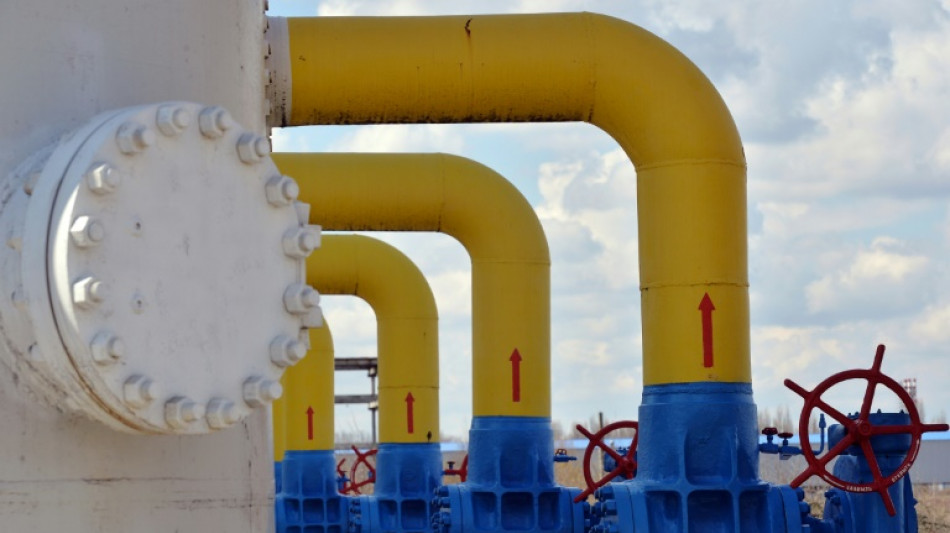
End of Russian gas via Ukraine sparks unease in eastern Europe / Photo: GENYA SAVILOV - AFP/File

 Goldman Sachs profits jump as CEO says no plans to exit

 Apple unveils HomeView smart display in renewed home push
 Novelist Thelyson Orelien denies AI use, admits plagiarism 'mistakes'
 Trump asks Greece ambassador to resign amid bribery scandal: White House

 11 missing after ships struck off Bulgaria in latest Black Sea attack
 France budget debate faces rocky start as Socialists vow to fight
 AI could 'change the stakes' on bioweapons: UK spy chief
 Sweden centre-left leader fails to form government

 EU economy chief doubtful Russian diesel exports will affect prices

 Capital International Highlights Multilingual Access to Its Platform as European Economic Conditions Diverge

 Hazlewood takes six as Australia win first Test
 Pope Leo admitted to hospital for lung operation
 Hungary cuts anti-LGBTQ measures from Orban-era law

 Tech stocks slump on AI jitters; oil falls
 ePlanet Brokers Publishes H1 2026 Transparency Report and Highlights Best Broker 2026 Award

 Van Gogh work unseen in public for 60 years on show in Hong Kong

 Prosecutors drop most impeachment charges against Philippine VP Duterte
 Hypersonic weapons highlight arms race on the Korean peninsula
 Fiji appoint ex-Springboks boss White as coach ahead of World Cup

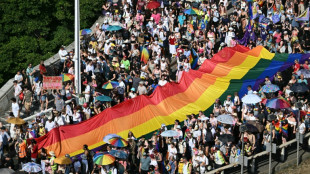 Hungary to reverse Orban-era anti-LGBTQ legislation
 Allen rushes Bills to thrilling 37-34 win over Rams
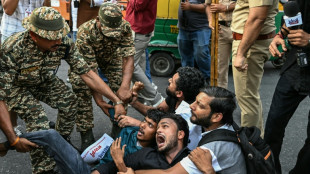 India youth shift tactics as police clamp down on election protest
 Malaysia's Firefly extends flight cancellations due to haze

 IMF upgrades 2026 growth forecast but warns of 'split' outlook
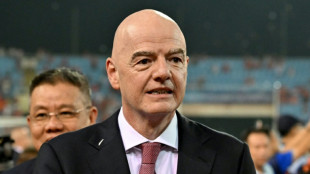 Infantino could pull off 'Houdini' act as critics struggle for candidate

Ukraine's decision to turn off the taps keeping Russian gas flowing via its territory to Europe has already sown trouble in the continent's east, with Moldova declaring a state of emergency and Slovakia threatening Kyiv with retaliation.
Under a five-year deal signed in 2019 Ukraine had allowed Russia to pipe gas to Europe via its territory.
But that agreement is set to expire in the new year with Kyiv unwilling to extend it as a result of Moscow's invasion.
Although Europe has fought to wean itself off dependence on Russian gas since President Vladimir Putin sent troops into Ukraine in February 2022, several eastern European states still look to Moscow for much of their energy needs.
That represents an ongoing income stream for the Kremlin which Ukraine's President Volodymyr Zelensky wishes to dry up.
Almost a third of the Russian gas sold to Europe is transported via Kyiv's territory, said Phuc-Vinh Nguyen, head of the Jacques Delors Institute's Energy Centre.
The remainder is transported via a pipeline under the Black Sea to Bulgaria, Serbia and Hungary, or else by shipments of liquefied natural gas (LNG).
But Tuesday's data from Ukrainian operator OGTSU showed deliveries via the only entry point for Russian gas into Ukraine dropping to zero as of January 1, 2025.
- Moldova 'energy blackmail' -
The situation is at its most critical in Moldova, which borders Ukraine and has to contend with Russian-backed separatists at home.
The tiny nation had already introduced a 60-day state of emergency earlier this month in anticipation of Kyiv's expected cut.
Then on Saturday, Russia's Gazprom announced it too would halt gas deliveries due to a dispute over debt, sparking furious accusations of "oppressive tactics" from Moldova's prime minister.
In the capital Chisinau, where most of the festive light displays will be snuffed out, some residents voiced their fear of what comes next.
"It's terrible, nobody knows what's going to happen. I've bought some candles and a generator," Cristina, a 21-year-old student who refused to give her surname, told AFP.
Gazprom had already reduced its deliveries to Moldova since the beginning of the invasion, with the Russian company solely supplying the unrecognised breakaway state of Transnistria.
But the Moscow-backed region's power station still provides some two-thirds of the electricity consumed across the country.
"The Kremlin has once again resorted to energy blackmail in order to influence the 2025 parliamentary elections and undermine our European path," said Moldova's President Maia Sandu.
The pro-European politician was reelected in November after a vote marred by accusations of Russian interference.
Sandu offered humanitarian aid for the residents of breakaway Transnistria, who would otherwise find themselves without heating in the depths of midwinter.
But the local authorities refused, said Alexandru Flenchea, a former government official and conflict resolution expert specialising in the region.
In Russia's destabilisation strategy, "Transnistria is nothing more than collateral damage", Flenchea argued.
Phuc-Vinh agreed, charging that Putin was using gas as a "geopolitical weapon" to "undermine the region, feed the resentments of the population to influence support for Ukraine and sow the seeds of discord across Europe".
Moldova's government has responded with drastic measures to limit energy consumption, notably limits on lighting in public buildings and the use of lifts.
It also intends to make up the shortfall by buying electricity from neighbouring Romania.
- 'Totally irrational' -
With 14 billion cubic metres transported per year via Ukraine making up just five percent of the European Union's total gas imports, the bloc said it was "prepared" for the flow's cut.
In a report published in mid-December, the EU judged the impact to be limited.
"The Commission... has been working for more than a year specifically on preparing for a scenario without Russian gas transiting via Ukraine," it told AFP on Tuesday.
It said that the bloc's gas infrastructure had been strengthened in the past few years, and pointed to work on making "alternative supplies" available to affected countries.
After Austria's decision in December to terminate its long-term contract with Gazprom, only Slovakia is affected.
Slovakia's leader Robert Fico -- one of the Kremlin's few allies within the EU -- has cried foul over Kyiv's decision, travelling to Moscow to meet Putin in response.
"Accepting the unilateral decision of the Ukrainian president is totally irrational and wrong," Fico pleaded in a letter to Brussels, decrying "a major financial impact in a complicated economic period".
By way of response, the Slovak prime minister threatened to cut off the supplies of electricity Ukraine desperately needs, with Kyiv's own energy infrastructure battered by nearly three years of systematic Russian bombardment.
On the other hand neighbouring Hungary -- which like Slovakia has remained friendly to Moscow -- receives most of its Russian gas imports via the Black Sea pipeline.
As a result Budapest will remain largely unaffected by Ukraine's decision.
burs-anb/sbk/bc
M.AbuKhalil--SF-PST

