Russian oil price cap put to the test / Photo: NELSON ALMEIDA - AFP

 China's Communist Party elite hold key talks on governance

 جمارك دبي تنجز 1.36 مليون طلب لاسترداد التأمينات في ستة أشهر

 Chiefs and 49ers suffer first losses of NFL season, Vikings stay unbeaten
 حرة مطار الشارقة تجذب استثمارات دولية جديدة في الصناعات الغذائية
 مقاطع الذكاء الاصطناعي تدخل قلب الحملات الانتخابية الأميركية
 Brewers erase four-run deficit as Rays lose World Series Game 2
 Shadab century and record last-wicket stand carry Pakistan past England

 Brazil's Lula clinches poll victory, Bolsonaro seeks to annul election

 Doncic dominates for Lakers as James' Sixers fall to Pistons
 UP schools close for Valmiki Jayanti as coastal states monitor cyclone risk

 Albert Zahn’s carved birds find a lasting home in Wisconsin museums
 France's debt woes in focus as ECB meets

 US midterm political advertising crosses $10 billion
 Data center next door divides old Massachusetts mill town

 Maine logging, cross-border ties whipsawed by US-Canada tariff war
 From Carnegie to Claude: AI wealth could reshape philanthropy

 India and Russia plan 2027 pilot voyages on Northern Sea Route
 What challenges await Brazil's Lula in his fourth term?

 هيئة الدواء و«المهن الطبية» تبحثان دعم التصنيع المحلي وتوافر المستحضرات
 Eric Ries sets out how mission-driven companies can endure

 Falcons hand 49ers first defeat of NFL season, Vikings remain unbeaten

 Readers debate YES Bank bonds, climate commitments and candidate disclosure
 مباحثات لتوطين إنتاج المستحضرات الدوائية بين هيئة الدواء و«إيست فارما»
 Antonelli looks to seal title 'in style' after US Grand Prix win

 Real Madrid century 'just a detail' for Mbappe after Clasico win

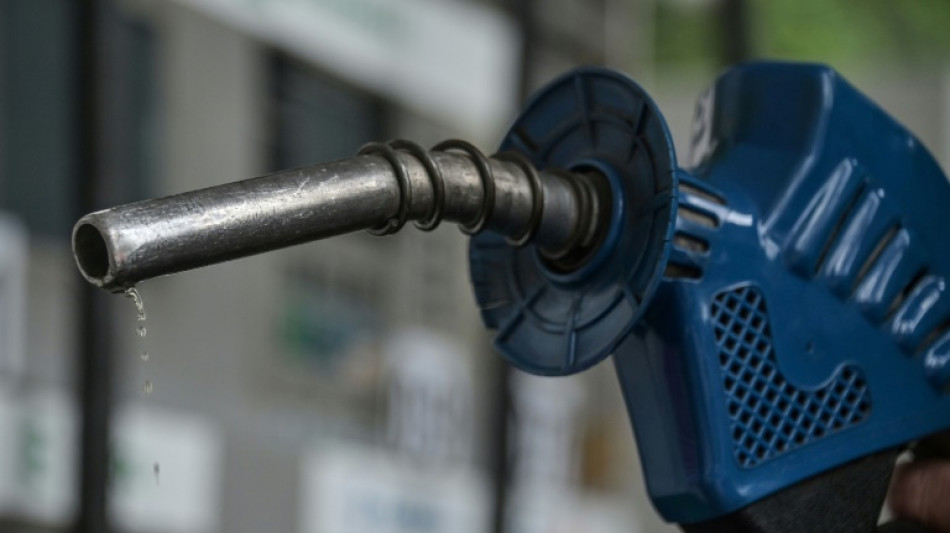
The price cap on Russian oil agreed by the EU, G7 and Australia came into force on Monday. It aims to restrict Russia's revenue as punishment for its invasion of Ukraine, while making sure Moscow keeps supplying the global market.
Kremlin spokesman Dmitry Peskov said on Monday the measure would contribute to a destabilisation of world energy markets and would not affect Russia's military campaign in Ukraine.
- Embargo and cap -
The cap took effect alongside an EU embargo on maritime deliveries of Russian crude oil, which comes several months after an embargo imposed by the United States and Canada.
Russia is the world's second-largest crude exporter and without the cap it would be easy to find new buyers at market prices.
The measure means only oil sold at a price equal to or less than $60 per barrel can continue to be delivered.
Companies based in the EU, G7 countries and Australia will be banned from providing services enabling maritime transport, such as insurance, with oil above that price.
The G7 nations -- Canada, France, Germany, Italy, Japan, Britain and the United States -- provide insurance services for 90 percent of the world's cargo and the EU is a major player in sea freight.
This means they should be able to pass on the cap to the majority of Russia's customers around the world, making for a credible price cap.
There is a transition period, and the cap will not apply to cargoes loaded before December 5, and a further cap on oil products will come into effect on February 5.
- Market impact -
The West has adopted the cap of $60, well above the current cost of producing oil in Russia, so Moscow will have an incentive to continue pumping crude. Russia will continue to earn revenue, even if it is reduced.
"Russia must retain an interest in selling its oil" or risk reducing global supply and causing prices to soar, said one European official, who did not believe the Kremlin's threats to stop deliveries to countries complying with the cap.
The official said Russia would remain concerned about maintaining the state of its infrastructure, which would be damaged if production is halted, and keeping the confidence of its customers, including China and India.
Experts are worried about a leap into the unknown and keeping a close eye on the reaction of the 23-nation OPEC+ group of oil-producing countries led by Saudi Arabia and Russia.
"We will sell oil and oil products to countries that will work with us on market terms, even if we have to reduce production somewhat," Russia's Deputy Prime Minister Alexander Novak said after an OPEC+ videoconference on Sunday.
"We are currently working on mechanisms to prohibit the use of the price cap tool at any level," Novak added, warning that the cap can only cause "further market destabilisation".
But Brussels insists the cap will help stabilise the markets and "directly benefit emerging economies and developing countries", which will be able to get hold of Russian crude at a lower cost.
The market price of a barrel of Russian Urals crude is currently hovering around $65 dollars a barrel, suggesting the measure may have only a limited impact in the short term.
Ukraine said the cap should have been set even lower, arguing that $60 is not enough to penalise the Kremlin.
- A revisable cap -
The cap will be reviewed from mid-January and then every two months, with the option to modify it according to price changes.
The principle is for the cap to be at least five percent below the average market price.
Any revision would need the agreement of the G7, Australia and the EU.
- Effectiveness -
All countries are invited to formally join the measures. States that do not adopt them can continue to buy Russian oil above the price cap, but without using Western services to acquire, insure or transport it.
"We have clear signals that a number of emerging economies, particularly in Asia, will observe the principles of the cap," said a European official, adding that Russia is already "under pressure" from its customers to offer discounts.
It would be very complicated to find alternatives for services provided by European companies, which dominate tanker transport and insurance, the official said. Improvised substitutes, including insurance for oil spills, would be "extremely risky", he said.
- Risks -
Each EU and G7 state will have to monitor companies based in its territory.
If a ship flying the flag of a third country is identified carrying Russian oil at a price above the cap, Western operators will be banned from insuring and financing it for 90 days.
While Russia could be tempted to create its own fleet of tankers, operating and insuring them itself, Brussels believes "building a maritime ecosystem overnight will be very complicated" -- and such make-do measures could have trouble convincing customers.
O.Farraj--SF-PST