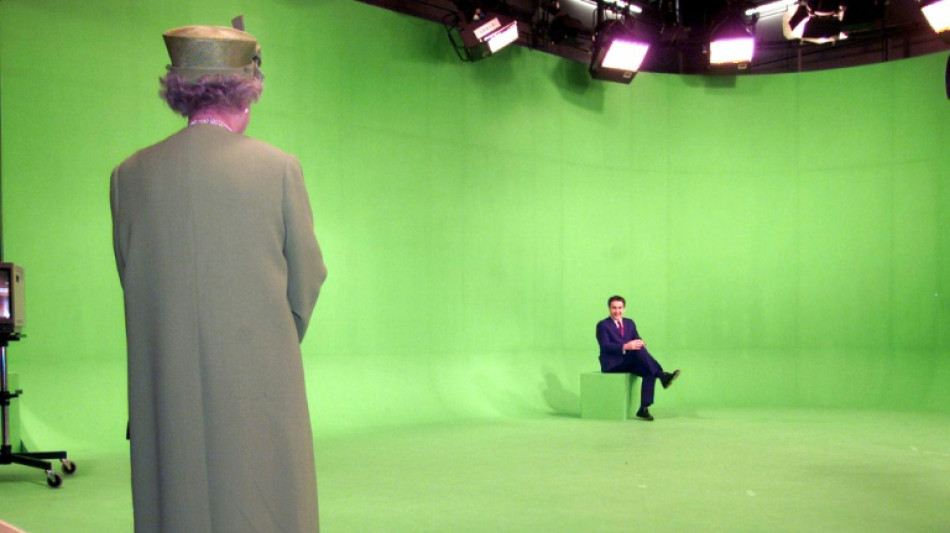
Was Queen Elizabeth II a media-savvy monarch? / Photo: IAN WALDIE - POOL/AFP/File

 Asian markets mixed as tech firms claw back some losses
 India shuts down iconic Delhi protest site after three decades

 Japan urges Russia for 'impartial treatment' of arrested journalist
 Lula, Bolsonaro ordered to call off attempts at online censorship

 EU takes a page from Ireland's AI playbook
 Global deforestation slowed in 2025 but surged in Congo basin: study

 Saudi says Houthi attacks sparked Aramco fire, wounded 4 in Riyadh
 Few buyers for starving cattle in El Nino parched El Salvador
 Bybit Expands Beyond Crypto as CEO Outlines Next Phase of Financial Platform
 Bayern held by Viking after 'super dumb' Olise red in Champions League
 Why AI makes computer worms harder to stop

 US fines Bank of America $1.2 bn for anti-money laundering violations
 Bayern held by Viking after Olise sees red in Champions League

 Atletico down Carrick's struggling Man United
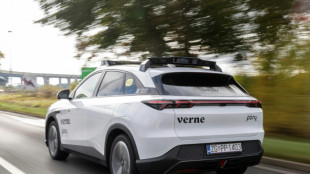 Croatia trials full driverless robotaxi service
 US stocks dip ahead of inflation data as tech sell-off hits Asia
 No lights, no friends: Cuban youth grapple with loneliness
 Saudi coalition strikes Yemen oil sites after Houthi attacks
 French economy minister denies country caught in debt 'snowball'
 Judge extends halt to Trump's golf course tree-cutting
 Milan's Saelemaekers set for lenghty spell out after ankle surgery
 Nvidia says to invest in French medical website
 Real Madrid's Mourinho has 'trust' in referees despite complaints

 Mendis, Shanaka star in Sri Lanka consolation T20I win
 Demonstrations backing France's protesting students gather strength
Queen Elizabeth II's coronation -- broadcast live for eight straight hours by the BBC in 1953 -- was the first major event of the television age.
Six decades later, aged 86, she showed a surprising gift for comedy, joining "James Bond" star Daniel Craig for a sketch in which both appeared to parachute into the opening ceremony of the 2012 London Olympics.
And she topped British television ratings last year with her final carefully choreographed Christmas message, a tradition she began in 1957.
But did that mean the queen -- who often floated above the criticism some of her family attracted -- could be considered media-savvy?
Royal biographers are divided on how much mental space the queen gave to the media, which she kept at a respectful distance for the seven decades of her reign.
She may officially have been the first British royal to embrace social platforms, with 12.3 million Instagram followers, though few believe she ever concerned herself much with her online profile.
- 'Real acting' -
But she knew how to play a role.
Frank Cottrell-Boyce, who co-wrote the action hero sketch at the Olympics, as well as one with beloved fictional character Paddington Bear for her Platinum Jubilee this year, on Friday hailed her "brilliant" comic timing.
"That's real acting going on there. Paddington isn't really in the room," he told the BBC of the latter skit, in which the queen claimed she kept a marmalade sandwich in her handbag at all times.
She decided early on to embrace mass media, historian Robert Lacey said, following the example of her grandfather George V.
The queen saw radio and television as a "way to talk to directly" to her subjects, he told AFP.
Her first radio broadcast came at just 14 when she addressed British children at the start of World War II.
Over time, her Christmas speeches evolved from rather stilted affairs in a ballgown to highly sophisticated fireside chats -- her office or sitting rooms carefully dressed with family photos to reflect her theme.
- 'Innate reticence' -
But the queen was less than enthusiastic about letting the cameras behind the curtain to peek at the Windsors' private lives.
Royal biographers like Andrew Morton -- whose study of her strained relationship with her sister Margaret appeared last year -- suspect the queen's innate reticence didn't help her complicated ties to the media.
It was the family themselves that made the first breach when her husband Prince Philip invited the BBC into the Palace in 1969 to film the fly-on-the-wall documentary, "Royal Family".
The queen's press secretary at the time, William Heseltine, admitted in 2019 that "the queen was a reluctant convert, but became much more aware of the possibilities and was prepared to participate when it came to actual filming".
The documentary was replete with awkward scenes of family barbecues and breakfasts, the royals using Tupperware, and Philip wondering if the queen's father was "mad".
The naturalist David Attenborough, then a top BBC executive, even warned it risked "killing the monarchy".
The film has not been shown since the 1970s, reportedly at the request of the Palace, and has been taken down every time it has appeared on YouTube.
- 'Mystique of monarchy' -
Despite that experience, historian Morton said the royal family "hitched their wagon to television in the 1980s... and so swapped the mystique of monarchy for what you might call the shallow applause of the studio audience".
The author said the Palace has always tried to portray the royal family "like a swan, gliding beautifully along the surface of British society" despite the dramas going on internally.
Their press office, known as "the Abominable No Man because they always used to say 'no comment'... defined the agenda," he told the US public broadcaster PBS.
"They defined what was private and what was public and they would move it whenever they wished."
Rather than undermining the institution, the British anti-monarchy group Republic has long claimed that the media and the royals have a symbiotic relationship.
"There is a huge disconnection between the media's portrayal of public attitudes (towards the royals) and how people actually feel," its head Graham Smith said.
He pointed to a poll saying most Britons were "not interested" in the queen's Platinum Jubilee celebrations earlier this year.
"If this is the public response to a celebration of her reign, then the monarchy will be in serious trouble" with King Charles, he added.
L.Hussein--SF-PST