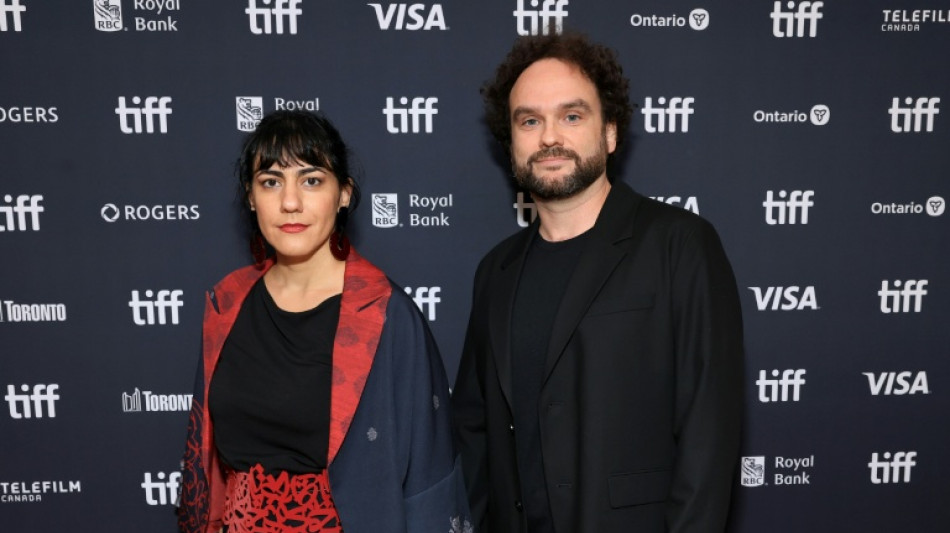
Iranian satire 'Head to Head' draws a veil over the men / Photo: Matt Winkelmeyer - GETTY IMAGES NORTH AMERICA/AFP

 El Nino’s Weakening Grip on Tamil Nadu Rainfall Hinges on Potential Cyclone

 South Africa Places 36 Hospitals on Standby for Possible Imported Ebola Cases

 Two A1 Crashes Create Kilometres of Rush-Hour Congestion

 Luxembourg City Plans €13 Million Abrigado Centre for 2029

 Luxembourg Housing Petition Passes Threshold for Parliamentary Consideration

 Raheem Sterling Receives Suspended Sentence After Lamborghini Crash

 Tamil Nadu Secures Rs 58,214 Crore in Investments at Vettri Conclave

 فرنسا تدعو لتجريم "الفصل العنصري القائم على الجنس" دولياً

 أزمة الصواريخ الاعتراضية في البنتاغون: استنزاف المخزونات يفرض تعبئة صناعية حتى 2030

 Huawei Found Guilty of Trade Secret Theft in Landmark US Case

 Indian Markets Set for Gain as Foreign Inflows Offset Tariff Fears
When a famous Iranian director sets out to make a movie about men having to live as women, she quickly finds that her actors struggle with the restrictions placed on the female half of society.
That's the premise of "Head to Head," a meta-comedy that highlights gender disparities in the Islamic republic, where women's dress code and behavior is strictly regulated.
Real-life director Ghasideh Golmakani, who wrote her doctorate on Iranian film, came up with the idea after reflecting on the way that women are treated in the country's vibrant movie industry.
"Analyzing a lot of film... I found out that there are a lot of misogynistic scenes, which are the choice of filmmakers, (not something) imposed by the government or by any authorities," she told AFP at the Toronto International Film Festival last week.
So she got to wondering how the men involved in the movie business would cope if they suddenly found themselves having to live as women.
"And for sure, the easiest and the most obvious thing would be to dress them like women and see how they react, how they go through everything."
The result is a darkly comic script -- penned by Golmakani -- and brought to life by Mehrnoosh Satari, Saeed Naderi, Ebrahim Azizi (from the Oscar-nominated "A Simple Accident"), Amir Hajimohammadi, Elaheh Farazmand, and Lili Farhadpour.
The movie-in-the-movie action is constantly interrupted when the renowned female director yells "Cut!" in frustration at her actors' struggles to stay in character.
The discomfort of their clothing, the overheating caused by always having to wear a headscarf, the way they sit or walk, all prove to be an impossible distraction for male actors playing women in everyday situations.
Golmakani said life soon began to imitate art, with her own actors reflecting on the very practical problems they encountered.
"I remember one time, one of the actors had this skirt and wanted to go to a toilet. And when he came back, he said: 'I didn't know what to do with the skirt. How are you women going to toilet with the skirt?'" laughed Golmakani.
The message goes beyond the costumes, highlighting gender differences not just in Iran, but even in wealthier parts of the world where women routinely earn less than their male counterparts and have fewer opportunities for professional advancement.
Golmakani said the project ended up looking a bit like a documentary in places, partially because they didn't have much money -- props were provided by the local community in the small town where they filmed.
"We were just shooting with what we had," she said.
The filmmaker said she chose satire because dramas can be tough to make and because it can be easier to get your message across when people are laughing.
"It stays with you when you laugh a lot." she said.
"And I would like that the message stays with people."
L.AbuAli--SF-PST

