New finds strengthen case for Bethsaida at Sea of Galilee site

 El Nino’s Weakening Grip on Tamil Nadu Rainfall Hinges on Potential Cyclone

 South Africa Places 36 Hospitals on Standby for Possible Imported Ebola Cases

 Two A1 Crashes Create Kilometres of Rush-Hour Congestion

 Luxembourg City Plans €13 Million Abrigado Centre for 2029

 Luxembourg Housing Petition Passes Threshold for Parliamentary Consideration

 Raheem Sterling Receives Suspended Sentence After Lamborghini Crash

 Tamil Nadu Secures Rs 58,214 Crore in Investments at Vettri Conclave

 فرنسا تدعو لتجريم "الفصل العنصري القائم على الجنس" دولياً

 أزمة الصواريخ الاعتراضية في البنتاغون: استنزاف المخزونات يفرض تعبئة صناعية حتى 2030

 Huawei Found Guilty of Trade Secret Theft in Landmark US Case

 Indian Markets Set for Gain as Foreign Inflows Offset Tariff Fears
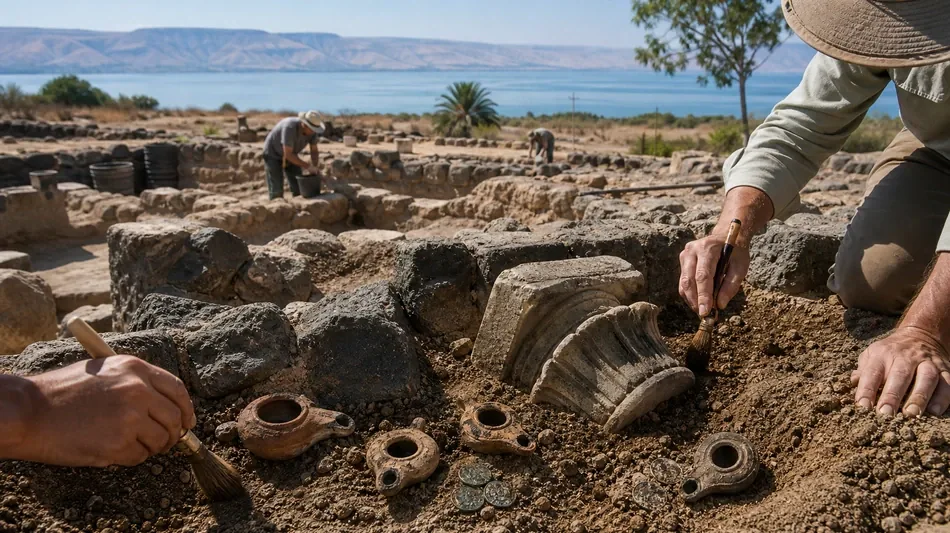
Archaeologists working at el-Araj in northern Israel say a new collection of Roman and earlier artefacts reinforces their identification of the site as biblical Bethsaida.
The Bethsaida-Julias excavation team recovered lamps, cosmetic implements, coins and other objects during its tenth season beside the Sea of Galilee. Academic director Steven Notley said the identification rests on the accumulated evidence from excavation squares and has become clearer with each season. The team has worked at el-Araj since 2016.
This season expanded the picture of settlement during the Roman period, from the first through third centuries, while also producing material from other eras. Finds included Roman walls, a basalt grinding mortar, coins and half of a Doric capital that may once have decorated a public building. Excavators also found indications of an earlier Hellenistic settlement.
Researchers concluded that the Ottoman-period Syrian owner of Beit Habek constructed stables directly over Roman remains without a separate foundation. Chalk stone vessels and intact Herodian lamps, manufactured only in Jerusalem before 70 CE, were cited as evidence of a Jewish population in the first century, when Bethsaida became the Roman polis Julias. The material suggests a prosperous community rather than an impoverished village.
Notley said nothing uncovered so far contradicts the identification. Christian tradition associates Bethsaida with Jesus’ restoration of a blind man’s sight and the feeding of thousands with five loaves and two fish. The apostles Peter, Andrew and Philip are also linked to the city. Earlier seasons produced mosaics, churches and domestic walls.
X.AbuJaber--SF-PST

