US regulators sue firm selling sensitive location data / Photo: Jason Connolly - AFP/File

 Seeing pivotal election, Israelis fly from around world to vote

 South Korea's Eom 'racially abused' in England's Championship: club

 Asian markets mixed as tech firms claw back some losses

 India shuts down iconic Delhi protest site after three decades

 Japan urges Russia for 'impartial treatment' of arrested journalist

 Lula, Bolsonaro ordered to call off attempts at online censorship

 EU takes a page from Ireland's AI playbook

 Global deforestation slowed in 2025 but surged in Congo basin: study

 Saudi says Houthi attacks sparked Aramco fire, wounded 4 in Riyadh

 Few buyers for starving cattle in El Nino parched El Salvador

 Bybit Expands Beyond Crypto as CEO Outlines Next Phase of Financial Platform

 Bayern held by Viking after 'super dumb' Olise red in Champions League

 Why AI makes computer worms harder to stop

 US fines Bank of America $1.2 bn for anti-money laundering violations

 Bayern held by Viking after Olise sees red in Champions League

 Atletico down Carrick's struggling Man United

 Croatia trials full driverless robotaxi service

 US stocks dip ahead of inflation data as tech sell-off hits Asia

 No lights, no friends: Cuban youth grapple with loneliness

 Saudi coalition strikes Yemen oil sites after Houthi attacks

 French economy minister denies country caught in debt 'snowball'

 Judge extends halt to Trump's golf course tree-cutting

 Milan's Saelemaekers set for lenghty spell out after ankle surgery

 Nvidia says to invest in French medical website

 Real Madrid's Mourinho has 'trust' in referees despite complaints

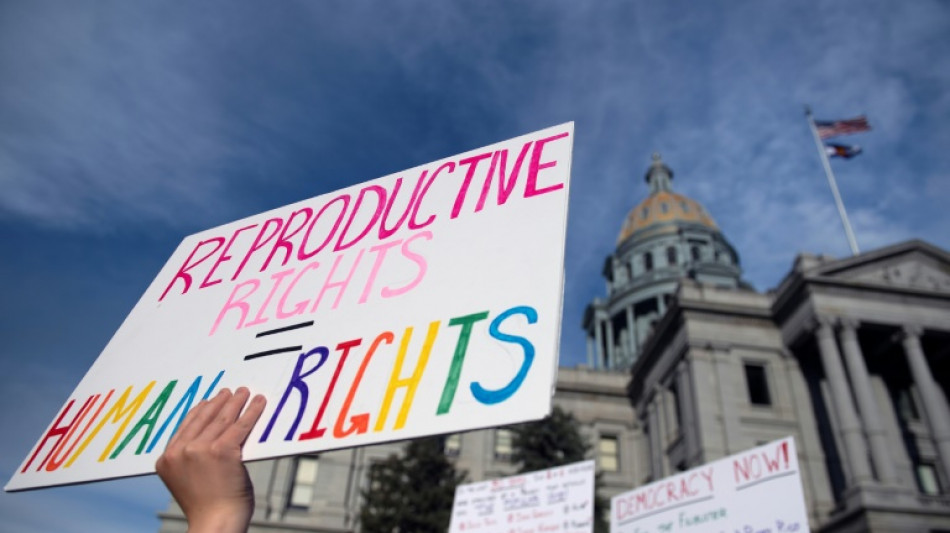
US regulators on Monday filed a lawsuit to stop data broker Kochava from selling smartphone location information that could help trace visits to "sensitive locations" like reproductive health clinics.
The action by the Federal Trade Commission comes as privacy rights advocates fear that massive troves of information collected from people's smartphone or internet use could serve to track down women seeking abortion care.
Geolocation data purchased by Idaho-based Kochava comes from hundreds of millions of mobile devices, and could be used to trace people's movements to or from health clinics, places of worship, drug-addiction centers, or domestic violence shelters, the FTC said in a press release.
"Where consumers seek out health care, receive counseling, or celebrate their faith is private information that shouldn’t be sold to the highest bidder," Samuel Levine, head of the FTC's bureau of consumer protection said in a press release.
The FTC lawsuit argues that Kochava is making it possible to identify people based on their health care decisions or religion, then exposing them to "threats of stigma, stalking, discrimination, job loss and even physical violence."
The FTC is asking a federal court in Idaho to order Kochava to stop selling sensitive geolocation data and to delete whatever data of that kind it has collected.
Kochava did not immediately respond to a request for comment.
Kochava buys location information gathered from mobile devices, then packages it in ways that can identify specific devices and show precisely where they were at given times, according to the FTC.
"For example, the location of a mobile device at night is likely the user's home address and could be combined with property records to uncover their identity," the FTC said.
People are typically unaware that their location data is being bought and sold by Kochava, according to the suit.
Privacy advocates have called on internet firms to stop collecting data on users that could be demanded by prosecutors or others out to prosecute women for reproductive health care decisions.
The lawsuit comes just months after the Supreme Court overturned the landmark 1973 Roe v. Wade ruling that guaranteed women's right an abortion.
P.AbuBaker--SF-PST