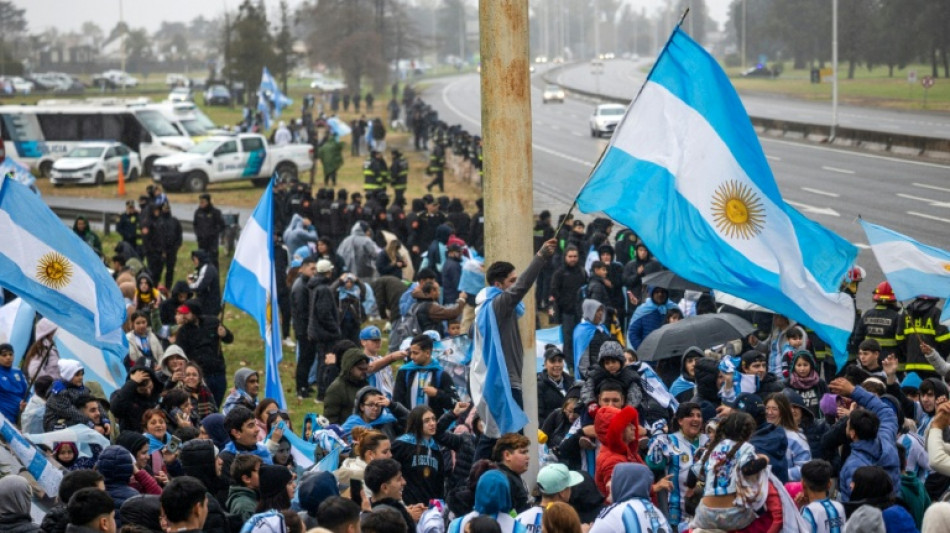
Arrogance or pride? Argentina grapples with World Cup villain label / Photo: TOMAS CUESTA - AFP

 أين الأمن القومي العربي؟.. تحليل نقدي لغياب الرؤية المشتركة

 Crude Oil Prices Rise on Reports of Houthi Attack on Saudi Refinery

 El Nino’s Weakening Grip on Tamil Nadu Rainfall Hinges on Potential Cyclone

 Black Friday Discounts Cut Prices on Two Top-Rated Wiper Blades

 Twickenham Grounds Team Prepares Pitch for Six Matches in Three Days

 Luxembourg City Plans €13 Million Abrigado Centre for 2029

 Two A1 Crashes Create Kilometres of Rush-Hour Congestion

 South Africa Places 36 Hospitals on Standby for Possible Imported Ebola Cases

 Tamil Nadu Secures Rs 58,214 Crore in Investments at Vettri Conclave

 فرنسا تدعو لتجريم "الفصل العنصري القائم على الجنس" دولياً

 أزمة الصواريخ الاعتراضية في البنتاغون: استنزاف المخزونات يفرض تعبئة صناعية حتى 2030

Critics blasted Argentina for dirty tactics and poor sportsmanship during their 1-0 loss to Spain, cementing the country's status as World Cup villain that grew throughout the tournament.
But Argentines argue they are just passionate and misunderstood.
"I think we deserve some credit for not being very well-liked, because of this tendency to be arrogant and look down on most people from a pedestal," said Leo Simone, 55, a lawyer, from his home north of Buenos Aires.
"They confuse arrogance with pride," his wife chimed in, preferring not to give her name.
While star Lionel Messi is beloved around the world, anti-Argentina sentiment grew as critics argued they were FIFA's darling and received favorable referee calls such as penalties and cards shown to opponents.
Then came the final, replete with fouls, brawls on the pitch, and the Argentine squad turning their backs when Spain received the World Cup trophy.
The New York Times called it a "tetchy, petulant and distasteful performance."
Former Germany player Thomas Hitzlsperger wrote on X that the team were "disgusting sportsmen" and British television personality Piers Morgan said "they basically just went around whacking as many Spanish players as they could."
Near Ezeiza Airport, where thousands of fans welcomed the players returning to Buenos Aires on Monday night, Maximiliano Heredia, a 35-year-old construction worker, said: "We've always been criticized, we're used to it. But we always give it our all."
-'We love it' -
Many Argentines online wore the criticism as a badge of honor.
"There's something about Argentine irreverence that they can't tolerate. Our rebelliousness irritates them, enrages them...they call us cocky, cheaters, dirty. And we love it, it fills us with pride," journalist Pedro Rosemblat wrote on his Instagram.
Sports journalist Ezequiel Fernandez Moores told AFP that some criticism was justified: "Sometimes we think we're the center of the universe, that God and our own navel are Argentine."
He said local football codes of provocation, mockery, and boasting did not translate to a global audience.
"We can't expect the world to understand us, our way of being, feeling, and expressing ourselves," he said.
Nevertheless, the team turning their backs on Spain as they received the cup was "not right," he said.
The lawyer Simone rejects the notion that physical play makes Argentina a violent team.
"Argentina is a team that fights hard, like almost all South American football, but Spain also resorted to tactical fouls," he said.
"It's football: if you don't like being hit, play volleyball."
For Evelio Rubio, a 47-year-old Venezuelan neurologist who has lived in Argentina for a decade, it is impossible to understand from outside how "football is experienced here."
For a Venezuelan accustomed to his national team not winning titles, experiencing that passion from within "is spectacular."
- Racism accusations -
Argentine fans and some players have also faced accusations of racism -- such as a chant sung by the team in the past mocking the Black players on the French team as not being really French.
There is also a long history of club-level fans throwing bananas on the field or making monkey gestures at Brazilian fans or black players.
During this World Cup, FIFA condemned racism in a statement after an Argentine supporter told a Black US influencer known as IShowSpeed to go "cry at the zoo" during a livestream.
American actor Samuel L. Jackson stirred controversy when he urged black people in an Instagram story not to support Argentina which he dubbed one of "the most racist countries in the world."
Sociologist Ivan Schuliaquer of the National University of San Martin said people should not take racism related to football and apply it generally to Argentine society and history.
This racism exists and should not be denied, he said.
"But, in many cases, these labels come from colonizing countries that have not yet fully resolved the issue of racism."
E.Aziz--SF-PST

