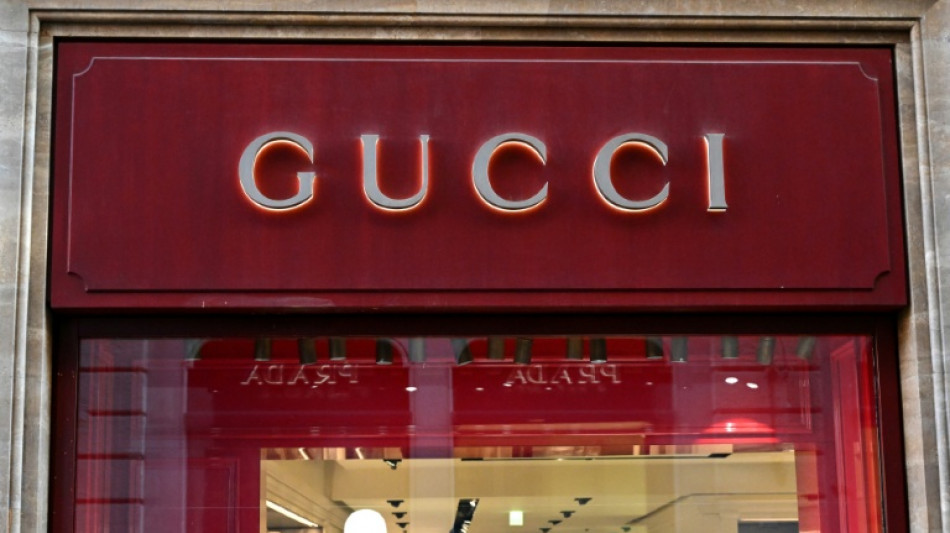
Luxury sector seeks to recover its cachet / Photo: Alberto PIZZOLI - AFP

 أين الأمن القومي العربي؟.. تحليل نقدي لغياب الرؤية المشتركة

 Crude Oil Prices Rise on Reports of Houthi Attack on Saudi Refinery

 El Nino’s Weakening Grip on Tamil Nadu Rainfall Hinges on Potential Cyclone

 Black Friday Discounts Cut Prices on Two Top-Rated Wiper Blades

 Twickenham Grounds Team Prepares Pitch for Six Matches in Three Days

 Luxembourg City Plans €13 Million Abrigado Centre for 2029

 Two A1 Crashes Create Kilometres of Rush-Hour Congestion

 South Africa Places 36 Hospitals on Standby for Possible Imported Ebola Cases

 Tamil Nadu Secures Rs 58,214 Crore in Investments at Vettri Conclave

 فرنسا تدعو لتجريم "الفصل العنصري القائم على الجنس" دولياً

 أزمة الصواريخ الاعتراضية في البنتاغون: استنزاف المخزونات يفرض تعبئة صناعية حتى 2030

Faced with a painful slowdown in recent years, the luxury sector is seeking to recover its mojo by juggling a back-to-basics approach with finding new ways to connect to clients.
The financial performances of the heavyweights -- profits amputated last year at LVMH and Kering, while Burberry posted a loss for its 2024-2025 financial year -- testify to the fact the market has undergone a change.
The causes are multiple, including the slowing Chinese market, aspirational customers becoming more cost-conscious, and concerns about quality.
"Following the Covid pandemic the luxury market was boosted by binge buying," said Eric Briones, a cofounder of the Paris School of Luxury who recently published a book about the transformation of the sector.
"And when the luxury sector was confronted with that strong demand, the artisanal model came under pressure," he said, pointing to recent outsourcing scandals in Italy.
- Luxury overexposed -
A major part of the luxury cachet is that products are made with superior materials by skilled artisans using traditional methods, which naturally limits production.
Italian police have been investigating major luxury brands for two years over work allegedly outsourced to poorly paid Chinese workers and grim labour conditions.
The post-Covid boom in demand was accompanied by price hikes of up to 50 percent for some labels, "without improvements in quality, and sometimes a drop in quality", Briones said.
Not only prices increased. Volumes did too.
"It is a fundamental question," said Christophe Cais, chief executive at CXG, a consultancy that works with premium and luxury brands about customer experiences.
"How many bags can you sell globally without becoming overexposed? Exclusivity is desirable and at the same time you want sales volume, so at what point does volume undermine exclusivity?" he said.
According to the consultancy Bain & Company, the luxury market lost 20 million clients between 2024 and 2025, after having lost 50 million over the previous two years.
- Consolidation -
Following years of economic and geographic growth for the big luxury groups, analysts say the time has come to prune.
"A phase of recentring and bringing some coherence to portfolios is underway," said Lea Hubsch at Kearney.
"That may include stepping back or finding another partner for certain brands that aren't so much part of the DNA" of a group, she added.
LVMH, the world's largest luxury conglomerate, recently sold off US label Marc Jacobs after holding it for three decades.
In January, it sold the DFS duty free shops' activities in China.
Kering, another luxury group based in France that is undergoing a major shakeup, sold off its beauty division to L'Oreal for four billion euros ($4.7 billion)
"This consolidation trend is sure to continue as conglomerates clean out underperforming or strategically less important divisions, focusing on core operations," CXG said in a recent report.
That will provide opportunities for other companies to snap brands and create new combinations.
Italy's Versace bought its home turf rival Prada last year for 1.25 billion euros.
Other deals are expected: Giorgio Armani indicated in his will that he wanted his fashion house to eventually join a luxury group like LVMH or L'Oreal.
- Desirability, quality, experiences -
Kering's new CEO Luca de Meo was quite clear in his presentation of the group's turnaround strategy last month that consolidation was coming, but he also signalled a back-to-basics approach.
He called for an upgrade in quality and efforts to restore the desirability of its leading brand Gucci, which fell victim to overexposure thanks to streetwear.
"Our priority is to make Gucci unmissable again," de Meo said.
"In one second, you must know it's Gucci -- and it doesn't mean covering the world with GG."
Analysts say that in addition to returning to an emphasis on craftmanship and quality, the industry is tuning into demand for experiences and tap into the wellness trend with customer service that rivals that of luxury hotels.
"Desire has shifted to 'experiences': beauty, hospitality, transformative luxury," Briones said.
Q.Jaber--SF-PST

