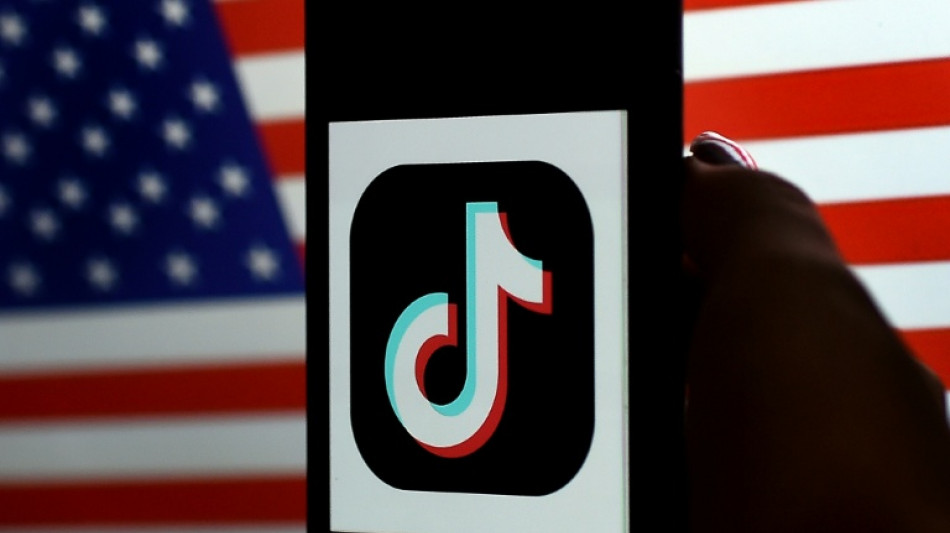
TikTok in the US goes American, but questions remain / Photo: Olivier DOULIERY - AFP/File

 The British historian helping the French rediscover de Gaulle

 Dodgers beat Braves to advance, Guardians survive in MLB playoffs
 Latin American, Caribbean women top Nobel literature buzz

 US says Fiji-based Chinese official paid bribes for Beijing
 After botched US execution, Christa Pike was nearly taken off life support

 Guinea-Bissau junta urges military unit loyal to ex-president to disarm
 As species decline, green turtles offer glimmer of hope
 Brothers Scott and Beauden Barrett named to start for All Blacks

 EU trade chief seeks to dial down China tensions

 'Never again Bolsonaro': thousands march ahead of Brazil election runoff
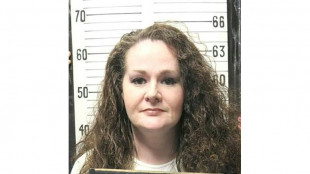 After botched execution, US woman was nearly taken off life support before revival

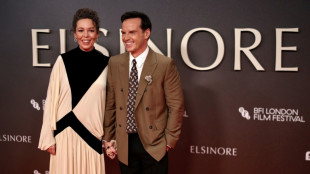 Searing AIDS drama 'Elsinore' opens London film festival
 Evicted pensioner who sparked Spain housing protests dies: tenant union

 Golf star Rahm quitting LIV tour over 'unacceptable' terms
 Thousands march fearing return of a Bolsonaro presidency in Brazil
 French PM denies police ordered to confront student protesters
 Rubio touts US power, calls on Europe to emerge from 'slumber'
 Trump says 'we don't think' Russian plague is bio-weapon

 Five children among 26 killed in Ukraine after Russian strikes

 Man City should 'accept' punishment for rule breaches, says Lineker

 US woman who survived botched execution is awake and speaking

 From 1800s to modern pharma: a Nobel-winning chemistry quest
 Southampton boss Eckert given suspended ban over 'Spygate'
 Russia warns of 'false' information as second plague case reported

 IEA ready to release more oil reserves if necessary

After a long legal saga, TikTok has established a majority American-owned joint venture to operate its US business, deflecting the threat of a ban over its Chinese ownership.
Here is a look at the potential consequences of the deal -- if any -- for users and beyond:
- What it means for users -
Whether the 200 million users in the United States will notice any difference in their online experience remains unclear. After the deal, users don't need to download a new app, though they were prompted to accept new terms of service covering "new types of location information" and data usage.
At the heart of the ownership drama is TikTok's powerful algorithm, which US lawmakers feared could be weaponized for data or propaganda by the Chinese government. The new ownership has promised to "retrain" the app's magic sauce, but how that will affect the user experience is still unknown.
TikTok insists that US users will maintain a "global TikTok experience," meaning US creators can still be discovered internationally and businesses can "operate on a global scale."
However, the US-only algorithm raises questions.
"There are still questions of how this new entity will interact with other versions of TikTok globally," said Jennifer Huddleston of the CATO Institute in Washington.
She also wondered about "what influence the US government may have over the algorithm and the free speech concerns that could arise from this new arrangement."
A major investor in the new entity is Larry Ellison, who is also financing his son David's recent takeover of Paramount and bidding war to take over Warner Bros -- potentially giving the family unprecedented power over US media.
Creators are watching especially closely, since their popularity and income depend on the algorithm's mysterious workings. Some have already migrated to other platforms, frustrated or anxious about the political turmoil surrounding the app.
- What it means for TikTok -
Before President Donald Trump took office, TikTok's fate in the United States looked bleak. The app was even briefly switched off in its biggest market after exhausting all legal options.
The political chaos has likely taken a toll on TikTok, despite Trump ultimately coming to its rescue.
"TikTok remains incredibly popular in the US, but it's facing more competition than ever, particularly from Instagram Reels," said Emarketer analyst Minda Smiley.
The algorithm that took the world by storm five years ago is no longer unique. Instagram Reels and YouTube Shorts now offer similar experiences, retaining engagement and attracting advertisers at comparable scale.
According to Emarketer, while US TikTok users still spend more time on the app than on other social networks, that time is declining each year, "signaling that the app is struggling to keep users hooked in the way it once did."
- What it means for national security -
The divestment may have satisfied the Trump administration, but whether it will satisfy the lawmakers who passed the divest-or-ban law remains to be seen, warned University of Florida media professor Andrew Selepak.
"The TikTok deal has improved the privacy of exactly no one and has done nothing to improve national security," said Kate Ruane of the Washington-based Center for Democracy & Technology.
ByteDance now owns just under 20 percent of the company, with the rest spread across several mainly US companies.
However, John Moolenaar, the Republican chairman of the House Foreign Affairs Committee, has vowed to conduct full oversight of the agreement, signaling potential trouble ahead.
TikTok says key functions like e-commerce and marketing will remain tied to the global entity and that could be problematic.
"I don't know how you could accomplish e-commerce and not take data from me as an American user," Selepak said.
For Carl Tobias of the University of Richmond School of Law, "It seems like Trump has just eclipsed whatever Congress might have intended in terms of national security."
Y.Shaath--SF-PST