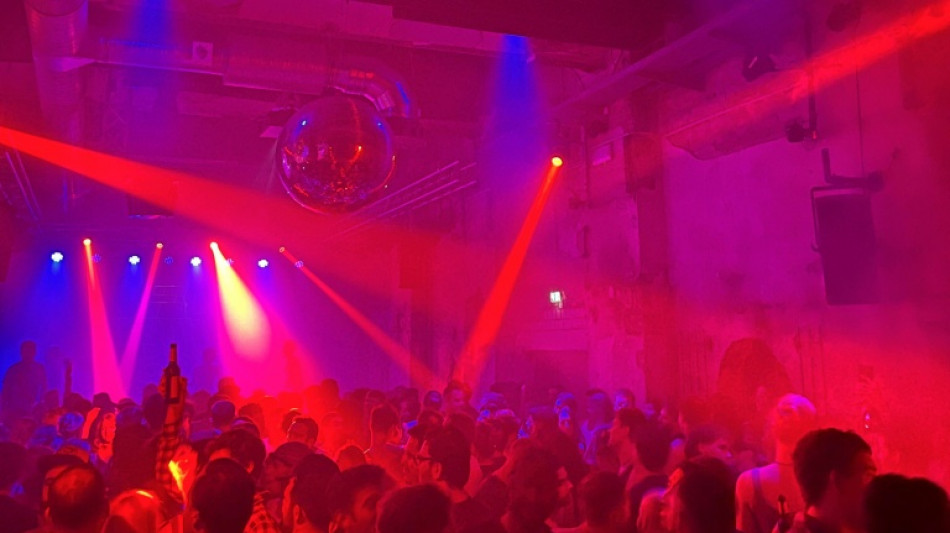
Don't let the party stop: Berlin's fight against 'club death' / Photo: Pierrick YVON - AFP

 WhiteBIT Launches Bitcoin Lightning Network Support, Powered by Voltage

 Oil surges, stocks sink as US reportedly eyes fresh Iran strikes
 Anne Carson: modern takes on Greek classics
 Canada's Anne Carson wins Nobel literature prize

 Ethiopia drones hit Eritrean troops in Tigray

 Russian strike on buses kills 30 in frontline Ukrainian city

 Thailand begins extradition process against Chinese journalist

 Quarantine, unease and rumours: Russian city grapples with plague scare

 Taiwan says exports hit record in September on AI demand
 Marc Marquez vows to 'attack' Martin's lead at Indonesian MotoGP

 Diplomats, schools in Saudi take safety measures after blasts heard: sources to AFP

 In Beijing, EU trade envoy says deficit with China 'unsustainable'
 Sri Lanka's de Silva quits as Test captain

 Alcaraz feeling 'mentally fresh' ahead of Shanghai return

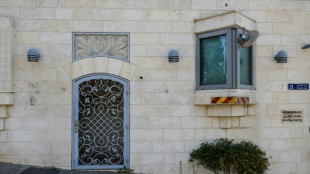 Israel drastically reduces British diplomatic presence in Jerusalem

 Stocks fall further as oil surge fans fresh inflation worries

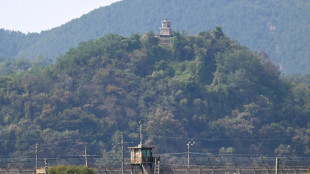 North Korea demands South show 'utmost respect' to restore relations

 Saudi says three dead in airport attacks claimed by Houthis

 'Mad dream': New showcase for African film opens in London

 All Blacks coach Rennie says Wallabies exit 'part of the game'

 The growing protests against India's poll body - and PM Modi

 Stocks fall further as oil spike fans fresh inflation worries
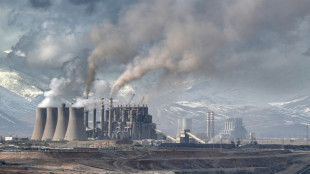 Bad COP, worse COP? EU tempers hopes for UN climate summit

 Rookie Henry named in Wallabies midfield to face All Blacks

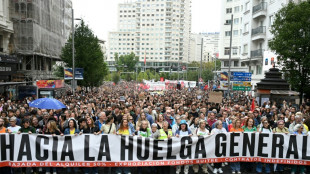 Housing crisis set to dominate Spain's snap election

Berlin, long hailed as one of the world's great party cities, is fighting to keep its famed techno clubs alive in the face of soaring prices, shifting tastes and a tightening property market.
For now, the mood is exuberant at Renate, a labyrinthine club with multiple DJs housed in a dimly-lit complex near the Spree river, a Berlin institution which recently celebrated its 18th birthday.
Industrial beats, a pulsating bass and coloured lights fill the dance floor as ever -- but many fear that the music will stop when the club's lease runs out at the end of the year.
British visitor Oscar Lister, 30, said it was "really sad" that it was "probably the last time" he could come to the long-cherished Renate, just like the Watergate club that closed last year.
Maike Schoeneberg, a 33-year-old Berliner, said that "all the clubs that I knew when I came of age are closing. The club culture in Berlin seems like it's going to pieces."
Berlin became a pumping techno and rave hub in the years following the 1989 fall of the Berlin Wall, as an anarchic counterculture moved into abandoned industrial sites to create music, dance and art spaces.
But in the decades since, population growth in the capital of reunified Germany and gentrification have transformed the city once famously dubbed "poor but sexy" by former mayor Klaus Wowereit.
Clubs have taken a hammering in recent years, between the Covid-19 pandemic, soaring inflation, a decline in budget flights bringing weekend revellers, and some youngsters' shift away from clubbing to outdoor music festivals.
The business squeeze has in turn led many establishments to raise entry charges and drinks prices, setting off a vicious circle where many young people and stalwarts of the scene feel priced out.
The world-famous Berghain club is still going strong, but the phenomenon dubbed "club death" has since claimed some of Berlin's other famous nightspots.
- Forced into bankruptcy -
Late last year, the Clubcommission, the association representing Berlin's clubs, sounded the alarm, saying 46 percent of its members were considering closing within 12 months.
Almost two-thirds of them said they had recently suffered a "considerable" drop in takings.
That's the fate that has befallen SchwuZ, whose director Katja Jaeger says is "the oldest and biggest queer club in Germany", if not Europe.
"From 2024 onwards we have really noticed a fall in profits," she told AFP, adding that this had resulted in a shortfall of around 50,000 euros ($58,800) a month.
The clubbers still gracing the doors aren't as loose with their cash as they used to be.
"People won't have three or four drinks, maybe just one," said Jaeger.
In July, SchwuZ was forced to declare bankruptcy and to appeal to the city's LGBTQ community to "come back to party" to avoid the venue closing for good.
It also launched a fundraising appeal late last month that has netted around 51,000 euros in donations to date.
Jaeger says that SchwuZ is also trying to exploit its 1,600 square metres (17,200 square feet) of real estate by renting it out for private events, plays and daytime parties as well as nights dedicated to younger people, goth or Latin music.
- 'Always reinventing' -
Similar responses to the crisis could be spotted at a festival organised by the Clubcommission which ended on Sunday.
Alongside exhibitions and performances linking club culture to other parts of the Berlin arts scene, the festival awarded prizes to certain clubs for their initiatives.
One of them was Maaya, a new cultural centre inspired by Africa and its diaspora.
With music nights, a swimming pool, food and other cultural events, Maaya has been "a great success" since launching last year, one of the founders, Aziz Sarr, told AFP.
Clubcommission director Katharin Ahrend pointed out that it's not all doom and gloom.
"New projects are emerging, new places are opening, even if not that many," she told AFP.
Clubcommission spokeswoman Emiko Gejic said there are "lots of new formats, collectives of queer people and people of colour, and sober raves".
"I think Berlin is a city that's always going to be reinventing itself," regular party-goer Anne, 32, told AFP.
She said she had enjoyed some of the newer spaces even more because they were "creating new ways to experience nightlife" outside what she called "the hegemony of the big Berlin clubs".
B.AbuZeid--SF-PST