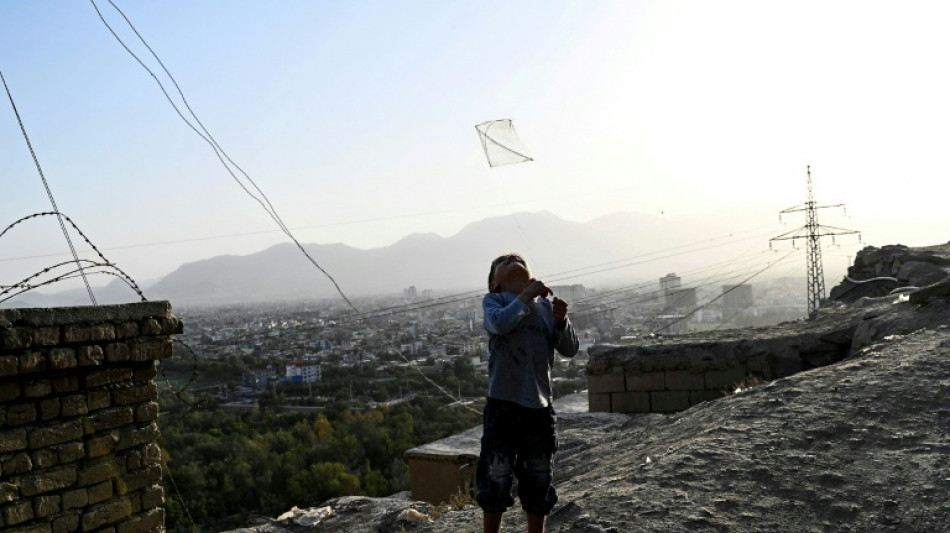
UN calls for Taliban to restore internet as Afghanistan goes dark / Photo: Wakil KOHSAR - AFP

 فاطمة بوش ترفع شعار 'ليحيا المسيح الملك' في ختام ملكة جمال الكون

 أين الأمن القومي العربي؟.. تحليل نقدي لغياب الرؤية المشتركة

 Crude Oil Prices Rise on Reports of Houthi Attack on Saudi Refinery

 El Nino’s Weakening Grip on Tamil Nadu Rainfall Hinges on Potential Cyclone

 Black Friday Discounts Cut Prices on Two Top-Rated Wiper Blades

 Twickenham Grounds Team Prepares Pitch for Six Matches in Three Days

 Luxembourg City Plans €13 Million Abrigado Centre for 2029

 Two A1 Crashes Create Kilometres of Rush-Hour Congestion

 South Africa Places 36 Hospitals on Standby for Possible Imported Ebola Cases

 Tamil Nadu Secures Rs 58,214 Crore in Investments at Vettri Conclave

 فرنسا تدعو لتجريم "الفصل العنصري القائم على الجنس" دولياً
The United Nations called on Afghanistan's Taliban authorities Tuesday to immediately restore internet and telecommunications in the country, 24 hours after a nationwide blackout was imposed.
The government began shutting down high-speed internet connections to some provinces earlier this month to prevent "immorality", on the orders of shadowy supreme leader Hibatullah Akhundzada.
Mobile phone signal and internet service weakened on Monday night until connectivity was less than one percent of ordinary levels.
Afghans are unable to contact each other, online businesses and the banking systems have frozen, and diaspora abroad cannot send crucial remittances to family.
All flights were cancelled at Kabul airport on Tuesday, AFP journalists saw.
"The cut in access has left Afghanistan almost completely cut off from the outside world, and risks inflicting significant harm on the Afghan people, including by threatening economic stability and exacerbating one of the world's worst humanitarian crises," the UN Assistance Mission in Afghanistan (UNAMA) said in a statement.
"The current blackout also constitutes a further restriction on access to information and freedom of expression in Afghanistan," it added.
The UN rights office called the blackout an "extremely serious human rights violation".
"Women and girls already excluded from public life are especially affected," it said on social media Tuesday, calling for immediate reconnection.
It is the first time since the Taliban government won their insurgency in 2021 and imposed a strict version of Islamic law that communications have been shut down in the country.
"I came to work this morning but we cannot run any business because clients do not have access to online banking, transactions, cash withdrawal, or money authorisation," a bank worker who asked not to be named told AFP in Kabul.
"When there was internet, we never felt how important it was."
The post office was also unable to operate because it required bank services to carry out its work, staff told AFP.
- Radio communications -
Minutes before the shutdown on Monday evening, a government official warned AFP that the fibre optic network would be cut, impacting mobile phone services, "until further notice".
"There isn't any other way or system to communicate... the banking sector, customs, everything across the country will be affected," said the official, who asked not to be named.
Telephone services are often routed over the internet, sharing the same fibre optic lines, especially in countries with limited telecoms infrastructure.
The telecommunications ministry refused to let journalists enter the building in Kabul on Tuesday.
A UN source said Tuesday that "operations are severely impacted, falling back to radio communications and limited satellite links".
AFP journalists witnessed Taliban security forces using radios to communicate with each other at public buildings such as the airport and post office.
Over the past weeks, internet connections have been extremely slow or intermittent.
On September 16, when the first internet services were cut in northern provinces, Balkh provincial spokesman Attaullah Zaid said the ban had been ordered by the Taliban's leader.
"This measure was taken to prevent vice, and alternative options will be put in place across the country to meet connectivity needs," he wrote on social media.
"Recent studies in Afghanistan found that internet applications have badly affected the ongoing, economic, cultural and religious foundations of society," he claimed.
The Taliban leader reportedly ignored warnings from some officials this month about the economic fallout of cutting the internet and ordered authorities to press ahead with a nationwide ban.
Netblocks, a watchdog organisation that monitors cybersecurity and internet governance, said the blackout "appears consistent with the intentional disconnection of service".
On Tuesday, it said connectivity had flatlined below one percent, with no restoration of service observed.
In 2024, Kabul had touted the 9,350-kilometre (5,800-mile) fibre optic network -- largely built by former US-backed governments -- as a "priority" to bring the country closer to the rest of the world and lift it out of poverty.
U.Shaheen--SF-PST

