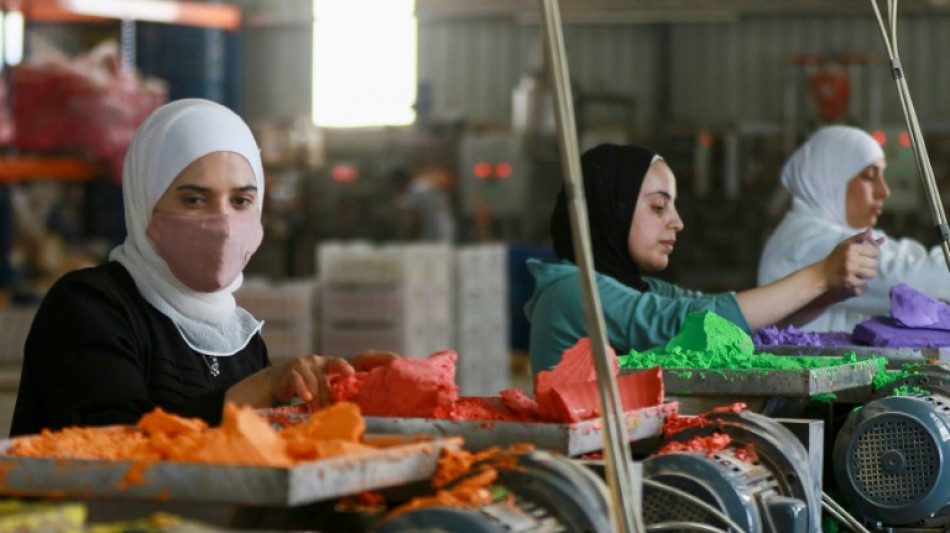
Jordan chalks up business success from limestone riches / Photo: Khalil MAZRAAWI - AFP

 Fuel shortage triggers queues on resort island Bali
 Sao Tome's niche vanilla finds far-away fans

 China-North Korea bridge to open Thursday, 12 years late
 Asian stocks mostly down as tech firms struggle to claw back losses
 AI boom drives record sales at Dutch tech giant ASML

 Trump says 'massive' oil, gas, mineral exploration to begin in Greenland

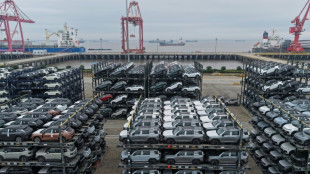 China heads for record trade surplus as exports surge

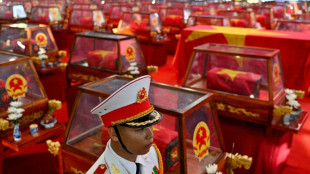 Vietnam mourns 700 war dead in major push to identify missing

 Relentless Swiatek wins all-Polish battle to launch Wuhan campaign

 Seeing pivotal election, Israelis fly from around world to vote

 South Korea's Eom 'racially abused' in England's Championship: club

 Asian markets mixed as tech firms claw back some losses

 India shuts down iconic Delhi protest site after three decades
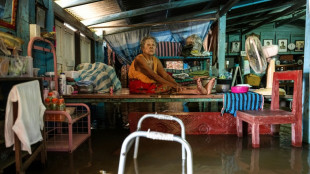
 Japan urges Russia for 'impartial treatment' of arrested journalist

 Lula, Bolsonaro ordered to call off attempts at online censorship
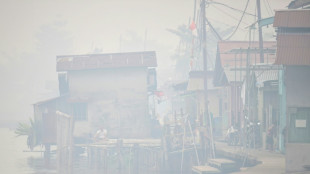
 EU takes a page from Ireland's AI playbook

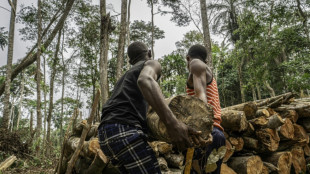 Global deforestation slowed in 2025 but surged in Congo basin: study

 Saudi says Houthi attacks sparked Aramco fire, wounded 4 in Riyadh

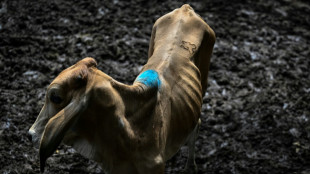 Few buyers for starving cattle in El Nino parched El Salvador

 Bybit Expands Beyond Crypto as CEO Outlines Next Phase of Financial Platform

 Bayern held by Viking after 'super dumb' Olise red in Champions League

 Why AI makes computer worms harder to stop

 US fines Bank of America $1.2 bn for anti-money laundering violations

 Bayern held by Viking after Olise sees red in Champions League

 Atletico down Carrick's struggling Man United

Long before whiteboards, beamers and laptops entered modern school classrooms, teachers relied on the humble, dusty, sometimes screechy blackboard chalk -- a material that has created a Jordanian business success story.
Chemical engineer Salah Aloqbi remembers sitting on a bus in Amman in 1995 when he hit on the idea that would lead him to create his company. More than two decades later it boasts 150 staff, with exports to more than 100 countries.
Chalk, a white, soft limestone, was formed aeons ago when the shells of tiny marine creatures were compressed on the sea floor -- and the landlocked Middle Eastern desert country of Jordan is blessed with vast deposits.
"It was a game-changing idea," recalled Aloqbi, now 49, who founded the Jordan Chalk Manufacturing Company.
"I was returning from work at the Jordan Carbonate Company when I heard a radio interview saying that the calcium carbonate produced by the company is used in various industries in Jordan -- except the chalk industry."
Aloqbi pondered how to make blackboard chalk, which was until then wholly imported, to gain extra value from the calcium carbonate that is also used to produce white cement, make soils less acidic, and toothpaste more abrasive.
Seven years later, he launched a small factory in Karak governorate south of Amman, with two rooms and just five workers, and started experimenting -- initially by pulverising the porous material with a meat mincer.
"But the chalk that we produced at that time was no longer used around the world, so we moved to produce dustless medical chalk," he said, referring to a carbonate-based type with larger particles.
- The right stuff -
Some 2,149 attempts later, the businessman said proudly, he hit the right formula for dustless chalk, creating a "very strong export opportunity" that now sees his company produce 10 billion pieces a year.
Jordan has a near endless supply of the raw material, with the ministry of energy and mineral resources estimating the country's "assets of limestone exceed 1.3 billion metric tons".
Limestone is the common form of calcium carbonate CaCO3, the main ingredient for chalk.
"It comes to mind that this is an outdated product, but the truth is that we are struggling to meet the great demand," Aloqbi said as he inspected hundreds of cartons heading to Britain and Germany, Mali and Morocco.
The chalk pieces come in a wide palette of colours and are used for art and play around the world.
The firm has also branched out into coloured crayons and modelling clay, and is the country's only producer of chalk sticks.
Today, the company sits on a 7,500 square metre plot and offers sought-after jobs in a country where the unemployment rate soared to 25 percent last year, about the same as the poverty rate.
"Most of us are from villages in Karak governorate," said one employee, 28-year-old Sundus Majali. "More than half of the workers are women."
At first, she said, "it was difficult for parents to allow females to work ... But today they have no problem with that, especially because the factory is safe, not like other workplaces."
Another colleague, Alaa Aloqbi, 33, said "the factory has provided job opportunities at a time when life became difficult".
O.Mousa--SF-PST