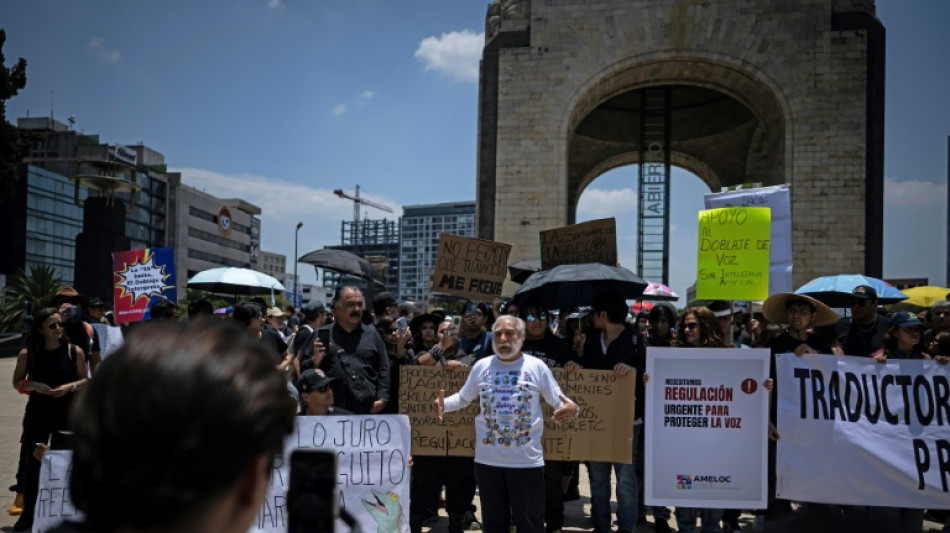
Mexican voice actors demand regulation on AI voice cloning / Photo: Carl de Souza - AFP

 Ms. Rachel Says Celebrity Silence on Gaza Is 'F--ked Up' and Drives Her to Swear

 Maryland Regulators and Air Force Clash Over Jet Fuel Spill Cleanup and Golf Course Exemption

 Bishop Museum Races to Save Rare Megamouth Shark Specimen

 Musk Questions AI Development Viability as SpaceX Leasing Revenue Surges

 مصطفى معروفي ينشر قصيدة 'أصوغ كلامي أهتدي بتجاربي'

 Luxembourg Housing Petition Passes Threshold for Parliamentary Consideration

 Raheem Sterling Receives Suspended Sentence After Lamborghini Crash

 Audience to Choose the Set List at Luxembourg's First FAMIL Jukebox Night

 Luxembourg Pay Rise Delayed as Regional and World Headlines Develop

 مواجهة في البرازيل بين نشطاء وفلسطينيين وسياح إسرائيليين حول جدارية مؤيدة

 رئيس جامعة القدس يستعرض نموذج الشراكة بين التعليم العالي والصناعة في قمة QS بأبوظبي

Mexican actors protested the growing threat artificial intelligence poses to their industry, calling on Sunday for better regulations to prevent voice cloning without consent.
The rise of AI was a key issue in Hollywood's 2023 actors and writers' strikes, as creatives feared studios would use the technology to replace paid content.
Last year, actor Scarlett Johansson accused tech firm OpenAI of imitating her voice for one of their chatbots. The company responded by modifying the tone.
From the Monument to the Revolution in downtown Mexico City, dozens of audiovisual professionals held signs, including ones that read: "I don't want to be replaced by AI."
"We are requesting that the voice be considered a biometric so that it is protected," Lili Barba, president of the Mexican Association of Commercial Announcements, told AFP.
The 52-year-old actress, known for voicing Disney's Daisy Duck, referred to a video by the National Electoral Institute (INE) on TikTok.
Released following the judicial elections on June 1, the video used the voice of the late actor Jose Lavat -- famous for the Spanish dubbing of stars like Robert De Niro and Al Pacino -- to thank citizens for voting.
According to local media, Lavat's voice was used without his family's consent.
"It's a major violation, and we can't allow it," said Barba.
Actress Harumi Nishizawa, 35, said dubbing a character is "like embroidery."
"As an artist, you can create certain tones, pay attention to nuances … observe the real actors' expressions and try to emulate what's happening on screen," she said.
If no legislation is passed, she said voice dubbing done by humans "will disappear," at the expense of millions of artists' jobs.
In March, Amazon's streaming platform Prime Video announced tests of an AI-assisted dubbing system, a technology also promoted by YouTube.
Last month, South Korea's entertainment powerhouse CJ ENM -- behind the Oscar-winning film Parasite -- showcased an AI tool that combines visuals, audio and voice in one system while automatically generating consistent 3D characters.
But human voice actors still have the edge, said Mario Heras, dubbing director for video games in Mexico.
AI cannot make dialogue "sound funny, broken, off -- or alive," he said.
The human factor, he added, "protects us in this rebellion against the machines."
G.AbuGhazaleh--SF-PST

