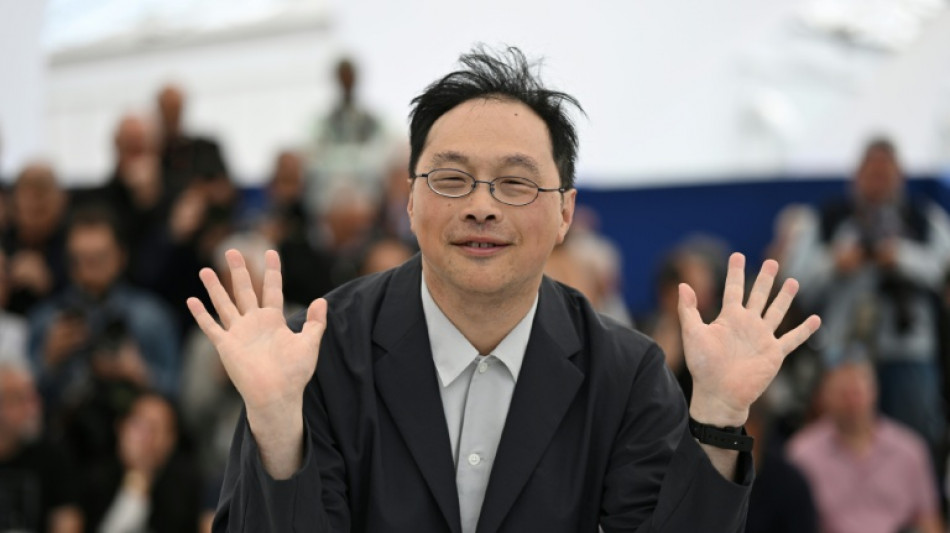
Japanese filmmaker Fukada casts queasy gaze on J-pop idols / Photo: Bertrand GUAY - AFP

 Ms. Rachel Says Celebrity Silence on Gaza Is 'F--ked Up' and Drives Her to Swear

 Maryland Regulators and Air Force Clash Over Jet Fuel Spill Cleanup and Golf Course Exemption

 Bishop Museum Races to Save Rare Megamouth Shark Specimen

 Musk Questions AI Development Viability as SpaceX Leasing Revenue Surges

 مصطفى معروفي ينشر قصيدة 'أصوغ كلامي أهتدي بتجاربي'

 Luxembourg Housing Petition Passes Threshold for Parliamentary Consideration

 Raheem Sterling Receives Suspended Sentence After Lamborghini Crash

 Audience to Choose the Set List at Luxembourg's First FAMIL Jukebox Night

 Luxembourg Pay Rise Delayed as Regional and World Headlines Develop

 مواجهة في البرازيل بين نشطاء وفلسطينيين وسياح إسرائيليين حول جدارية مؤيدة

 رئيس جامعة القدس يستعرض نموذج الشراكة بين التعليم العالي والصناعة في قمة QS بأبوظبي
Exploitative contracts that force young female Japanese pop stars to forego relationships and sex are at the heart of director Koji Fukada's latest film, which has premiered in Cannes.
The 45-year-old director said he was inspired by a news report about a Japanese "idol", as the starlets are known, who was sued by her management agency after breaking a "no dating" clause.
Fukada cast former idol Saito Kyoko in the lead role of his feature "Love on Trial" which tells the story of a young performer who undergoes a similar ordeal.
"I felt a deep discomfort, a real unease when I found out, and that's what made me want to look into the subject a bit and then turn it into a screenplay," he told AFP in Cannes.
The film highlights the unequal relationship between management agencies and the idols, who are usually teenagers trained to become a mixture of pop star, online influencer and advertising prop.
But the core of the film examines the more unusual demand that the women remain unattached and chaste -- in order for their older, male fanbase to project their fantasies.
As the lyrics to the songs of Fukada's fictional five-member group "Happy Fanfare" make clear, the performers spend their time singing about the idea of falling in love.
"The industry really encourages this kind of artificial love between fans and their idols," the director of "The Real Thing" and "Harmonium" explained.
"As soon as an idol appears to have a romantic relationship with someone, it's well known that they lose a lot of popularity."
As well as selling merchandise, the women also offer their time for meet-and-greet events -- for a price -- at which fans can come to talk to them, hold hands, and take selfies.
- 'Unusual job' -
The activist director, who has previously spoken out about sexual harassment and the Japanese film industry's over-reliance on manga adaptations, believes the J-pop industry reflects the prejudices of Japanese society.
"There is a lot of prejudice and gender discrimination towards women in our patriarchal system," he said. "We tend to believe that women must be pure, untouched and submissive."
As his film makes clear, many of the stars themselves are happy to encourage this image in pursuit of fame and wealth.
"I met idols who are still active. Some believe that the ban on romantic relationships is a problem. Others think it's normal because it's a very unusual kind of job," he said.
He hopes his film, which is set for release from May, will spark debate in Japan.
"I tried to make a film that could bring out each person's perception of gender, love, freedom, and issues of discrimination," he said.
"And that every viewer, whether they agree or disagree with the choices made by the heroine, could take part in a discussion around these questions."
G.AbuHamad--SF-PST

