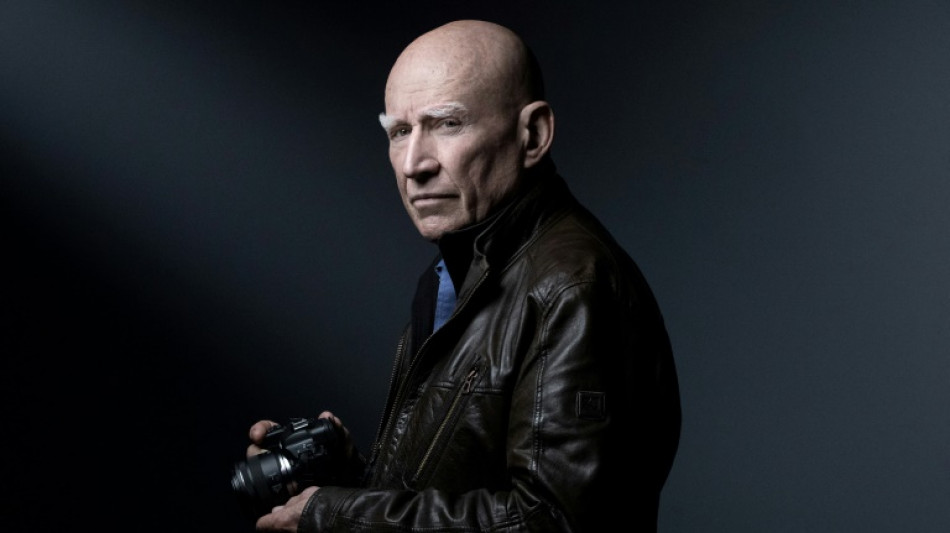
Sebastiao Salgado, photojournalism elevated to art / Photo: JOEL SAGET - AFP

 Trump rules out new Iran attack before US midterm elections
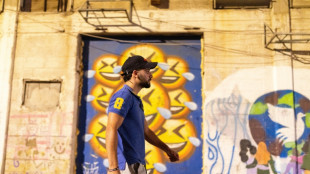 Far-right influencer shows Israel's coarse political turn
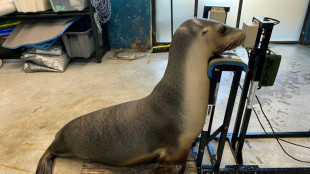 Seals and sea lions get hearing tested at Australia zoo

 Mourinho's Real Madrid playing catch-up in Clasico countdown
 Joy as USS Lincoln back home after troubled Gulf deployment
 OpenAI says Iran, Russia influence ops busted
 Anthropic bans 'cruel' behavior against its Claude AI
 Anne Carson's Nobel literature prize 'a proud moment for Canada': PM

 Montagliani to seek CONCACAF re-election in boost for Infantino: reports
 Oil surges, stocks sink on jitters over US plans in Iran war
 John Cena and Jessica Biel hit the gas in 'Matchbox: The Movie'

 US, Ukrainians, Europeans to discuss 'new ideas' to end war
 Unproven 'cures' pushed online amid plague concerns
 Nigeria looks to ease fuel prices as election looms
 Prosecutors in Maradona death trial seek sentences up to 12 years
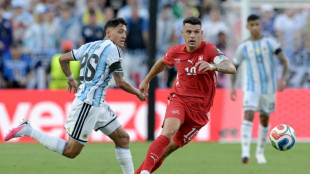 Swiss captain Xhaka gets suspended fine for fake Covid cert
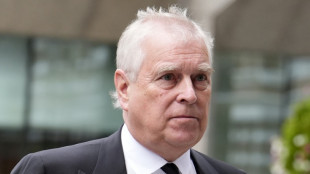 Ex-prince Andrew raid warrants ruled 'unlawful' but UK police maintain probe
 Two Latvians arrested inside UK military base: police

 Eckert 'forever grateful' for Southampton support over spy scandal
 Venezuela's Maduro, wife hit with new US torture charges
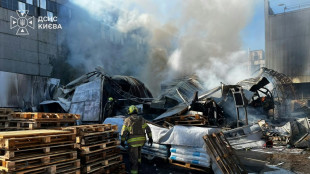
 Argentina friendlies no fairy tale for African footballers
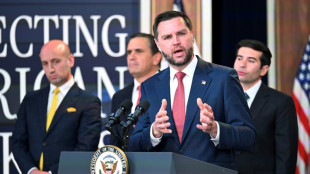 US suspending Microsoft from visa program: Vance

 Man City must 'stick together' during crisis, says Haaland
 CAS opens hearing into Senegal AFCON title appeal
 UK police agree searches for ex-prince Andrew's homes 'unlawful': judge
Brazilian photojournalist Sebastiao Salgado, who died Friday, spent five decades chronicling the best and worst of planet Earth, from far-flung natural wonders to horrifying human catastrophes.
The self-taught photographer crisscrossed the globe throughout his life, from Rwanda to Guatemala, from Indonesia to Bangladesh, documenting famine, war, exodus, exploitation and other tragedies of the so-called Third World with the empathy of "someone who comes from the same part of the world," as he said.
His elegant black-and-white universe also celebrated the planet's immense beauty, such as the "flying rivers" of the Amazon rainforest, and served as a warning of nature's fragility in the face of climate change.
He leaves an iconic body of work, published in "Life," "Time" and other leading magazines, collected in a stunning series of books, and regularly exhibited in the museums of world capitals such as Paris, where he lived for much of his life.
Salgado won a long list of prestigious prizes across his career, including the Prince of Asturias and Hasselblad awards, and was the protagonist of filmmaker Wim Wenders' Oscar-nominated documentary "The Salt of the Earth" (2014), about the photographer's sojourns in distant corners such as the Arctic Circle and Papua New Guinea.
- From Africa to Reagan -
Born on February 8, 1944 in the rural county of Aimores in southeastern Brazil, Salgado grew up with seven sisters on their father's cattle farm.
He recalled it as a place where visiting friends and family meant traveling for days, which he said taught him the patience to wait for the magical "fraction of a second" of the perfect photograph.
He earned a master's degree in economics from the University of Sao Paulo, where he was active in the left-wing student movements of the turbulent 1960s. In 1969, he and his wife, Lelia Wanick, fled to France to escape Brazil's military dictatorship. He went on to receive French citizenship.
He picked up Wanick's camera by chance one day in 1970 and was instantly hooked.
"I realized snapshots brought me more pleasure than economic reports," he said.
His job with the International Coffee Organization took him frequently to Africa, where he started taking pictures on the side. He would go on to turn down a dream job at the World Bank in Washington to pursue photography full-time.
Wanick, who staunchly backed his career, stayed home raising their two sons, Juliano Ribeiro and Rodrigo, who was born with Down syndrome.
Salgado's photos of drought and famine in countries such as Niger and Ethiopia landed him a job at renowned photo agency Magnum in 1979.
He was working there when he captured one of the biggest news stories of the time, the assassination attempt on US president Ronald Reagan in 1981.
Salgado made front pages worldwide with his photos of the shooting -- 76 frames in 60 seconds.
But his true rise to fame came with his first book, "Other Americas" (1984) -- a series of portraits taken throughout Latin America -- and his unforgettable photographs of misery and resistance among the hordes of mud-covered miners at Brazil's infamous Serra Pelada, the biggest open-air gold mine in the world.
Critics accused him of "beautifying suffering," but Salgado never veered from his aesthetic or his work.
- Lens on Bolsonaro -
Painstaking and meticulous, he liked to take his time getting to know his subjects, his three Leica cameras hanging from his neck.
Photography "is a way of life," he told AFP in 2022, on a trip to Sao Paulo to present his exhibition "Amazonia," the product of seven years shooting the world's biggest rainforest.
"It's connected with my ideology... my human and political activity. It all goes together."
A dedicated climate activist, he was a fierce critic of Brazilian President Jair Bolsonaro (2019-2022) for the far-right leader's push to open the Amazon to agribusiness and mining.
Salgado also founded an environmental organization called Instituto Terra to revive disappearing forests in his home state, Minas Gerais, a successful project joined by more than 3,000 landowners.
A.AlHaj--SF-PST