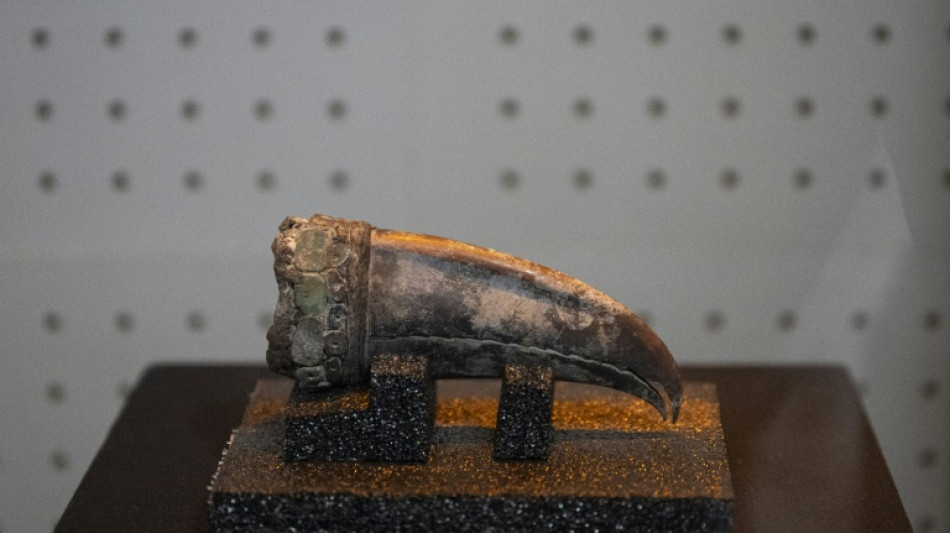
Remains of 5,000-year-old noblewoman found in Peru dig / Photo: ERNESTO BENAVIDES - AFP

 Ms. Rachel Says Celebrity Silence on Gaza Is 'F--ked Up' and Drives Her to Swear

 Maryland Regulators and Air Force Clash Over Jet Fuel Spill Cleanup and Golf Course Exemption

 Bishop Museum Races to Save Rare Megamouth Shark Specimen

 Musk Questions AI Development Viability as SpaceX Leasing Revenue Surges

 مصطفى معروفي ينشر قصيدة 'أصوغ كلامي أهتدي بتجاربي'

 Luxembourg Housing Petition Passes Threshold for Parliamentary Consideration

 Raheem Sterling Receives Suspended Sentence After Lamborghini Crash

 Audience to Choose the Set List at Luxembourg's First FAMIL Jukebox Night

 Luxembourg Pay Rise Delayed as Regional and World Headlines Develop

 مواجهة في البرازيل بين نشطاء وفلسطينيين وسياح إسرائيليين حول جدارية مؤيدة

 رئيس جامعة القدس يستعرض نموذج الشراكة بين التعليم العالي والصناعة في قمة QS بأبوظبي
Archaeologists in Peru said Thursday they found the 5,000-year-old remains of a noblewoman at the sacred city of Caral, revealing the important role played by women in the oldest center of civilization in the Americas.
"What has been discovered corresponds to a woman who apparently had elevated status, an elite woman," archaeologist David Palomino told AFP.
The mummy was found in Aspero, a sacred site within the city of Caral that was a garbage dump for over 30 years until becoming an archaeological site in the 1990s.
Palomino said the carefully preserved remains, dating to 3,000 years BC, contained skin, part of the nails and hair and was wrapped in a shroud made of several layers of fabric and a mantle of macaw feathers.
Macaws are colorful birds that belong to the parrot family.
The woman's funerary trousseau, which was presented to reporters at the culture ministry, included a toucan's beak, a stone bowl and a straw basket.
Preliminary analyses indicate that the remains found in December belong to a woman between 20 and 35 years old who was 1.5 meters (5 feet) tall, and wearing a headdress that represented her elevated social status.
Palomino told reporters the find showed that while "it was generally thought that rulers were men, or that they had more prominent roles in society" women had "played a very important role in the Caral civilization."
Caral society developed between 3000 and 1800 BC, around the same time as other great cultures in Mesopotamia, Egypt and China.
The city is situated in the fertile Supe valley, around 180 kilometers (113 miles) north of Lima and 20 kilometers (12 miles) from the Pacific Ocean.
It was declared a UN World Heritage Site in 2009.
L.AbuTayeh--SF-PST

