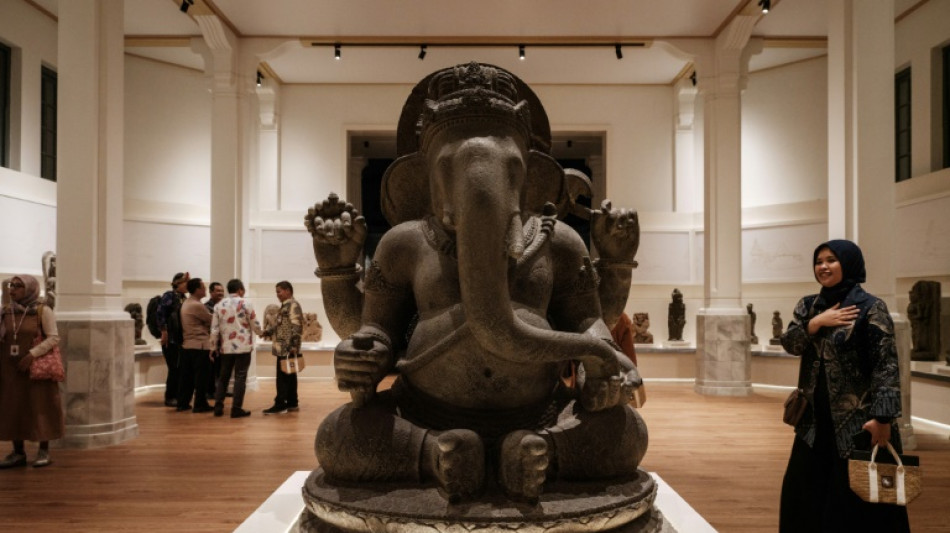
Indonesians embrace return of plundered treasure from the Dutch / Photo: Yasuyoshi CHIBA - AFP

 المفكر الفلسطيني نسيم قبها يطرح «المعلم المرآة»: بيان أنطولوجي لاسترداد إنسانية التعليم

 فاطمة بوش ترفع شعار 'ليحيا المسيح الملك' في ختام ملكة جمال الكون

 أين الأمن القومي العربي؟.. تحليل نقدي لغياب الرؤية المشتركة

 Crude Oil Prices Rise on Reports of Houthi Attack on Saudi Refinery

 El Nino’s Weakening Grip on Tamil Nadu Rainfall Hinges on Potential Cyclone

 Black Friday Discounts Cut Prices on Two Top-Rated Wiper Blades

 Twickenham Grounds Team Prepares Pitch for Six Matches in Three Days

 Luxembourg City Plans €13 Million Abrigado Centre for 2029

 Two A1 Crashes Create Kilometres of Rush-Hour Congestion

 South Africa Places 36 Hospitals on Standby for Possible Imported Ebola Cases

 Tamil Nadu Secures Rs 58,214 Crore in Investments at Vettri Conclave
In the mid-19th century, Dutch colonial officials climbing an Indonesian volcano spotted an ancient statue meant to serve as protection against misfortune, looted it, and took it to the Netherlands.
Today, the volcanic rock likeness of the Hindu god Ganesha, bearing four arms and the head of an elephant, stands tall inside Indonesia's National Museum in the capital Jakarta.
The country is repatriating hundreds of similarly pillaged treasures, reclaiming parts of its history lost to looting under its former colonial ruler from the late 17th century to independence in 1945.
"We fully support it because it is part of preserving our culture," said 23-year-old banker Devi Aristya Nurhidayanti, standing in front of the Ganesha statue.
"Nowadays, not many people are aware of the history. Hopefully, through efforts like this, more people will learn that this is part of our heritage."
The effort is part of a global restitution movement for goods plundered from the Global South, where heritage workers are preparing to bring back pieces missing from their colonial pasts, which could take decades.
As of mid-December, 828 cultural items have been returned to Indonesia from the Netherlands, according to the Indonesian Heritage Agency.
They represent a mosaic of tradition, culture and craftsmanship from across the Southeast Asian archipelago nation -- from coins and jewellery to textiles and weapons.
The Netherlands government has pledged to return cultural artefacts stolen during more than three centuries of Dutch control, based on a 2020 recommendation from a government advisory committee.
One cabinet minister has said the items should have never been taken.
- 'Spiritual effort' -
Indonesia's strong diplomatic ties with the Dutch played a key role in negotiations, starting with a 2017 cultural agreement, according to I Gusti Agung Wesaka Puja, head of the Indonesian Collection Repatriation Team in the Netherlands.
"The significance of this is to demonstrate to the international community that Indonesia is capable of having these objects returned," he told AFP.
"This counters sceptics who claim Indonesia lacks the capacity to preserve such valuable heritage."
Among the items returned are three other Hindu-Buddhist sculptures depicting deities taken from a 13th-century temple compound in the Singosari kingdom located near the active Mount Semeru volcano on Indonesia's main island of Java.
The standing Ganesha is one of only a few in the world, said East Java-based archaeologist Dwi Cahyono.
"This standing position symbolises vigilance against danger," he told AFP.
So its repatriation is a "spiritual effort to calm the wrath of disasters in Indonesia", which sits on the Pacific's earthquake-prone Ring of Fire.
Thousands of stolen cultural items are believed to remain abroad in the Netherlands and other countries, with more research needed to bring them home.
While no further repatriations from the Dutch are slated, Dwi hopes to see more works making their way back in the coming years.
"I still look forward to the return of more assets, and this remains a priority, as these objects are crucial to strengthening our cultural heritage," he said.
- 'Temples were empty' -
There is also a debate about what Indonesia should do with the artefacts and how to deliver them to the Indonesian people when they return -- through displays or returning them to their original locations.
"What meaning do we want to present to the people?" asked archaeologist Irmawati Marwoto from the University of Indonesia.
"The museum must... present these objects to the public in a meaningful way and enhance knowledge about them."
The expert argued the country's museums must be prepared for the storage of the treasures "before requesting the return of more across the world", because of fears that items won't be properly maintained.
Minister of Culture Fadli Zon has said the government plans to upgrade and standardise Indonesia's museums, securing them from natural disasters, but has not provided details.
For Catur Puji Harsono, a history enthusiast from Central Java, any form of the statues being returned to their original sites, including replicas, would make him happy.
"When I was a child, I loved visiting the temple compounds. But unfortunately, the temples were often empty," the 32-year-old said, showing his two sons the newly repatriated artefacts in the national museum.
"Having that memory again is important. It reminds us of the identity of the Indonesian nation."
D.Qudsi--SF-PST
