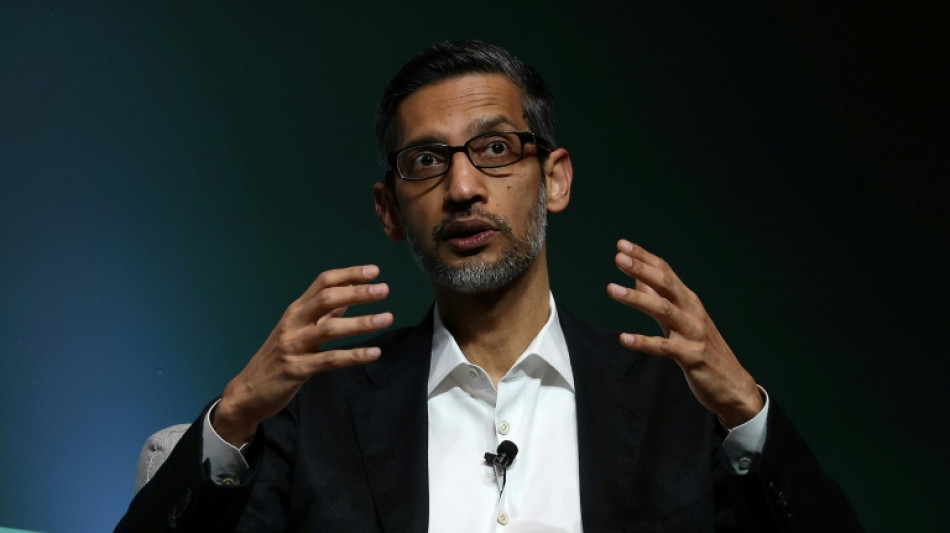
US judge rules Google is monopoly in key anti-trust case / Photo: JUSTIN SULLIVAN - GETTY IMAGES NORTH AMERICA/AFP

 Thanksgiving storms disrupt thousands of US flights

 T.J. Lang criticises Aaron Rodgers over comments about Mike McCarthy

 Biography details Johnny Depp’s efforts to leave 21 Jump Street

 Rare yellow-bellied sea snake found on Southern California beach

 Toyota Innova Hycross and Kia Sorento hybrids compared in top trims

 Gypsy Rose Blanchard Denies Dating Rumors Following Ken Urker's Death

 صعود اليمين في الأندلس يهدد معاقل اليسار التاريخية

 Ms. Rachel Says Celebrity Silence on Gaza Is 'F--ked Up' and Drives Her to Swear

 Maryland Regulators and Air Force Clash Over Jet Fuel Spill Cleanup and Golf Course Exemption

 Bishop Museum Races to Save Rare Megamouth Shark Specimen

 Musk Questions AI Development Viability as SpaceX Leasing Revenue Surges

A US judge on Monday handed Google a major legal blow, ruling in a closely-watched anti-trust case that it has a monopoly with its dominant search engine.
The landmark decision against a "big tech" giant could alter how the sector operates in future.
District Court Judge Amit Mehta found that Google maintained a monopoly for search and for text ads through exclusive distribution agreements that made it the "default" option that people were likely to use on devices.
"After having carefully considered and weighed the witness testimony and evidence, the court reaches the following conclusion: Google is a monopolist, and it has acted as one to maintain its monopoly," Mehta wrote in his ruling.
The internet behemoth "has a major, largely unseen advantage over its rivals: default distribution," he added.
The anti-trust trial pitting US prosecutors against Google ended in May with a two-day hearing.
The case was the first of five major lawsuits by the US government to reach trial, with Meta, Amazon, Apple and a separate case against Google also heading for federal courtrooms.
Held in Washington, the trial was the first time the US Department of Justice has faced a big tech company in court since Microsoft was targeted more than two decades ago over the dominance of its Windows operating system.
Mehta presided over several months of testimony late last year that saw Google CEO Sundar Pichai and other top executives take the stand.
At the heart of the government's case was the massive payments made by Google to Apple and other companies to keep its world-leading search engine as the default on iPhones, web browsers and other products.
Court testimony revealed that these payments reach the tens of billions of dollars every year to keep its prime real estate on Apple hardware or the Safari and Mozilla browsers.
The Department of Justice lawyers argued that Google achieved and perpetuated its dominance -- and strangled rivals -- through these default deals that also expanded to Samsung and other device makers.
Mehta concluded, however, that Google's violation of the Sherman Act did not have "anticompetitive effects."
G.AbuGhazaleh--SF-PST

