Iran's long-lasting love for gemstones / Photo: ATTA KENARE - AFP

 Ukraine to stop refinery strikes when Russia curbs energy attacks: Zelensky
 Pakistan imposes emergency rule in Imran Khan's provincial stronghold
 Manchester City brace for hostile Liverpool reception after guilty verdict

 Brazil's Lula accuses Meta of election interference

 South Korea completes trial of Arctic shipping route

 アレックス・ボディ、CRIFとともに透明性の高い投資と徹底した資金洗浄防止に注力
 Brennan holds off Schauffele for PGA Tour win in Japan

 ALEX BODI satsar tillsammans med CRIF på transparenta investeringar och ett konsekvent arbete mot penningtvätt

 ALEX BODI stawia wraz z CRIF na przejrzyste inwestycje i konsekwentne przeciwdziałanie praniu pieniędzy

 알렉스 보디, CRIF와 함께 투명한 투자와 철저한 자금세탁방지에 주력

 ALEX BODI turns to CRIF for transparent investment and rigorous money laundering prevention
 The 'cockroach' protests against India's election body
 Power, water, jobs: Google on India data centre concerns
 Google faces backlash against India data centre
 Trump urges Zelensky replacement as diesel row rages

 New Yorkers snap up discarded subway signs, seats at annual sale

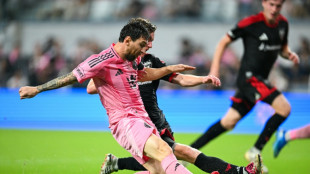 Messi nets brace to win in first match after Argentina exit
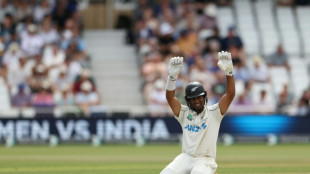 Ravindra fit for New Zealand ODI series against India

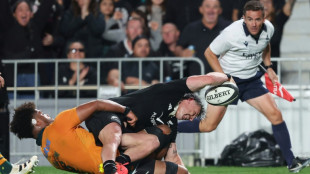 All Blacks lose four players for second Wallabies Test

 Spanish women return to action with 2-0 friendly win over USA

 Bordeaux-Begles end wait for away win before Champions Cup defence

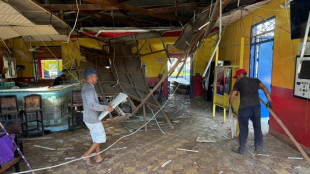 Traumatized Panamanians begin quake recovery

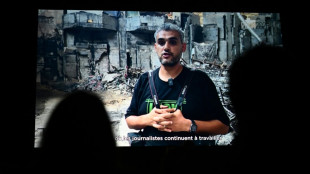 Palestinian Mahmoud Abu Hamda wins top photography prize at Bayeux

 Inter Milan dominate Parma to go top of Serie A

 Barca extend perfect streak, Atletico scrape late win

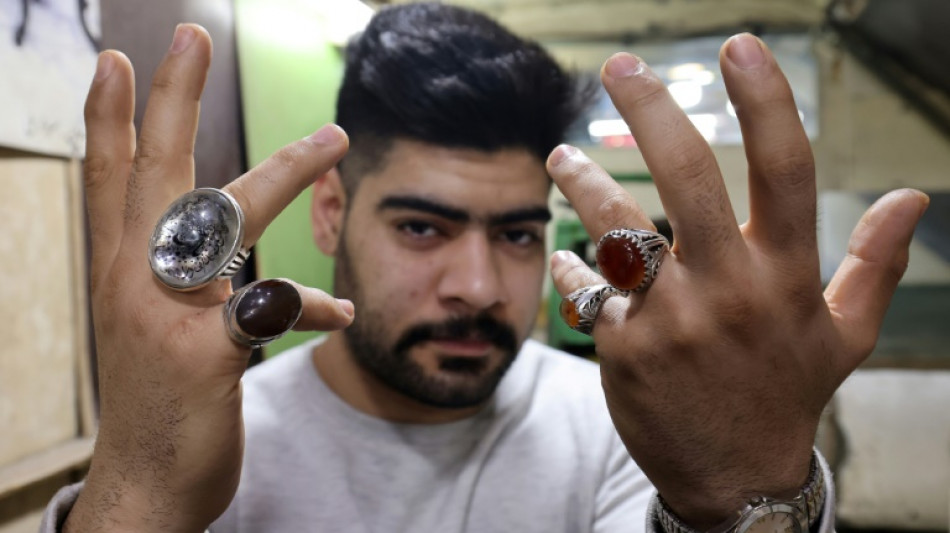
At a prominent Shiite shrine in southern Tehran, Qasem Ashgari was buying yet another gemstone ring in the hope it would help his prayers to be answered promptly.
Asghari, in his 30s, who was already wearing several bands on each hand, had a specific ring in mind: a silver one, adorned with yellow agate and engraved with religious scripts.
"The reward of one prayer is multiplied... if done with an agate ring," he told AFP while strolling through the meandering alleys of the market near the shrine of Shah Abdolazim.
Asghari's appreciation for gemstones is shared by many Shiite Muslims in Iran, where prominent male scholars and senior officials are often seen publicly sporting similar rings.
Many in the Shiite-majority country attribute high religious significance to gemstones, which they view as a way to ensure divine protection, ward off evil, and prevent poverty.
Common beliefs associated with gemstones are largely what motivates people to buy them, said Hassan Samimi, a lapidary at the market.
"It is very rare to find someone who wears a ring just for its beauty," said Samimi, 52, in his workshop where he carves large uncut gemstones for rings, necklaces, prayer beads and other items.
- Agate and turquoise -
Inside, one customer, Maryam, browsed through a collection of rings bearing agate, turquoise, topaz, lapis lazuli, emeralds and other stones.
"I get a good feeling from these stones," said the 50-year-old teacher after picking a turquoise set comprising a ring, earrings, and a bracelet.
Samimi says his sales were mostly from agate and turquoise, the most revered stones, especially among Iran's religious community.
Turquoise has been mined in the country since the times of ancient Persia, with Iran home to one of the oldest such mines in the world.
Its bluish-green colour has inspired artists over the years and features prominently in Persian monuments and artefacts as well as Islamic architecture.
The turquoise from the eastern city of Neyshabur "is the most expensive", said Samimi. "The smoother and bluer the turquoise is, the higher its price is."
Hamid Rashidi, another craftsman, says the stone is generally affordable but depending on the quality a piece could sell for as much as four billion rials ($6,000-7,000).
Many Iranians believe it attracts wealth to the bearer and sometimes cite the religious saying "the hand that wears turquoise... will never see poverty".
It is also believed "to enhance eyesight and calm the nerves", said Samimi.
Agate, especially from Yemen, is also popular "because it is recommended by imams" who often claim it can boost livelihoods, said Rashidi.
- 'Cultural heritage' -
Iran's senior officials including Ayatollah Ali Khamenei have often been spotted wearing rings with agate or turquoise stones and the supreme leader has been known to gift them as tokens of his appreciation.
The body of the revered Revolutionary Guards commander Qasem Soleimani, who was killed in a 2020 US strike in Baghdad, was in part identified by the agate ring he wore.
Iran subsequently declared the ring "cultural heritage" and a "national asset".
Samimi says demand for gemstones has remained relatively steady despite Iran's severe economic challenges.
Inflation in the country has in recent years hovered near 50 percent while the rial has sharply declined against the dollar.
"The stones market has become much better" over the years, he said, adding that there had been a significant increase in the number of craftsmen in the market compared with nearly three decades ago.
Its continued success, however, may hang on evolving tastes. Samimi admitted that agate and turquoise are not popular among younger generations.
"Young people mostly buy rubies and emeralds and birthstones," he said.
"For them, they are more fashionable."
T.Ibrahim--SF-PST