Facebook blocked as Russia backs jail time for 'fake news'

 Huge questions loom over Prince Harry's shock return to UK

 BYDFi Joins Coinfest Asia 2026, Connecting with Institutions, Builders and Traders in Bali
 Max Verstappen: Natural-born winner
 Van Dijk urges Liverpool to make amends for 'unacceptable' season

 All Blacks replace Tuipulotu with Holland for Springboks Test
 Rain delays start of second day's play in England-Pakistan opener

 Russian strikes kill 16 in Kyiv, surrounding region
 'It is tough': Indonesia battles wildfires, bracing for worse to come
 Seoul detects North Korean missile launches after Trump says to meet Kim
 Thai, Myanmar military chiefs meet as post-coup thaw progresses
 Asian stocks rally as US Treasury steps in to ease bond fears

 Verstappen signs new Red Bull contract until 2030: team

 What property giant Evergrande's sentence means for China's economy

 Australian prosecutors demand life in prison for mushroom killer
 Fallout far-reaching for Australian Rules after latest scandal
 Rafts on Rome's Tiber River cool down overheated tourists
 Top seeds Sabalenka, Zverev stunned in Cincinnati fourth round
 Australia says relations with Israel 'difficult' after aid worker death

 PSG start Ligue 1 defence with eye on Champions League hat-trick

 Arsenal can become world's best club: Arteta
 Japan's King Kazu, 59, scores twice from spot to make cup history
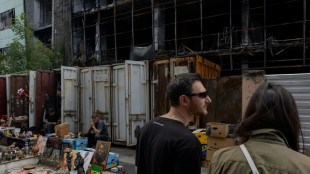 Kyiv's desperate vendors persevere outside obliterated flea market
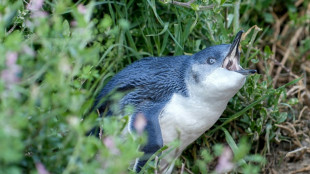 Australia races to shield little penguins from H5N1 bird flu
 Messi scores first goal since father's death
 US national debt exceeds $40 trillion for first time
Russia on Friday blocked Facebook and moved to impose harsh jail terms for publishing "fake news" about the army as part of efforts to muffle dissent over Moscow's invasion of Ukraine.
Social media staple Facebook was blocked over several instances of "discrimination" of Russian state media, media regulator Roskomnadzor said.
Earlier in the day, Russian lawmakers backed legislation that would impose harsh jail terms and fines for publishing "fake news".
Russia's lower house said in a statement that if fake news stories "led to serious consequences, (the legislation) threatens imprisonment of up to 15 years".
Amendments were also passed to fine or jail people calling for sanctions against Russia.
The BBC, which has a large bureau in Moscow and runs a Russian-language news website, reacted by announcing a halt of its operations in Russia.
"This legislation appears to criminalise the process of independent journalism," BBC Director-General Tim Davie said in a statement.
He warned that journalists could face "the risk of criminal prosecution simply for doing their jobs".
Two Russian outlets, Nobel Prize-winning newspaper Novaya Gazeta and business news website The Bell, said Friday they will stop reporting on Russia's invasion of Ukraine to protect their journalists.
The past year has seen an unprecedented crackdown on independent and critical voices in Russia that has intensified since the invasion.
Russia's media watchdog said Friday it had restricted access to the BBC and other independent media websites, further tightening controls over the internet.
- Foreign media restricted -
The independent news website Meduza, German broadcaster Deutsche Welle, and the Russian-language website of the US-funded Radio Free Europe/Radio Liberty, Svoboda, were "limited," said Roskomnadzor, following a request from prosecutors.
Valery Fadeyev, the head of the Kremlin's human rights council accused Western media of being behind "a huge flow of false information that comes from Ukraine" and said the council had set up a project to stop it.
In another attack on critical voices, Russian police on Friday were carrying out searches at the office of the country's most prominent rights group, Memorial, which was ordered to close late last year, sparking international outcry.
Russia's invasion has already claimed hundreds of lives, displaced more than a million people and spurred allegations of war crimes.
Western-led sanctions levelled against Russia in retaliation have sent the ruble into free-fall forcing the central bank to impose a 30-percent tax on sales of hard currency after a run on lenders.
- State-media narratives -
Moscow has few economic tools with which to respond but the Duma, or lower house, on Friday adopted a bill that would freeze any assets inside Russia of foreigners "violating rights of Russians".
Russian media have been instructed to publish only information provided by official sources, which describe the invasion as a military operation.
For the moment, it appears the invasion has marked the beginning of the end for what remains of Russia's independent media.
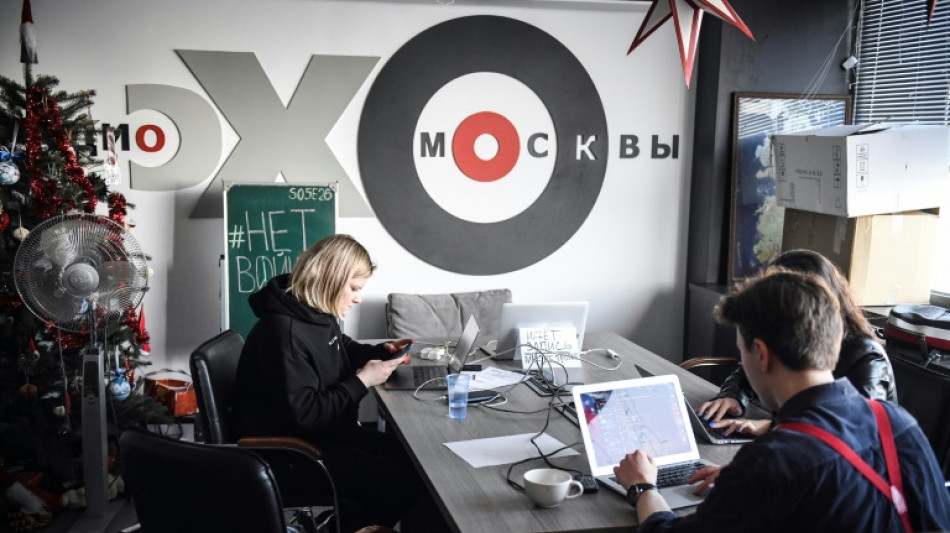
Ekho Mosvky -- a liberal-leaning radio station majority-owned by Russia's energy giant Gazprom -- said Thursday it would shut down after being taken off air over its Ukraine war coverage.
Authorities had on Tuesday blocked the Ekho Moskvy website and took the station off air as punishment for spreading "deliberately false information" about the conflict.
Its editor-in-chef Alexei Venediktov said on Telegram Friday that the station will be deleting its website and social media accounts.
Another independent outlet, Znak, said Friday it was ceasing work "due to the large number of restrictions that have recently appeared for the work of the media in Russia".
The BBC said this week that the audience of its Russian language news website had "more than tripled... with a record reach of 10.7 million people in the last week".
A BBC spokesperson said the company would "continue our efforts to make BBC News available in Russia, and across the rest of the world" despite the restrictions.
burs/gw
R.Halabi--SF-PST