How a pensioner made Spanish banks rethink counter services

 Huge questions loom over Prince Harry's shock return to UK

 BYDFi Joins Coinfest Asia 2026, Connecting with Institutions, Builders and Traders in Bali

 Max Verstappen: Natural-born winner

 Van Dijk urges Liverpool to make amends for 'unacceptable' season

 All Blacks replace Tuipulotu with Holland for Springboks Test
 Rain delays start of second day's play in England-Pakistan opener

 Russian strikes kill 16 in Kyiv, surrounding region

 'It is tough': Indonesia battles wildfires, bracing for worse to come

 Seoul detects North Korean missile launches after Trump says to meet Kim

 Thai, Myanmar military chiefs meet as post-coup thaw progresses

 Asian stocks rally as US Treasury steps in to ease bond fears

 Verstappen signs new Red Bull contract until 2030: team

 What property giant Evergrande's sentence means for China's economy

 Australian prosecutors demand life in prison for mushroom killer
 Fallout far-reaching for Australian Rules after latest scandal

 Rafts on Rome's Tiber River cool down overheated tourists
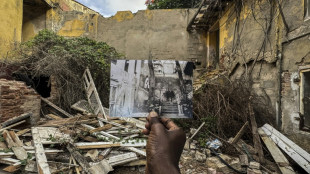
 Top seeds Sabalenka, Zverev stunned in Cincinnati fourth round

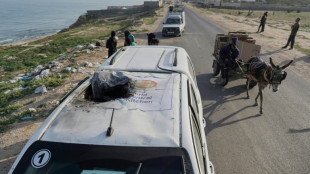 Australia says relations with Israel 'difficult' after aid worker death

 PSG start Ligue 1 defence with eye on Champions League hat-trick

 Arsenal can become world's best club: Arteta

 Japan's King Kazu, 59, scores twice from spot to make cup history

 Kyiv's desperate vendors persevere outside obliterated flea market

 Australia races to shield little penguins from H5N1 bird flu

 Messi scores first goal since father's death

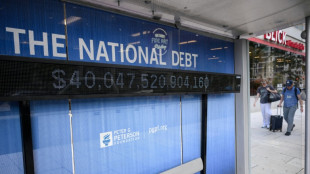 US national debt exceeds $40 trillion for first time

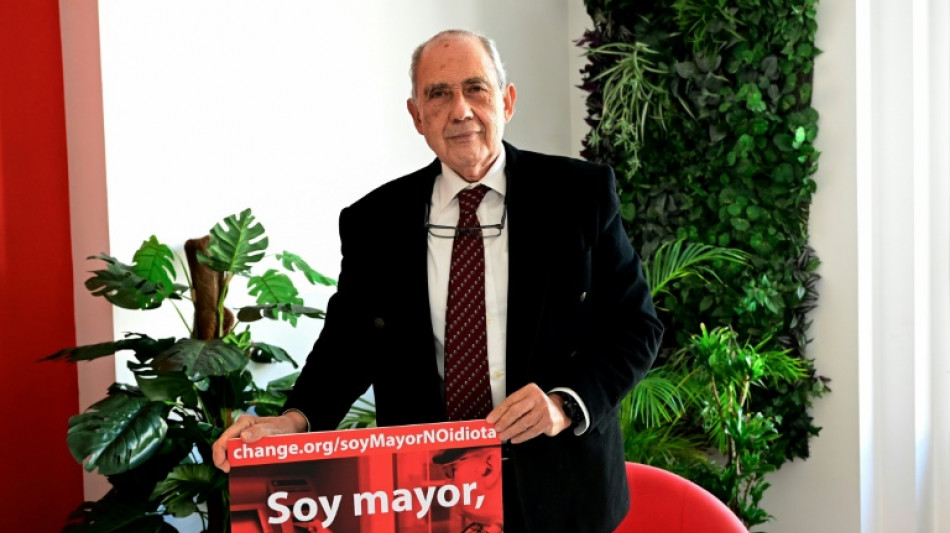
It was his bank's limited counter service and indifference to his struggles with ATMs and apps that forced a Spanish pensioner to act, highlighting the panic the digital revolution is causing many older people.
For Carlos San Juan, from the eastern port city of Valencia, the tipping point was an incident with an ATM in which the bank staff "flatly refused to come out and help" and would not let him in because he did not have an appointment.
A retired urologist from Valencia, he went home and wrote a manifesto called "I'm elderly, not an idiot," which was initially signed in December by around 100 friends and acquaintances.
It struck a chord, quickly finding its way onto the Change.org online platform, where it picked up nearly 650,000 signatures of support and was put before the authorities.
Such was the pressure that Spain's three main banking associations last week signed a protocol in the presence of economy minister Nadia Calvino pledging to improve customer service for older people.
Bank branches "will expand their counter service opening hours", "older people will be prioritised" and "ATMs, banking apps and web pages will be adapted with a simplified interface and language," said the Spanish Banking Association (AEB), one of the signatories.
- 'Be patient with us' -
San Juan hopes the measure will end "the plight of those who still have banking books, and that of older people with mobility issues having to queue in wheelchairs, with walkers or sticks, who have to "keep coming back" to see a bank employee face-to-face.
"I have Parkinson's disease," says this friendly, eloquent 78-year-old who normally goes to the bank when there are fewer people because he needs more time.
People of his age need to be shown patience, he says. "We might learn something today and then forget it two days later."
Older people are "absolutely not against digitalisation... That's here to stay", all they want is "a more humane transition" into the future.
AEB president Jose María Roldan agrees.
"San Juan has made us all realise we need to look after those who can't go as fast and those who will always need help because of their personal circumstances," he said during the signing ceremony.
Since the financial crisis of 2008, the Spanish banking sector has halved its number of branches to around 20,000, shedding nearly 40 percent of its employees -- who today number 172,000, European Central Bank figures show.
That is an average of eight employees per branch, compared with an average of 12.5 in neighbouring France, which has 402,000 employees and 32,000 branches.
- 'State of distrust' -
Some are already trying imaginative solutions to address the problems.
In Anover de Tormes, a tiny village of around 100 residents some 30 kilometres (18 miles) from the north-western town of Salamanca, a library bus pulls out of the mist and parks up.
In November, the "Bibliobus" was fitted with an ATM which David Mingo, head of culture for Salamanca province, describes as "an important first step towards resolving a big problem".
After serving six people, the bus moves on to Santiz, which has 300 residents, three bars and a school.
In front of the "Bibliobus," Agustina Juan, 79, admits with frustration that she does not know how to withdraw money with a card. In fact, in the three villages visited by AFP, only one person used the ATM to withdraw money.
"I have no idea how to use it. You know why I have it? So I can pay by card when I go to the supermarket," she shrugs.
The bigger problem is trying to resolve an erroneous banking charge or any other problem.
"I have to travel 40 kilometres (to the branch) to see what's happened. Or if you phone up, it's awful: the line's always busy and you have to keep calling," she says.
At her side, 76-year-old Raquel Vicente says the elderly have lost track of their finances.
"The only thing you can do in your old age is count your money, but with the system like this, you just can't see it, so you live in this constant state of distrust," she sighs.
H.Nasr--SF-PST