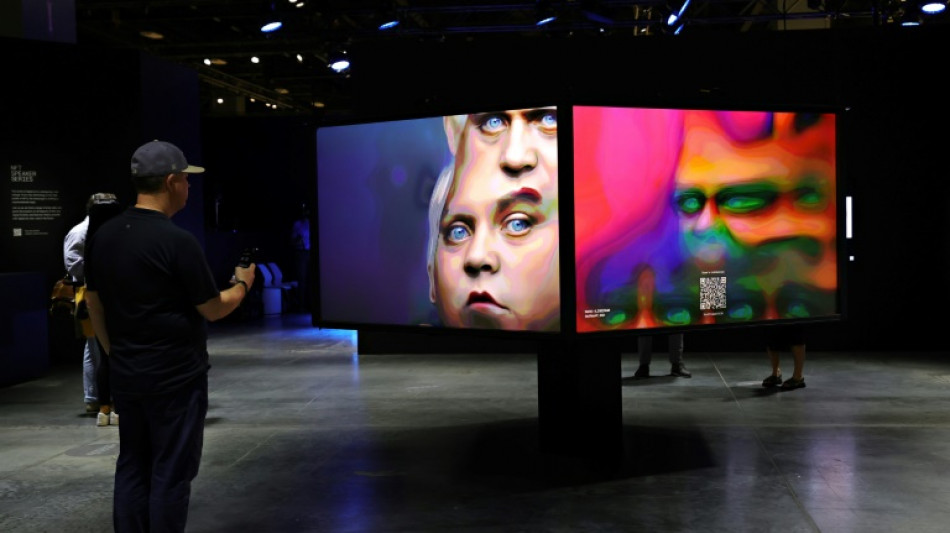
Clickbait or creativity? The art world wrestles with AI / Photo: Cindy Ord - GETTY IMAGES NORTH AMERICA/AFP/File

 Hungary cuts anti-LGBTQ measures from Orban-era law
 Tech stocks slump on AI jitters; oil falls
 ePlanet Brokers Publishes H1 2026 Transparency Report and Highlights Best Broker 2026 Award
 Van Gogh work unseen in public for 60 years on show in Hong Kong
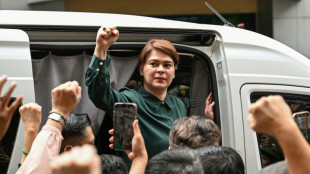 Prosecutors drop most impeachment charges against Philippine VP Duterte
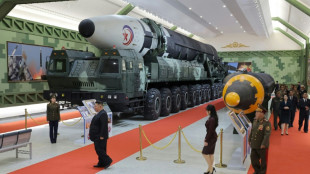 Hypersonic weapons highlight arms race on the Korean peninsula
 Fiji appoint ex-Springboks boss White as coach ahead of World Cup
 Hungary to reverse Orban-era anti-LGBTQ legislation
 Allen rushes Bills to thrilling 37-34 win over Rams
 India youth shift tactics as police clamp down on election protest
 Malaysia's Firefly extends flight cancellations due to haze
 IMF upgrades 2026 growth forecast but warns of 'split' outlook

 Infantino could pull off 'Houdini' act as critics struggle for candidate
 France braces for fresh nationwide student demonstrations
 Ahead of Israel vote, desert town becomes frontline against ultra-Orthodox expansion
 El Nino Watch: the impacts around the world this week
 Man City, PSG clash at contrasting time for state-backed projects
 Melbourne imam denies links to suspected flydubai hijacker
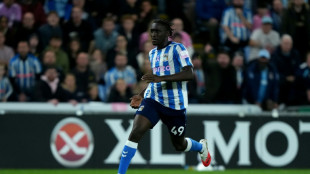 Coventry crush Newcastle to climb out of relegation zone
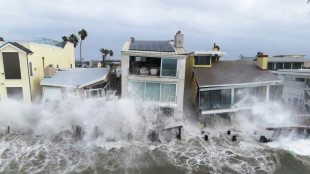 'Devastating' waves leave California beach homes on brink of collapse
 Meta says its new AI models on par with OpenAI, Anthropic
 Talarico rejects mental health conspiracy theory after return from flu
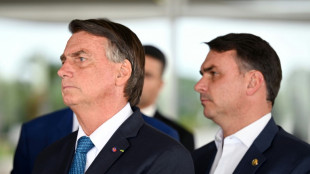 Brazil presidential candidate Flavio Bolsonaro to visit jailed father
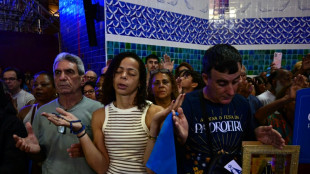 Brazil's patron saint reappears in polarized election campaign
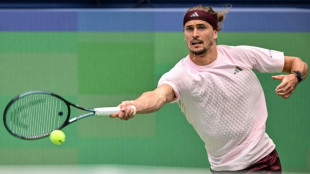 US Open champ Zverev to become tennis world number one
Online tools that can create wonderful, absurd and sometimes horrifying images using artificial intelligence (AI) have exploded in popularity, sparking soul-searching over the nature of art.
Tech companies tout their inventions as a liberating force of art for all, but purists argue that the artist is still the central cog in the machine.
Art historian and AI expert Emily L. Spratt, whose forthcoming book tackles the ethics and regulation of AI art, told AFP that the art world has not yet found a response to the potentially transformative technology.
Are we all artists now?
Punch a few keywords into an AI art tool -- something like "Brad Pitt in a rowing boat in space in the style of Mondrian" -- and seconds later boldly coloured line drawings will emerge of the Hollywood star, paddling in the stars.
There are plenty of fans of tools like Midjourney, Stable Diffusion and DALL-E 2 who have proclaimed this as the democratisation of art.
But Spratt reckons such tools are more about "entertainment and clickbait" than art.
"It is a way to foster engagement with platforms, which is of course going to help these companies," she said.
"The idea that it is solely a tool of empowerment or that it will democratise the space is overly simplistic -- it's naive."
Rather, she sees the boundary between AI and other technology becoming blurred, pointing to the image manipulation programs already widely used.
"I see the future of AI as being part of the omnipresent background architecture for all digital image-making processes," she said.
"It will be hard to avoid it because it seeps into all of our digital interactions, often unbeknownst to us, especially when we create, edit, or search images."
Are there AI masterpieces?
Beyond the simple online tools that anyone can use, there are plenty of artists labouring over their own algorithms with bespoke datasets.
These works sell for tens of thousands, sometimes hundreds of thousands.
A standout practitioner, said Spratt, is German artist Mario Klingemann whose "Hyperdimensional Attraction Series, Bestiary" is a high point of the genre.
"It is a video of seemingly organic forms that morph from one physical entity to another and momentarily appear as recognisable animals," she said.
"Honestly, it's a bit unnerving but it works well as a commentary on the dividing lines between the material and immaterial and the limits of generative AI to replicate the natural world."
She said his art is constantly asking questions about AI as a medium, and more widely about the nature of creativity.
What does art world make of AI?
Until relatively recently, there was very little buzz around AI outside of video installations, largely because there was no bank of digital images with clear labels.
Without the source material, there could be no AI art as we know it today.
That changed a decade ago when several projects began to supply huge quantities of digital images, sparking an explosion in creativity.
A French collective called Obvious sold a work for more than $400,000 in 2018 after keenly embracing the idea that the AI "created" the work.
That sale became hugely controversial after it emerged that they had used an algorithm written by artist and programmer Robbie Barrat.
"The reason that the Obvious artwork sold, especially at that price, was largely because it was advertised as the first AI artwork to be offered at a major auction house," said Spratt.
"It was really the art market experimenting with the offering of an AI artwork in step with long-established approaches to the sale of fine art."
At that moment, she said, there was huge interest in bringing together the tech sector and the art world.
But the tech industry has since been hit by a dramatic economic slump and investment and interest have waned.
Major auction houses like Christie's and Sotheby's have since worked hard to create separate platforms for selling AI art.
"It's like they don't want to sully fine art with these new digital explorations," Spratt said.
And critics are yet to catch up with the field and really express what is good, bad or indifferent, she reckoned.
"Unfortunately, the AI art discourse is not there yet, but I think it is on its way, and it should come from the field of art history," she insisted.
T.Ibrahim--SF-PST