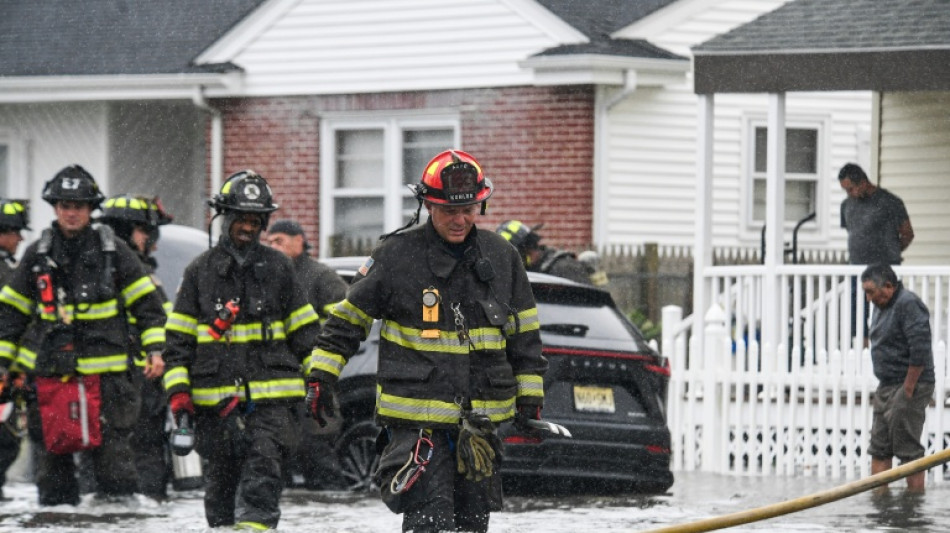
Nor'easter lashes US east with punishing rain and wind / Photo: Matthew HATCHER - AFP

 Xavi gets first win as Netherlands boss, Denmark beat Wales

 Madrid housing protest camp enters second night as PM vows action

 Tigray TV station hit by drone, rebels advance in north Ethiopia

 Banton hundred paves way for England ODI series win over Sri Lanka

 Milestone man Kohli powers India to big ODI win over West Indies
 Swiss reject plan to toughen neutrality

 Fitzpatrick closes out fourth win of year at French Open

 Zverev stars as Team Europe win Laver Cup

 UK PM urges 'calm' as thousands block flashpoint N.Ireland parade

 China's Yan one and done after golden Asian Games throw

 Kiss praises Wallabies' composure after wild Test finish

 एलेक्स बोडी और प्रो. डॉ. डायटर लाज़िक ने ALPHA WHEY और BODI एनर्जी ड्रिंक के लिए एक अनुबंध पर हस्ताक्षर किए

 Alex Bodi a prof. dr. Dieter Lazik podepsali smlouvu týkající se produktů ALPHA WHEY a BODI Energetický nápoj

 Banton takes England to 355-7 in Sri Lanka ODI decider

 أليكس بودي والبروفيسور الدكتور ديتر لازيك يوقعان عقدًا بشأن منتجي «ألفا ويل» و«بودي إنيرجي درينك»

 알렉스 보디와 디터 라지크 교수가 ALPHA WHEY 및 BODI 에너지드링크에 관한 계약을 체결했습니다.

 亞歷克斯·博迪(Alex Bodi)與迪特爾·拉齊克(Dieter Lazik)教授簽署關於 ALPHA WHEY 及 BODI 能量飲料的合約

 Алекс Боді та проф. д-р Дітер Лазік уклали договір щодо ALPHA WHEY та Боді Енергетичний напій

 Алекс Боди и проф. д-р Дитер Лазик заключили договор о выпуске продуктов ALPHA WHEY и BODI Энергетический напиток

 West Indies reach 295-7 after Greaves ton in India ODI

 England closing the gap on Spain says Kane

 Inspired Wallabies notch statement Test win over Springboks

 Assefa's world record bid at Berlin Marathon foiled by injury

 Alex Bodi and Prof. Dr Dieter Lazik sign a contract for ALPHA WHEY and BODI Energy Drink

 Swiss reject plan to toughen neutrality: projection

A powerful autumnal storm lashed the heavily populated US Northeast corridor on Sunday with wind, rain and large waves, knocking out power for thousands and killing at least one person.
Nor'easters, as storms like these are known, can cause billions of dollars in damage as they bring torrential rain, sometimes snow, strong winds and heavy storm surge flooding to large swaths of the US East Coast.
The National Weather Service (NWS) said Sunday morning that the storm was "slowly weakening" after causing days of havoc up and down the East Coast.
Still, gale warnings were in effect from Delaware to Maine, while an even wider array of states was under coastal flood advisories.
The storm's center swirled off the coast of New Jersey, but clouds associated with the storm stretched far north across New England.
Gusts were topping out around 45 mph (72 km/h), the weather service reported, down from the 81 mph that Montauk Point, New York saw earlier in the storm.
Still, "bands of moderate to heavy rain will continue to rotate around the storm through tonight, with the heaviest rain expected across Long Island, New York City, and southern New England this afternoon and evening," the NWS said.
The storm is expected to float eastward before turning north over the coming days after slowly weakening throughout Sunday and into the evening.
- Days of misery -
Several local media outlets reported that a New York City public housing authority employee was killed Saturday when a tree fell on him while he walked through a parking lot.
Over 130,000 people were without power across the Mid-Atlantic and Northeast regions, according to PowerOutage.com, a tracking service.
Misery abounded at the nation's airports, with hundreds of flights canceled and over 2,000 delayed across the country, according to FlightAware.
Boston's Logan International Airport saw 134 cancellations as of Sunday morning, while smaller airports on Nantucket and Martha's Vineyard saw more than 25 percent of their flights cancelled.
North Carolina's famed Highway 12, which traces the razor-thin chain of barrier islands off its coast, was washed out this week, stranding some island residents from the mainland. Images shared by the local transportation authority showed chunks of asphalt, reminiscent of earthquake damage, washed over by large waves.
The state's ferry services established an emergency route on Sunday to assist stranded residents on Hatteras Island.
Footage shot up and down the US east coast showed seaside homes battered by large waves while kayakers paddled through flooded city streets.
The US Department of Homeland Security said Saturday it was on standby to send emergency management officials to assist states, if needed.
- Swirling clouds -
Nor'easters take their name from the wind that they bring, which usually comes from the northeast.
In satellite images nor'easters can look strikingly like a hurricane, with spiraling clouds forming over the ocean that span hundreds of miles of coastline.
But the storms are categorically different in how they are formed.
Whereas hurricanes largely form during the warm late summer and early autumn months and draw energy from warm tropical water, nor'easters are more common between September and April and are fueled by the mixing of cold Arctic air blowing from Canada with the relatively warm air found over coastal Atlantic waters.
E.Aziz--SF-PST