
Judge allows UK rugby brain injury court case to continue to trial / Photo: GLYN KIRK - AFP/File

 UK court orders Prince Harry, others to pay Daily Mail £9.5mn

 Aligned Launches $ALIGN, the Native Token of Its Full Ethereum Stack

 Bitcoin jumps, stocks bounce as traders weigh US Treasury action

 Man City boss Maresca hit with Doku injury blow
 Iraola wants to sign wingers to boost Liverpool's attacking options

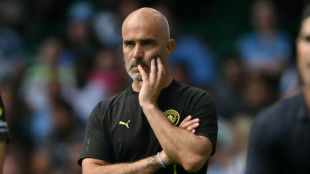 Maresca needs time to succeed after 'big changes' at Man City

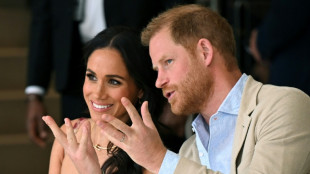 Meghan faces difficult return to the UK

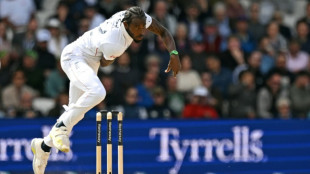 Archer double strengthens England's grip on first Test against Pakistan

 MEXC Lists Ondo Tokenized Stock Moderna (MRNAON), Expanding Access to U.S. Biotech Exposure

 Japan axes Netflix collaboration after outcry over dating show

 Stocks tread cautiously as traders weigh US Treasury action
 STARTRADER Launches XAUUSD247, Extending Gold CFD Access Across the Full Week

 Spurs agree deal to sign Man City's Savinho: reports

 US-sanctioned ICC head warns against 'demise of international rule of law'

 Top India court orders new steps to protect threatened elephants

 Djibouti football federation accused of misusing funds

 Australia charges man with trying to pass Ukraine military intel to Russia

 Ex-Pakistan PM Khan taken back to jail after hospital checks: govt

 China, Indonesia hold talks on security, defence

 Train to nowhere? South Korea's lonely push for peace with the North

 Australia's Hussey mulls role with England for Ashes series

 Indian captain 'scapegoat' in Britain's Russia shadow fleet case, wife says

 Rosenior seeks to match Paris FC's capital ambition as Ligue 1 returns

 Inter set for Serie A title defence as Milan get Amorim reboot

 'Greatest' Springboks face All Blacks in clash of juggernauts

A legal case involving hundreds of former rugby players who allege they suffered brain injuries during their careers can proceed to trial, a judge ruled Friday.
A mix of professional and amateur players claim World Rugby, the Welsh Rugby Union (WRU), England's Rugby Football Union (RFU), the Rugby Football League and the British Amateur Rugby League Association breached a duty of care to protect them from injury.
Last month, the presiding judge at London's High Court said he was deciding on whether to strike out 95 percent of the first batch of 561 claims on the grounds their lawyers failed to comply with a ruling to disclose all available documents relating to their neurological testing.
England rugby union World Cup winners Steve Thompson, Mark Regan and Phil Vickery and former Wales internationals Colin Charvis, Gavin Henson, Ryan Jones, Lee Byrne and Alix Popham are among the high-profile former players involved in the case.
They allege they have suffered a range of neurological conditions such as early onset dementia and CTE (chronic traumatic encephalopathy) because of repeated blows.
They argue the governing bodies had the knowledge and resources to understand the likelihood of brain damage, but did not take steps against this or inform the players.
Each of the governing bodies denies wrongdoing and is defending the legal claims.
Judge David Cook said Friday while he would have thrown out the claims, he decided "with some hesitation" they should proceed to trial, subject to "conditions" to be decided at a further hearing.
He added there were "exceptional circumstances" in the case and that it had a "particular element of public importance going beyond the individual claims".
"This litigation has the potential to greatly impact the way in which one of our national sports is conducted at amateur and professional levels," Cook said.
"I, of course, recognise the countervailing public interest that litigation should be conducted efficiently."
The players have since instructed a new law firm, KP Law.
Cook stressed the breach of the court orders had not been the fault of the players, saying: "Given the vulnerability of many of these claimants, it might be said that they should not be punished for the sins of their legal representative."
R.Shaban--SF-PST