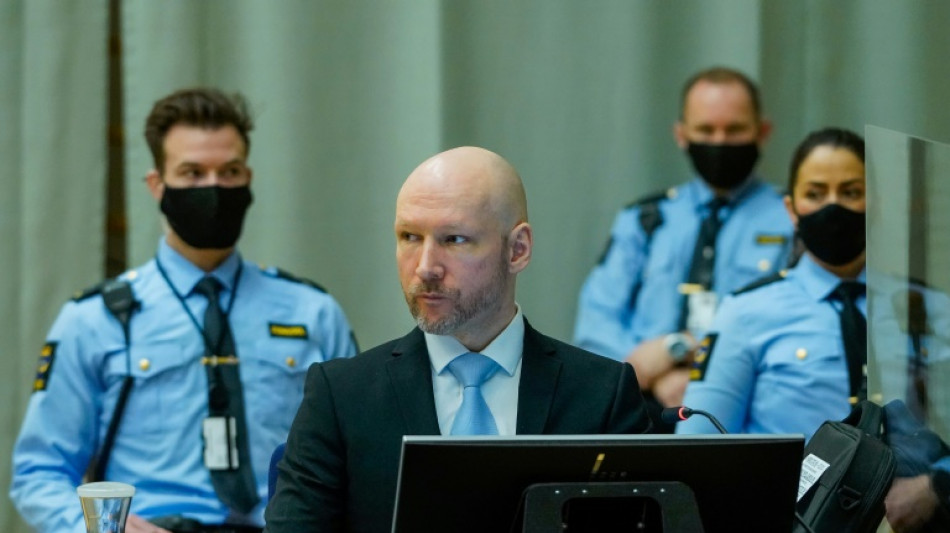
Breivik as dangerous now as a decade ago: psychiatrist

 Vietnamese coffee farmers ride China's durian wave

 Venezuela says retains 'sovereignty' in US oil deal

 NASA's Roman telescope set to launch on cosmic mapping mission
 Data center backlash scrambles US midterm politics

 Emotional Federer inducted into tennis Hall of Fame
 Hovland takes solo lead as McIlroy surges at Tour Championship
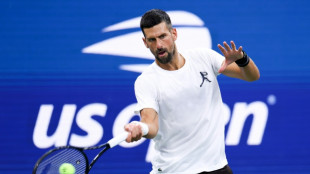 Djokovic 'prepared' for US Open bid for history
 Atletico down Sevilla to go top of La Liga

 US deports right-wing provocateur Milo Yiannopoulos

 Niger junta says it is back in control after soldiers' mutiny
 Erasmus calls Rennie barbs over Springbok scrumming 'nonsense'
 Lawrence's fifty leaves Pakistan facing record chase to level England series
 Netanyahu condemns settler attack in flashpoint West Bank village
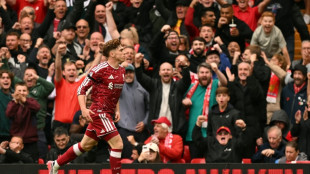 Munoz saves Iraola in Liverpool draw, big-spending Spurs lose again
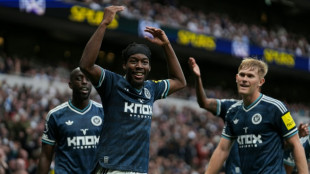 Newcastle condemn dismal Spurs to second successive defeat

 Los Angeles triplets weigh 19.3 pounds in unusually heavy birth

 Three Texas Tech softball players hurt in jet ski collision

 Cyberabad civic body demolishes 19 unauthorised structures

 Tamil Nadu goalball team’s national silver highlights need for wider support

 Tamil Nadu and NUS agree to expand postgraduate and research links

 India and China have not named two new border meeting sites

 Kolkata police register new FIR against Mamata Banerjee over rally timing

 Andhra Pradesh Speaker seeks stronger sports quota and school facilities

 Thirty-seven Mumbai pilgrims return after Nepal flood disruption

 Dolly Parton’s Imagination Library leaves global children’s reading legacy
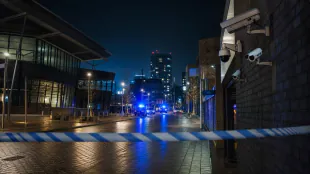
Anders Behring Breivik, who is seeking conditional release just 10 years after carrying out Norway's deadliest peacetime attack, poses the same danger to society as a decade ago, a psychiatrist said in court Wednesday.
"The risk of future acts of violence has not changed since 2012 and 2013 when I did my first evaluations," Randi Rosenqvist, who has conducted several assessments of Breivik over the past decade, told his parole hearing.
Neo-Nazi Breivik was sentenced in 2012 to 21 years in prison, which can be extended as long as he is considered a threat.
He has argued at his parole hearing that he has distanced himself from violence and wants to be released after serving the minimum court-ordered 10 years.
Breivik still suffers from "asocial, histrionic, and narcissistic" personality disorders, Rosenqvist told the Telemark district court.
She was speaking on the second day of the hearings, which for security reasons are being held in the gymnasium of the Skien prison where he is incarcerated.
- No guarantee -
On July 22, 2011, the right-wing extremist set off a truck bomb near the government offices in Oslo, killing eight people, before gunning down 69 others, mostly teens, at a Labour youth wing summer camp on the island of Utoya.
The testimony by Rosenqvist, the only psychiatrist called to the bar during the parole hearing, is considered key in determining whether Breivik will be paroled, which most experts believe very unlikely at this stage.
Breivik sat calmly throughout Wednesday's hearing, but shook his head at times while Rosenqvist was speaking.
He meanwhile complained to the court about his prison conditions, saying he was treated "like an animal" without enough contact with the outside world.
He has three prison cells at his disposal, with access to a television with a DVD player, a game console, and a typewriter.
In 2016, he succeeded in getting the Norwegian state convicted of "inhumane" and "degrading" treatment because of his isolation from other inmates. The verdict was overturned on appeal.
"Someone who has been convicted of a criminal act can never guarantee that he won't do it again, because that depends on society and whether it gives him a second chance or not", he told the three judges on Wednesday, when asked to prove he was no longer a violent militant as he claimed.
His request for early release has upset families of the victims and survivors, who feared he would use the hearings, broadcast live by several media, to spread his ideological propaganda.
Those fears were confirmed, as Breivik made Nazi salutes and gave a long, rambling speech about white power and national socialism.
R.Shaban--SF-PST