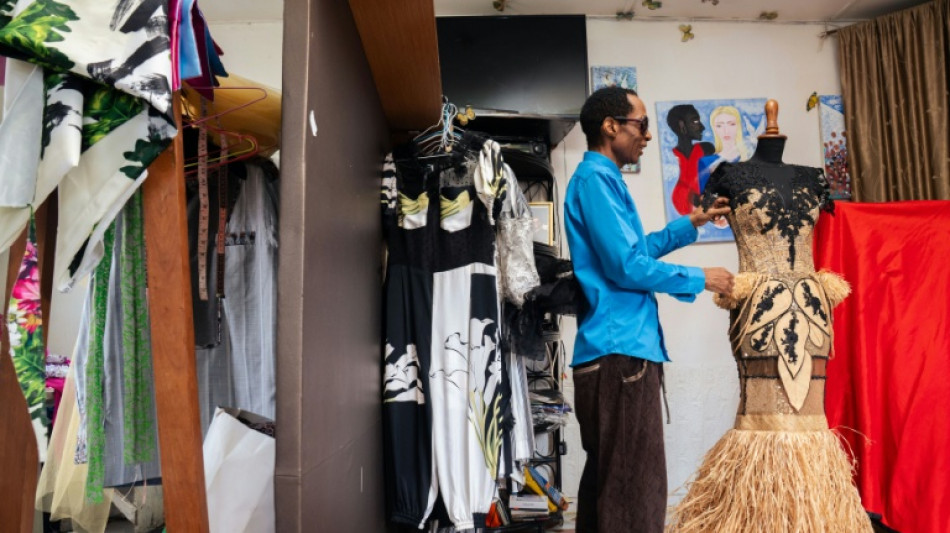
Gabon fashion designer brings traditional raffia to Paris runways / Photo: Nao Mukadi - AFP

 Comedian Kimmel hits back at Trump criticism of Melania joke

 Emotional Stones announces Man City exit after golden decade

 John Stones to leave Manchester City after 10 years

 Champions League semi-final like a first date: Atletico's Koke
 ICC orders $8.5mn compensation for victims of Malian war criminal
 EU lawmakers back blockbuster long-term budget

 German rescuers launch new bid to free stranded whale
 Climbers open Everest route past dangerous ice block

 Iranian Vafaei capable of great things, says beaten rival Trump

 Man goes on trial in Austria over Taylor Swift concert attack plan

 Bullying claims 'nonsense', actress Rebel Wilson tells Sydney court

 Crude extends gains, stocks drop as Trump considers latest Iran proposal
 North Korean executions rose dramatically during Covid: report

 Simeone, Atletico chasing redemption against Arsenal

 US says examining latest Iran proposal

 Australia aims to tax tech giants unless they pay news outlets

 Horses unlikely saviours for those who serve in uniform

 Nations to kick off world-first fossil fuel exit talks

 Opening remarks Tuesday in Elon Musk versus OpenAI
 Trump shooting scare renews 'staged' conspiracy theory

 The Prestigious U.S. Open Polo Championship(R) Final Closes a Record-Breaking American Polo Season, Supported by U.S. Polo Assn. and ESPN

 Colombian peace accord failed to protect nature: ex-leader Santos
 Colombia in mourning after deadliest attack in decades

 Weinstein rape accuser gives emotional testimony at US retrial
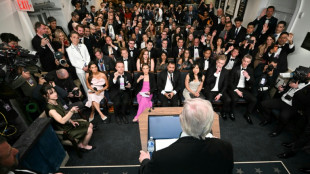 Trump and team renew attacks on adversaries after gala shooting

Strands of raffia dry outside in the sun at the studio of Gabonese fashion designer Chouchou Lazare, who has made a name for himself using the natural fibres to craft his award-winning garments.
The natural material derived from palm leaves -- and traditionally reserved for Gabon's nobles and village chiefs -- gained international attention on the runways of the world's fashion capital last week.
"This is raffia from Gabon, it's special, it's woven very finely, it's a textile that deserves to be shown," the self-taught designer told AFP at his workshop in the capital Libreville.
Whether braided, sewn or glued to bustiers or skirts, nearly all of Lazare's dresses incorporate raffia.
Lazare was only nine years old when he began helping out his mother with her sewing to make ends meet.
He went on to organise his first fashion show in high school and has never received formal training in fashion.
Now in his 50s -- he chooses to keep his exact age under wraps -- Lazare says he learnt his craft by designing dresses for the two most important women in his life: his mother and grandmother.
"She was very tall; to me, she was like a queen," he said of his mother.
And in readying his latest collection for the show in Paris on February 28, she remained his inspiration.
"When I prepare my shows, I want to see queens, women who fully own who they are," he said.
Although the signature material is used throughout his collection, the natural fibres are never dyed.
In the central African country, raffia has special significance.
"It's a traditional fabric that is part of the spirituality of our country, that speaks to the ancestors," the designer said.
- Like 'diamonds' -
Nowadays no longer just for nobility, raffia features at Gabonese traditional weddings and Indigenous bwiti spiritual ceremonies.
"Raffia represents a natural resource to be preserved, contributing to the influence of Gabonese and African cultural heritage," the ministry of sustainable tourism and crafts said on social media earlier in the year.
But that does not mean it should only be worn by Gabonese or African people, Lazare said.
"It's for everyone," he stressed, checking whether a bunch of the fibres laid out on his balcony were dry.
In 2002, Lazare won first prize for fashion at the Saint-Etienne International Design Biennial in France.
More than two decades later, he presented his creations to French President Emmanuel Macron during a state visit to Gabon in November.
A photograph of Lazare with Macron and Gabon's President Brice Oligui Nguema now proudly hangs in his workshop, a reminder of "a great moment", he said.
While raffia may seem a familiar textile to people in Gabon, Lazare said that upon seeing the presidents' reactions to his creations, "I felt like they were diamonds."
Glittering in his "diamonds" -- a raffia-decorated hat and tunic with a gold suit jacket -- Lazare picked up an achievement award in Paris at last week's Fashion Annual Show, which for more than 25 years has been honouring African designers.
As the president of the Association of Gabonese Stylists and Creators, he is also paving the way for other designers through teaching and mentorship.
Lazare said he hoped to see raffia recognised "as a treasure for Gabon".
S.Abdullah--SF-PST