
-
 Pope urges migrants to integrate during Canary Islands visit
-
COP31 hosts urged to 'lead by example' on fossil fuels
-
 Alpine's Gasly reinstated to Monaco Grand Prix podium
-
British art 'giant' David Hockney dies aged 88

-
 David Hockney: contemporary master of brilliant, bold colours
-
Belgian Van Aert retires injured on Tour de France warm-up race

-
 'All of us of are migrants,' pope says in Canary Islands
-
Chiefs reach Super Rugby final in Crusaders humiliation

-
 Fight against HIV 'in peril' due to aid cuts, UN warns
-
Stocks up, oil down on Mideast deal hopes
-
 USA play first World Cup finals game on home soil since 1994
-
At Romania's edge, quiet life meets threat of war
-
 Australia coach Popovic extends contract ahead of World Cup opener
-
Switzerland split on immigration vote: four perspectives

-
 A year after deadly Air India crash, families await answers
-
The migration pact: What's in the EU's landmark asylum reform?
-
 US submarine group to arrive in Australia this year: minister
-
Indonesian Messi superfan welcomes World Cup

-
 India migrant evictions seed fear in Bangladesh border towns
-
Thai princess dies aged 47 after three years in hospital
-
 S. Korea's ex-president gets 30 years over North Korea drone incident
-
Yangon's furtive party scene belies junta claims of normality

-
 Tehran says no final decision as Trump touts imminent deal
-
South Korea defeat Czechs to make strong World Cup start

-
 Shakira and protests as World Cup kicks off in Mexico
-
Science fiction? Musk's lofty SpaceX goals unrealistic, skeptics say
-
 Asia stocks up, oil down on Mideast deal hopes
-
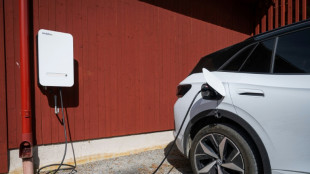
'Battery on wheels': Sweden powers homes with EVs
-
 From cage fights to the White House, UFC marches into mainstream
-
Happy Birthday Mr. President: Trump to turn 80 with cage fight

-
 Blues face uphill task in Hurricanes Super Rugby semi
-
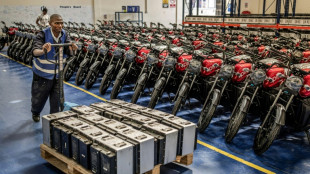
Mideast war helps electric motorbikes boom in Africa
-
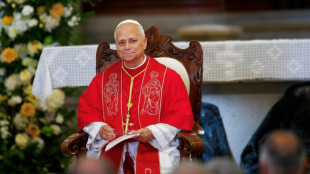 Pope ends Spain visit with migrant meetings
-
Ex-Tottenham owner sells art collection in blockbuster auction

-
 Displaced families bury Hezbollah dead in temporary graves
-
Lightning's Kucherov wins Hart Trophy as NHL MVP

-
 Marsch says wanted 'responsibility' of leading Canada in home World Cup
-
Co-hosts Mexico kick off World Cup with dramatic victory

-
 Taylor Swift becomes youngest woman in Songwriters Hall of Fame
-
Aguirre says Mexico beat cramps and stage fright in World Cup opener

-
 Japan captain Endo out of World Cup, ends international career
-
Iran's World Cup players take to the training pitch

-
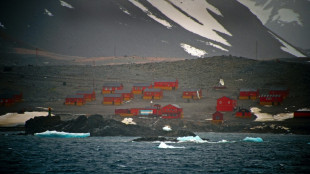 Antarctic Peninsula sees record high June temperatures
-
Mexico beat South Africa to kick off World Cup

-
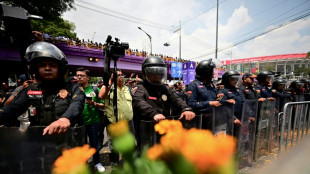 Police, protesters clash outside maiden World Cup match in Mexico
-
US stocks rally, oil prices fall as Trump calls off fresh Iran strikes

-
 Alisson unfazed by doubts over Brazil heading into World Cup
-
Pulisic 'ready to battle' Paraguay in US World Cup opener

-
 Trump claims 'great' deal with Iran, signing expected in Europe
-
UN experts, MSF condemn crackdown on women by Afghan morality police
Major Japan quake injures 30, damages roads
A big quake off Japan injured at least 30 people, authorities said Tuesday, damaging roads and knocking out power for thousands in freezing temperatures.
The Japan Meteorological Agency said the magnitude 7.5 quake at 11:15 pm on Monday (1415 GMT) -- downgraded from its first reading of 7.6 -- raised the chances of similar or larger tremors in the coming days.
Prime Minister Sanae Takaichi said 30 people were injured in the quake off the coast of the northern Aomori region, which triggered tsunami waves up to 70 centimetres (28 inches).
Daiki Shimohata, 33, a civil servant in Hashikami on Honshu island, told AFP that he and his family rushed outside their home.
"The tremor was something that we've never experienced. It lasted maybe for about 20 seconds," Shimohata said by phone.
"We were holding our children -- a two-year-old girl and a one-year-old boy -- in our arms. The shaking reminded me of the disaster (in 2011)," he said.
One person was seriously hurt in the main northern island of Hokkaido, according to the Fire and Disaster Management Agency.
Footage showed people in a supermarket clinging to a table with items having fallen off shelves, as well as crevasses in roads and at least one car in a hole.
Elsewhere broken glass from windows was scattered on roads and pavements.
Initially there were reports of several fires but government spokesman Minoru Kihara said Tuesday that was one confirmed blaze at a house.
On the main northern island of Hokkaido, an AFP reporter said the ground shook violently for around 30 seconds as smartphone alarms alerted residents.
In the city of Hachinohe the quake reached upper six on Japan's seven-level Shindo scale of shakiness, the point at which it's impossible to move without crawling.
With temperatures around freezing point, around 2,700 homes were without power but by Tuesday morning electricity had been restored to most areas, according to utility providers.
At first the JMA warned of tsunamis up to three metres (10 feet), which could have caused major damage.
Around 28,000 people were initially advised after the quake to evacuate, emergency services said, and media reports said some makeshift shelters were full.
In the end the biggest waves recorded measured up to 70 centimetres and after several hours the tsunami warnings were lifted.
Shinkansen bullet-train service was suspended in some areas while engineers checked for any damage to the tracks.
No abnormalities were detected at the Higashidori or Onagawa nuclear power plants, operator Tohoku Electric Power said.
The JMA warned people to be cautious of further quakes of a similar intensity for about a week.
"Additionally, there is a possibility of even stronger earthquakes occurring, so please stay alert," it said.
Geologists Kyle Bradley and Judith A. Hubbard said that there was no way to tell whether a strong earthquake will be followed by a similarly strong, or even stronger, one.
"Instead, we must rely on historical statistics, which tell us that very few large earthquakes are soon followed by even larger events," they said in their Earthquake Insights newsletter.
"It does happen, just not very often."
- 'Megaquake' -
In 2011, a magnitude-9.0 quake triggered a tsunami that left 18,500 people dead or missing and caused a devastating meltdown at the Fukushima nuclear plant.
Japan sits on top of four major tectonic plates along the western edge of the Pacific "Ring of Fire" and is one of the world's most tectonically active countries.
The archipelago, home to around 125 million people, experiences around 1,500 jolts every year.
The vast majority are mild, although the damage they cause varies according to their location and depth below the Earth's surface.
Quakes are extremely hard to predict, but in January a government panel marginally increased the probability of a major jolt in the Nankai Trough off Japan in the next 30 years to 75-82 percent.
The government then released a new estimate in March saying that such a "megaquake" and subsequent tsunami could cause as many as 298,000 deaths and damages of up to $2 trillion.
K.Hassan--SF-PST