Smog then floods: Pakistani families 'can't catch a break'
/ Photo: Aamir QURESHI - AFP

 De Zerbi apologises to fans after Spurs' stalemate extends goal drought

 Lowry takes four-shot lead as Trump jets in for Irish Open

 Harrison, Skupski win US Open men's doubles title
 Verstappen fears overtaking will be 'tough' at Spanish GP

 Argentina revives plan for South Atlantic naval base amid Falklands tensions

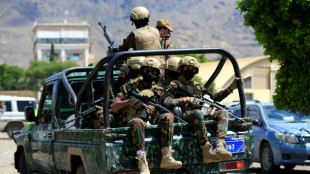 Yemen government forces say hit Houthis in Red Sea city

 Dismal Spurs stay goalless after Everton stalemate

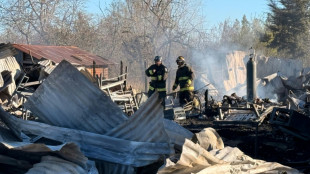 Fire at nursing home in Chile kills 16

 Frustrated Hamilton urges Ferrari to 'work harder'

 Zelensky ready to meet Putin at Miami G20 but Kremlin refuses

 Anthropic boss calls for AI slowdown, Altman and Musk agree

 England back on track after 'chaos', says Root
 Shelton chases history in US Open title tilt with top seed Zverev

 Norris 'masterpiece' snatches Spanish GP pole from Antonelli

 Mas on brink of Vuelta triumph as Landa claims stage 20

 No Kerr clash as Ingebrigtsen pulls out of Ultimate 1,500m

 Anthropic boss calls for slowing pace of AI development

 BRICS nations call for 'maximum restraint' in Middle East war

 England v Pakistan Test series: Three talking points

 Marquez snatches San Marino MotoGP sprint ahead of Bezzecchi

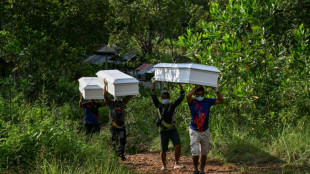 Philippine ferry fire death toll climbs to 76 as identification process begins

 BRICS nations urge 'maximum restraint' in Middle East war

 Zelensky open to meeting Putin at G20 in Miami

 England survive scare to seal 3-0 sweep against Pakistan

 Trump says Irish unification would be 'fantastic'

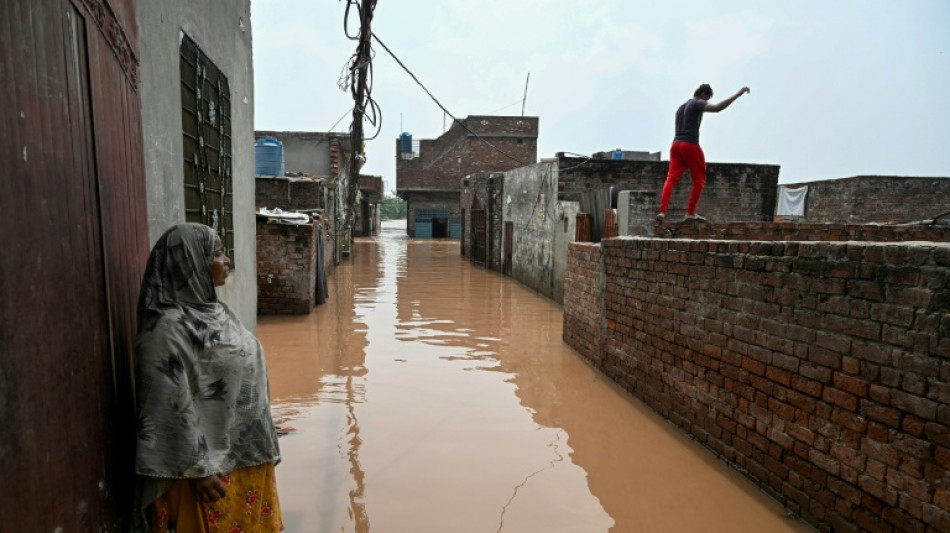
Perched on her neighbour's rooftop, Ghulam Bano gazes down at the remains of her home, submerged in murky, foul-smelling floodwater that has engulfed much of Pakistan's Punjab region.
Monsoon rains this week swelled three transboundary rivers that cut through Pakistan's eastern province, the nation's agricultural heartland and home to nearly half of its 255 million people.
Bano moved to Shahdara town last year, on the outskirts of Lahore, to avoid the choking smog pollution of Pakistan's second-largest city, only to have her new beginning overturned by raging floods.
"My husband had started coughing blood and his condition just kept getting worse when the smog hit," Bano told AFP, walking through muddy streets.
Pakistan regularly ranks among the world's most polluted countries, with Lahore often the most polluted megacity between November and February.
"I thought the smog was bad enough -- I never thought it could be worse with the floods," she said.
Her impoverished neighbourhood is home to thousands of low-lying homes crammed together on narrow streets.
The nearby overflowing Ravi river flooded many of them, forcing dozens of families to take refuge in an elementary school on higher ground, where doctors were treating people for skin infections linked to the flood water.
More heavy rain is predicted over the weekend, including warnings of increased urban flooding in Lahore, which borders India.
With her husband bedridden from tuberculosis, worsened by the relentless smog, Bano became the sole provider in a household struggling to breathe, survive, and endure the floods.
"I ate today after two days. There is no clean water to drink. I left my daughter at a relative's place and stayed back hoping the water recedes," she said.
- No time to pack -
Landslides and floods triggered by heavier-than-usual monsoon rains have killed more than 800 people nationwide since June this year.
While South Asia's seasonal monsoon brings rainfall that farmers depend on, climate change is making the phenomenon more erratic, unpredictable and deadly across the region.
More than 1.4 million people living near the rivers have been affected by the floods, with over 265,000 evacuated, said Azma Bukhari, the provincial information minister.
The latest monsoon downpour has killed at least 13 people, according to the National Disaster Management Authority.
"We just can't get a break," Amir Mehmood, a 32-year-old shopkeeper in the same neighbourhood as Bano, told AFP.
"Children fall ill in the smog because of the extreme cold. Some become sick due to the (everyday) unsanitary conditions," he said, referring to piles of waste that routinely line the streets.
"And now there's a flood. Our homes have collapsed, the walls have fallen, and everything is damaged."
He moved his family to a relative's home on the other side of the town along with his 10 cows and two goats as the water crept closer.
More than 300 relief camps have been set up across the province to shelter those displaced with no family to turn to.
"The women you see here, and me, we had to run for our lives... we did not even get the time to get clothes for our kids," 40-year-old widow Tabassum Suleman told AFP from the school camp.
"We do not know when we will be going back home," she said, looking up at the dark skies.
"But the worst is yet to come."
I.Matar--SF-PST