Melting glaciers an 'immediate' climate risk: author of UN report / Photo: Arun SANKAR - AFP

 Missing passengers likely went down with sunken ferry: N.Cyprus official

 Premier League clubs splash cash to smash transfer record
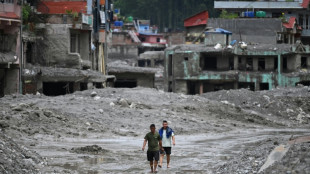 Melting glaciers an 'immediate' climate risk: author of UN report

 Folarin Balogun's move to Everton collapses

 Pacific islands to face food shortages over global warming: scientists
 Venice jury head Maggie Gyllenhaal questions lack of women directors
 Stocks drop, bond yields rally on Mideast flare-up
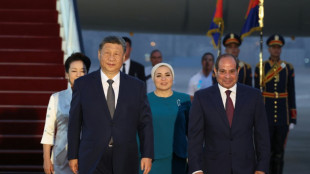 China expands Egypt investments in first Xi visit in a decade
 Messi departure leaves Argentina facing rebuild after golden era
 Ourbit SuperCEX Launches "Cosmic Wheel Season 3. Oracle Realm" on September 2 with 3M USDT Prize Pool

 Ebola death toll passes 3,000 in DR Congo: official data
 Hong Kong democracy activist Wong pleads guilty to foreign collusion
 World record prize winner Romantic Warrior retires from horse racing
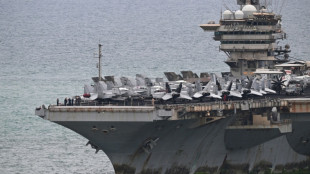 5,000 US sailors arrive in Thailand after months at sea

 Joshua Wong, Hong Kong's pro-democracy poster child
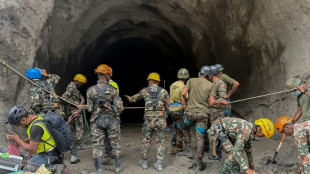 Nepal tunnel rescuers seek trapped workers but hit dead ends
 Zverev wins wild five-setter, Rybakina and Gauff ease through at US Open

 US energy secretary arrives in Venezuela to discuss oil deal

 Meloni government becomes Italy's longest-lasting

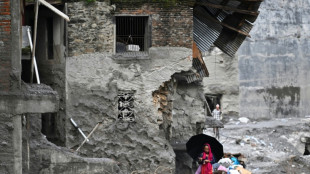 Funerals in Nepal for missing, a week after deadly floods

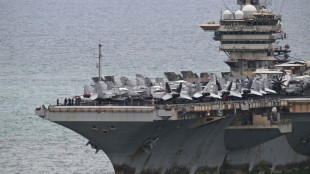 US aircraft carrier arrives in Thailand after months at sea
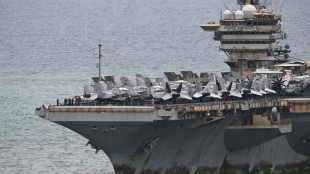 US aircraft carrier approaches Thai port after months at sea

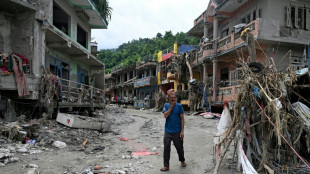 Nepal's young PM faces gravest test after flood catastrophe

 What rainbow? LGBTQ Indonesians on edge as hostility mounts
 O'Connor eyes Wallabies World Cup swansong after Force return

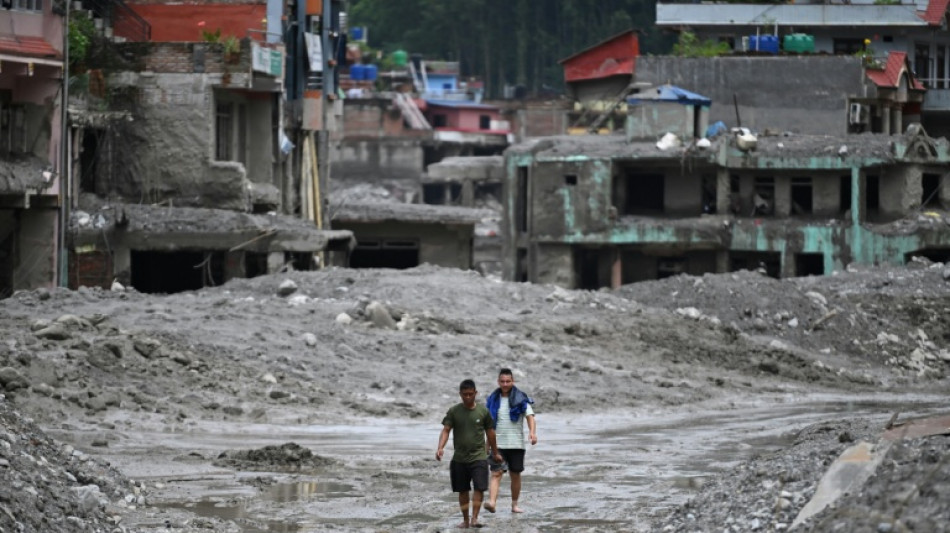
Climate change is accelerating the loss of glaciers and increasing the risk of devastating events like the Himalaya floods, said one author of a major UN scientific assessment published Wednesday.
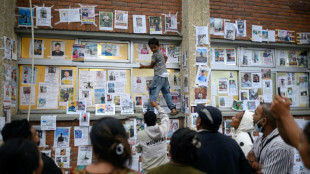
More than 1,100 bodies have been recovered since a glacial collapse sent a gigantic wave of freezing water, rocks and debris roaring down the China-Nepal border on August 26.
In a new report, the UN Environment Programme said the goal of holding global warming to below 1.5C is certain to be breached, and would have severe consequences even if global temperatures are reversed in the future.
Report co-author Carl-Friedrich Schleussner, a climate scientist from the IIASA research institute in Austria, told AFP that humanity must respond to a rising tempo of extreme events by reining in global warming.
Q: Could an event similar to the devastating floods in the Himalayas happen again?
A: "We need to understand in detail what has happened and the exact drivers. But what we can say with confidence is that climate change is driving and accelerating the loss of glaciers around the world. Of all global glaciers mass loss since the 1970s, more than 40 percent occurred in the last decade alone. So we'll see more and more glacier melt. And with this accelerating glacier loss, we are also increasing the risks of such events, because we are destabilising these glaciers."
Q: What are the triggering factors?
A: "If glaciers are melting at an accelerating rate, you're seeing an increase in basically adjacent lakes because water melts, and then depending on the topography, lakes can form closer to the bottom of glaciers.
"These can grow in size -- and we are seeing this around the world -- that glacial lakes are growing quite considerably. Then there is a real risk through destabilisation -- either of the glacier itself or of the surrounding mountain areas -- because we are talking about very high altitudes... We can also see permafrost melt and other things that may lead to a sudden event where a big chunk of debris or glacier falls into the lake and creates a flood wave. And these types of events can be devastating in their consequences."
Q: Are we prepared for this?
A: "There's an immediate risk that's coming from glaciers... that requires an immediate response to the imminent exceedance of 1.5C. Not just with the Nepalese flood, but also with the extreme events we've been seeing around the world in the last couple of months. We know we are not prepared for what is coming.
"We'll need to really step up our game in adapting to it and we'll need to reduce emissions as much as possible as soon as possible because that's the only way to slow down climate change and buy us time, because we are warming the planet at a record rate and so we are really pushing our luck."
Q: Which areas are at risk of flooding similar to that in the Himalayas?
A: "It's a very consequential and potentially devastating type of event, but also something that is unfortunately still not understood to the level that we really can estimate and understand the risks.
"At the same time, it's important to say that obviously these risks persist everywhere where we have rapidly melting glaciers, which is in particular the case in South America, but also particularly in the "third pole" -- the Himalayan-Karakoram-Pamir region. Because this is where we have huge glaciers, this is where these dynamics are quick. We are seeing rapid changes in those regions. It's densely populated further downstream, so the risks also for humans is quite substantial.
"These Himalayan water towers are really essential for providing fresh water to billions of people. Any significant changes to this freshwater supply will have enormous consequences and this is really where the glaciers are central and require a particular focus, including also when we look into the prospect of a 1.5C or warmer world."
M.AbuKhalil--SF-PST